


Cell powerhouses could offer cures for genetic diseases
We still know very little about how energy flows within our cells. Ville Kaila is using advanced methods to understand how a complex protein chain keeps the flow running. This knowledge may contribute to new treatments for severe genetic and neurodegenerative diseases.
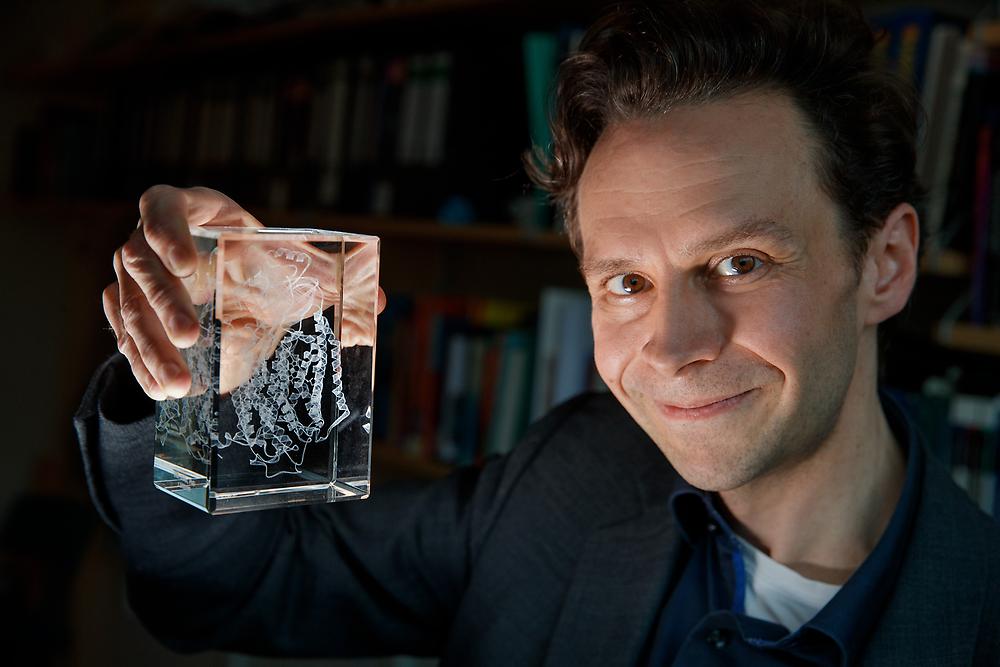
Professor Ville Kaila. Photo: Magnus Bergström/KAW
Within our cells, there is an organelle often compared to the cell’s own power plant: the mitochondrion. It has the ability to capture and convert the energy from molecules in the food we eat into electrical energy. This conversion takes place with the help of large protein complexes that absorb and channel the energy required for cell growth and metabolism.
“We’re trying to unravel energy conversion at the molecular level. How are the atoms arranged in these proteins, and how do they change their structure in order to function? Our aim is to map the entire process step by step to see how the proteins depend on each other’s function,” says Kaila, Professor of Biochemistry at Stockholm University.
He has devoted virtually his entire research career to understanding the energy conversion that takes place in the mitochondrion.
“We have now achieved an important understanding of the central mechanisms in this machinery, largely thanks to recent technological advances, for example, in cryo-electron microscopy. Although this is basic research, we also see exciting biomedical applications ahead,” he says.
Read full article at Knut & Alice Wallenberg Foundation´s website
Last updated: 2026-01-30
Source: Communications Office