


LNU for researchers
The Swedish Level of Living Survey (LNU) is a recurring survey in which a nationally representative sample of Sweden’s adult population answers questions about their living conditions. Researchers can apply to use LNU data in their own research projects.
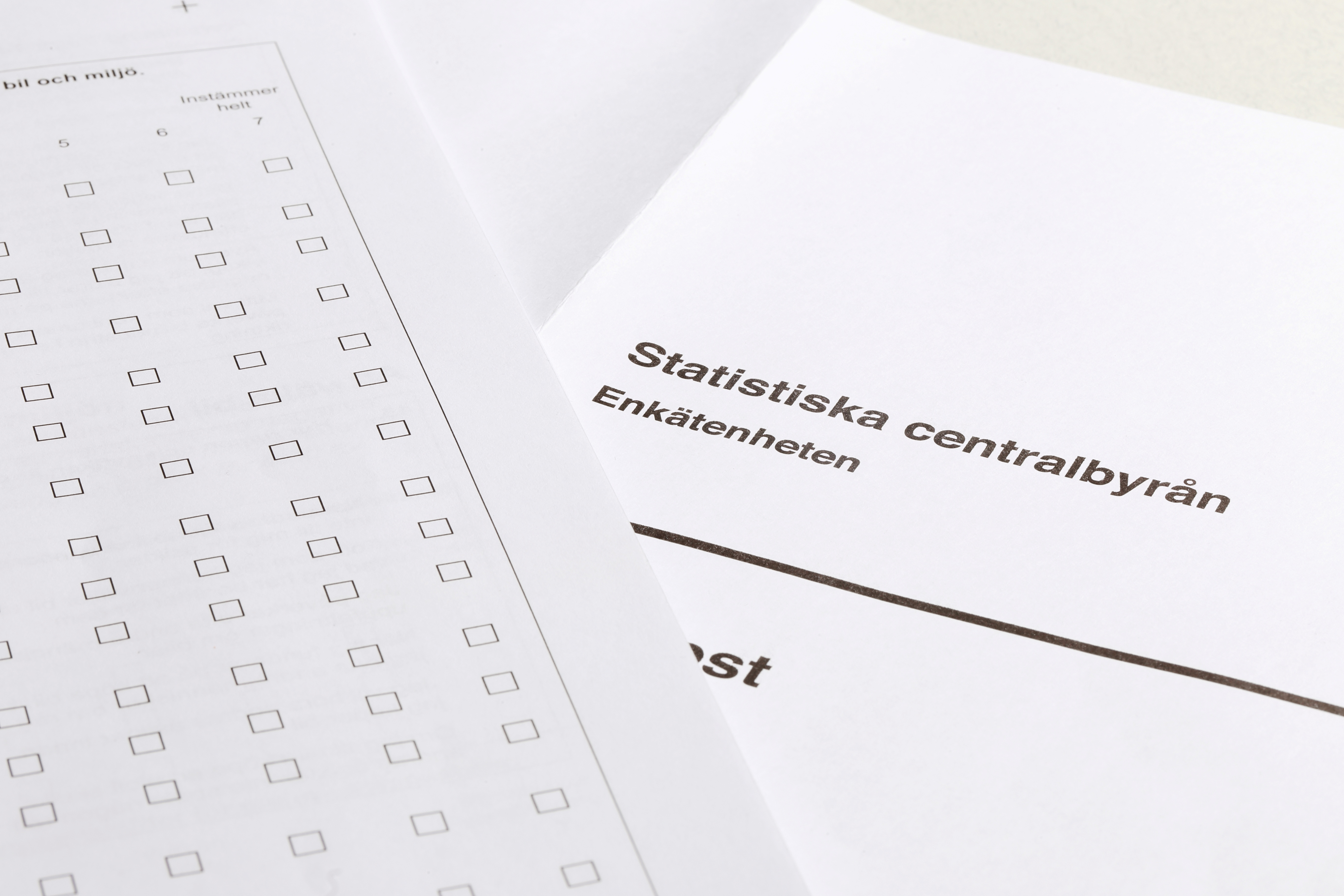
Photo: Roland Magnusson/Mostphotos
This page provides detailed information and documentation from completed data collection waves. It also provides information on how to apply for access to LNU data, data release procedures and terms of use.
Longitudinal data on living conditions
LNU has followed people’s living conditions since 1968 and conducted its eighth and most recent data collection in 2026. The survey is based on a nationally representative sample of Sweden’s adult population. A large proportion of respondents are members of a panel, making it possible to study changes in living conditions over time at the individual level.
To ensure that the survey remains nationally representative, new samples of young adults and foreign-born individuals are added in each wave. By following many participants over long periods, the longitudinal design enables analyses of how different aspects of people’s living conditions are interrelated and how they change in the long term.
Survey content
LNU covers key dimensions of people’s living conditions and makes it possible to study changes over time. The nine original areas covered by the main questionnaire are:
- Housing
- Childhood, family and social relations
- Education
- Employment and working conditions
- Health
- Economic resources
- Personal and property security
- Leisure and recreation
- Civic participation
Two areas have been added later:
- Perceptions and attitudes
- Personality
In some waves, LNU has included supplementary studies in which participants’ managers, partners or children have been invited to take part. In connection with LNU 2010, a separate study of the living conditions of foreign-born individuals and their children was also conducted.
LNU includes adults up to the age of 75. Participants who are older than 75 are instead invited to take part in the Swedish Panel Study of Living Conditions of the Oldest Old (SWEOLD), which has been conducted at Karolinska Institutet since 1992.
Access to LNU data
Researchers can apply for access to LNU data for use in their own research projects, including data from the supplementary studies involving participants’ managers, partners and children. The page Apply to use LNU data provides information about data release conditions, rules for use and the application process. Please note that most of the documentation and all datasets are in Swedish.
Aggregated LNU data are available in a web-based visualisation tool. Researchers can use the tool to explore the content of LNU before applying for access to microdata. The tool covers all parts of the survey and includes most, but not all, variables.
Explore LNU data in the visualisation tool (in Swedish)
Publications based on LNU data are listed on the LNU Publications page.
About the Swedish Level of Living Survey (LNU)
LNU is a recurring, nationally representative survey of living conditions in Sweden. Data collections have been conducted in 1968, 1974, 1981, 1991, 2000, 2010, 2020–2022 and 2026. Participants are currently between 19 and 75 years old, although the minimum age was lower in early waves.
Up to and including LNU 2010, around 7,000 individuals were invited to participate in each data collection wave. The samples have been considerably larger in the two most recent waves, with approximately 20,000 individuals in 2026. Many participants have taken part in several waves.
LNU is conducted by the Swedish Institute for Social Research (SOFI) at Stockholm University. The project leaders are Carina Mood and Martin Hällsten, both professors of Sociology.
Data collections and documentation
The sections below provide detailed information and documentation for completed data collection waves, including codebooks, questionnaires and technical reports. Use the arrows to view information about each data collection.
Contact
Feel free to contact the LNU team.
LNU team
lnu@sofi.su.se
Project leaders
Carina Mood, professor
carina.mood@sofi.su.se
Martin Hällsten, professor
martin.hallsten@sofi.su.se
Survey director
Katarina Boye, associate professor
katarina.boye@sofi.su.se
Last updated: 2026-11-10
Source: Swedish Institute for Social Research