News

  • Stockholm Business School has received joint accreditation from AMBA & BGA

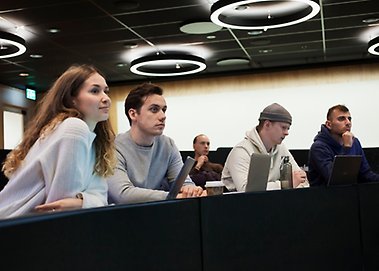
    Stockholm Business School has officially received joint accreditation from the Association of MBAs (AMBA) and the Business Graduates Association (BGA), two of the world’s leading authorities on business education. These two organizations are globally recognized authorities in the field of business education. The accreditation was awarded after a thorough evaluation process, which involved a panel of senior business school leaders from around the world. The assessors praised Stockholm Business School for being dedicated to the pastoral wellbeing of participants. The panel also mentioned that the school has new facilities which were said to provide a variety of learning environments which are all of excellent quality. Finally, the panel saw that there were good links with employers. - "We're delighted to, once again, receive AMBA accreditation for our Executive MBA programme and, with its strong emphasis on responsible management practice and continuous improvement, to also receive BGA accreditation. These awards recognise the standards of quality that have been set at SBS, and the tremendous efforts of our faculty, staff, students, and supportive alumni. We're very grateful to AMBA - BGA for their guidance and support throughout the process" says Fredrik Nordin, Head of Stockholm Business School. Upon receiving the AMBA accreditation, all current and recent graduates of the school's MBA portfolio are invited to join AMBA's global membership network, which comprises approximately 70,000 students and alumni from over 150 countries. Meanwhile, all undergraduates and alumni from any of the business school’s programmes are invited to join BGA’s individual membership network. Through both these organizations, students and graduates can strengthen a community that acts as a force for good in management thought and practice, through exclusive events and business content. About AMBA & BGA AMBA & BGA accreditation is international in scope and reach, and the organization works with senior academics at top educational institutions around the world, to update accreditation criteria continuously and maintain one unique, in-depth, and detailed approach. AMBA & BGA believes accredited schools should be of the highest standard and reflect changing trends and innovation in post-graduate management education. As such, the accreditation process reflects this commitment to fostering innovation and challenges business schools to perform at the highest level continuously. - "I am delighted that Stockholm Business School is being welcomed into both the AMBA and the BGA family. While the school was already accredited by AMBA, by joining BGA it is showing its commitment to joining a network striving to create excellence in management education for the good of society" says Andrew Main Wilson, Chief Executive of AMBA & BGA. Read more about AMBA & BGA

    Stockholm Business School
  • Reconstruction of War-Affected Municipalities in Ukraine

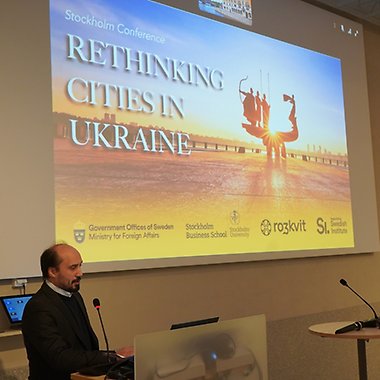
    The conference "Rethinking Cities in Ukraine" was organized for three days from April 29th to May 1st. Representatives from various municipalities in Ukraine, participants from Sweden, and other European countries attended the conference. The responsible organizer was Ragnar Lund from Stockholm Business School, Stockholm University. This conference was the culmination of a six-month capacity-building program focusing on spatial planning for recovery and strategic sustainable development of communities in eastern Ukraine. Representatives from five hromadas, municipalities, located near the front line in eastern Ukraine and affected by the war, presented pilot projects addressing various needs for rebuilding their communities and strategies for urgent yet long-term city reconstruction. The conference allowed Swedish and international stakeholders to explore collaborative efforts with decision-makers from the Ukrainian municipalities. It has been very valuable to gather the Ukrainian municipalities from the capacity development program here in Stockholm. In order to create collaborations and mobilize resources effectively, we need to listen to the local needs and understand how we can collaborate in the best possible way, says Ragnar Lund. The first day of the conference was hosted at the Ministry of Foreign Affairs and brought together 120 Swedish and international stakeholders. Speakers from Kyiv, Mykolaiv, Helsinki, Dresden, Berlin, Brussels, Vienna and Stockholm met with mayors and community leaders from Lozova, Nizhyn, Nikopol, and Sumy to discuss financing and implementing reconstruction pilot projects and how to build human capital at the local level.

    Stockholm Business School
  • Ballerina Award 2024

    Bino Catasus has, for the second time in a row, received the Föreningen Ekonomernas' Ballerina Award 2024 for Best Pedagogical Teacher. The award is given out annually by the Education Committee at Föreningen Ekonomerna to the teacher who has best shown exceptional pedagogical ability during the previous year. The Ballerina award demonstrates the commitment of SBS teachers to the students as well as the students' appreciation for them.

    Stockholm Business School
  • How to use accounting to facilitate sustainable development

    Olga Golubeva, researcher and teacher at Stockholm Business School, has published the article Sustainability and technology: the contribution of “managerial talk” to the three pillars framework at Accounting, Auditing & Accountability Journal. The article investigates whether accounting, a tool that affects the actions of both organisations and society, can contribute to further developing the concept of sustainability. Exploiting real-time accounts of management speeches, termed “managerial talk” in the context of this paper, the study is among the first to include technology within a sustainability framework. Findings The study develops an inductive model that emerges as a result of the data analysis process. It emphasises that technology can be both an enabler for, and an interference with, sustainability according to the application of steering mechanisms. The latter include governance and regulations, analysis and evaluation tools, and disclosure practice. Read the article Sustainability and technology: the contribution of "managerial talk" to the three pillars framework Read more about Olga Golubeva

    Stockholm Business School
  • Video games at work?

    Gamification refers to the application of video-game logic to non-game contexts, like work. It sounds like fun, but research argues that gamification has ethical risks writes Associate Professor Nick Butler in The Conversation. Gaming might be thought of as a fun and frivolous hobby. The video game industry generates huge amounts of money , but it does little to improve the world. However, recent developments are changing this view. Increasingly, organisations are using video games to address real issues , like energy reduction or water conservation. The UN has even developed an online game called Mission 1.5 to help tackle the climate crisis . This approach is referred to as " gamification ". Gamification is meant to generate the same sense of purpose and accomplishment we might feel when we are playing video games, but with a different kind of outcome – like saving the planet. And it is also being used to affect how people work .

    Stockholm Business School
  • PhD students connect coast and society in a changing climate

    Solving complex questions about interactions between the sea and climate change, and how they relate to society, requires a broad set of skills. In a new research school, PhD students from diverse scientific disciplines at Stockholm University get a unique opportunity to learn how transdisciplinary approaches and research communication can lead to sustainable management of coastal environments. What unites students in from widely varied subjects like marine geology, business accounting, and ecotoxicology? They all provide important perspectives necessary to answer questions on societal challenges and solutions to climate change in coastal seas. During a kick-off meeting for the research school Perspectives on climate change in coastal seas in March, 14 new PhD students were introduced to this framework that will be their research focus for the coming years. "I feel proud to be part of this program, and though this transdisciplinary context is new to me, I think I have a lot to bring to the table," says Emma Flévaud, PhD student in environmental law.   Adding new pieces to the puzzle The oceans face multiple climate-related pressures such as acidification, oxygen deficiency and rising temperatures. These, among others, cause feedbacks that release potent greenhouse gases into the atmosphere, reinforcing the climate effects. However, under healthy conditions with prospering ecosystems, the coastal zones have effective carbon storage capacities and can be important carbon sinks. "If we manage the coastal zones right, they could globally contribute to 20 percent of the greenhouse gas emission reductions we need to fulfill the Paris Agreement," says Christoph Humborg, Scientific Director at Stockholm University Baltic Sea Centre and one of the initiators of the research school. This intricate puzzle is partly understood and described in science, and questions remain about the links between climate change, biodiversity and the full potential of the coastal zones to serve as climate mitigators. In research initiatives like CoastClim experts in ecology, modeling, marine physics, and atmospheric sciences explore these links. For the next couple of years, the students from Stockholm University will be involved in research questions that add important information in this context.

    Stockholm University Baltic Sea Centre
  • Entrepreneurship, a way for immigrants to establish themselves in the job market

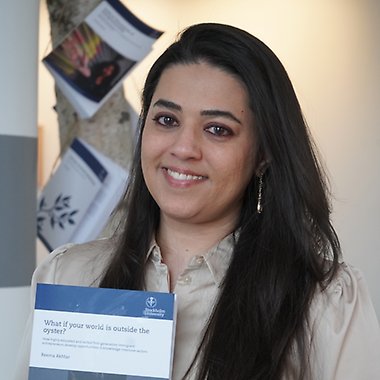
    In recent decades, immigration from countries outside the EU to Western countries has increased significantly. Due to different cultural backgrounds, education qualifications, and social ties the economic integration of these immigrants is even more important for their financial support as well as the economic growth of the host country. Consequently, the rising unemployment rate poses a threat requiring multiple efforts to integrate them into the labor market, and one such way that immigrants tackle unemployment is by opting for entrepreneurship. Reema Akhtar defended her dissertation titled "What if your world is outside the oyster? How highly educated and skilled first-generation immigrant entrepreneurs develop opportunities in knowledge-intensive sectors" at the Marketing Section, Stockholm Business School, on March 20th. - "I wanted to study how immigrants can enable themselves to start businesses in knowledge-intensive sectors," says Reema. "I have used a consolidated view of opportunity creation and discovery, namely opportunity development, which is at the core of the entrepreneurial process."

    Stockholm Business School
  • New thesis on Financial market structure

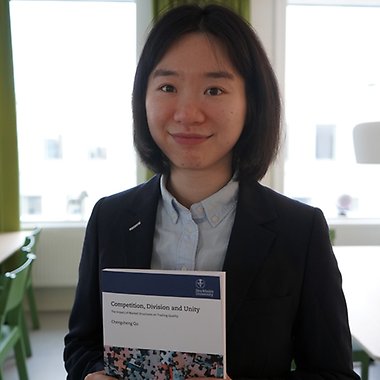
    Chengcheng Qu has completed her doctoral studies in Financial economics at Stockholm Business School with the thesis Competition, Division, and Unity - The Impact of Market Structures on Trading Quality. The financial market operates as an ecosystem, involving diverse yet interconnected marketplaces and participants. Market design, intricately interacting with technology, regulation, and competition, shapes how participants adapt their trading behavior and therefore influences market performance. This thesis investigates how market microstructure impacts the behavior of fast and slow traders, the incentive for liquidity provision and liquidity demand, and the competition between exchanges for gaining order flow. It is a compilation thesis consisting of three articles: "Latency Arbitrage and Market Liquidity," "Market Fragmentation, Liquidity, and Efficiency," and "Tick Size, Lot Size, and Liquidity in Futures Trading."

    Stockholm Business School
  • Time to work, a new thesis on performance management

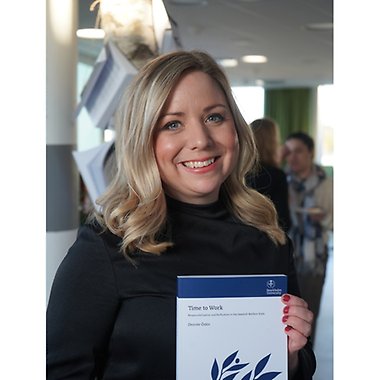
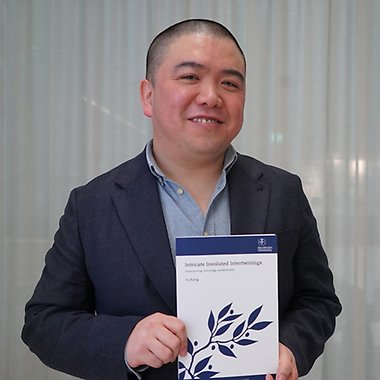
    Desirée Ödén recently defended her thesis "Time to Work - Responsibilization and Reification in the Swedish Welfare State" at the Accounting Section, Stockholm Business School. The thesis's subject is performance management and deals with how organizations measure and manage both financial and individual performance. In late 2015 and early 2016, over two million refugees crossed the European borders. It was a period that has become known as the refugee crisis. Sweden welcomed over 160,000 refugees, the second highest number per capita in Europe. - "Initially, the study was supposed to focus on the development of indicators to measure performance within a unit at the Swedish Public Employment Service. However, when I understood that they were working to help those who arrived in Sweden as refugees during the so-called refugee crisis of 2015/2016 to establish themselves in the Swedish labor market, it quickly became clear to me that I needed to study the measurement of performance from a broader societal perspective," says Desirée.

    Stockholm Business School
  • A cultural perspective on cigarette consumption

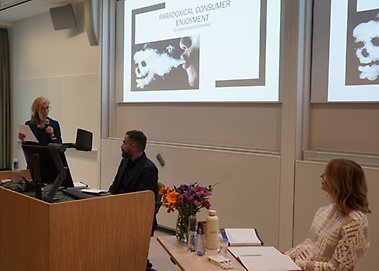
    Anna Felicia Enhage defended her doctoral thesis "Paradoxical consumer enjoyment: A cultural perspective on cigarette consumption" on February 9th at the Marketing section, Stockholm Business School. Anna Felicia examines smoking and cigarette consumption in her thesis, a monograph within consumer culture theory. -"Smoking is one of the most interesting topics I can think of: it has always been a symbol for rebelliousness but during the latest decades it has quite drastically lost its former status" says Anna Felicia. The reason she picked the subject for her thesis was actually justified by theories. When she read consumer culture theory, she realised that it´s often implied that consumption was motivated by a drive to attain pleasurable experiences. These experiences were mainly described as positive and constructive to society and consumers. It is often seen as building social bonds, improving health and enhancing productivity. That is, pleasure derived from consumption is described as rational and constructive. As a result, the consumption that does not adhere to these rules is excluded or described as compulsive.

    Stockholm Business School
  • Great interest in Stockholm Business School's international programmes

    The Bachelor's Programme in International Business and Politics and the Bachelor's Programme in Business, Ethics, and Sustainability are the most popular international programmes at Stockholm University. January 15th was the deadline for the first round of applications for international bachelor's and master's programs. The Bachelor's Programme in International Business and Politics has 1677 applicants, while the Bachelor's Programme in Business, Ethics, and Sustainability has 1190 applicants. Three of the master's programmes at Stockholm Business School are included in the list of the top ten most sought-after master's programmes at Stockholm University. The most popular is the Master's Programme in Banking and Finance/Financial Economics with 865 applicants. Following that is the Master's Programme in Marketing with 757 applicants and the Master's Programme in Management, Organization, and Society with 691 applicants. The Master's Programme in Operations Management and Control has 660 applicants, the Master’s Programme in Accounting and Management Control has 618 applicants, and the Master's Program in Marketing Communication has 612 applicants. Read more about our bachelor's and master's programmes at Stockholm Business School Read more about the most popular master's programmes at Stockholm University

    Stockholm Business School