



New data soon available for research
This year's SLOSH data collection is now complete. Researchers will soon be able to access new data on work, health and quality of life in Sweden.
REWHARD − Research Infrastructure
This year's SLOSH data collection is now complete. Researchers will soon be able to access new data on work, health and quality of life in Sweden.

Fifty years ago, mental health problems were more common among older people than among younger adults. Today, the pattern is reversed. An analysis of data from the Swedish Level-of-Living Survey (LNU) shows that younger generations are much more likely to report mental health problems than previous generations were at the same age, while such problems have decreased among older people.
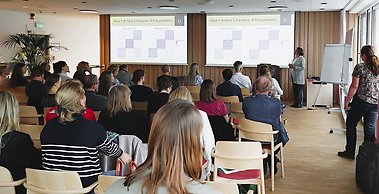
Over two half-days in September, researchers and experts gathered at Campus Albano to discuss current research on the changing world of work.

Are you a researcher studying people’s living conditions and health? REWHARD gives you the opportunity to use high-quality data in your research. Join our Open Forum to learn more.

Our fifth newsletter was published in June. You are welcome to sign up to receive the next issue.

How accurate are our perceptions of contemporary Sweden? A new book examines common perceptions of poverty, health, social relationships and working life, drawing on more than 50 years of data on people’s living conditions. The findings show, among other things, that economic hardship has declined over the period despite growing income inequality, and that mental health problems have increased sharply among younger generations.

How does everyday life change when work is replaced by retirement? A new study shows that retirement changes how people divide their time between activity and rest – and that being less physically active is not always a bad thing.
In the past few years, REWHARD data have been used in over 400 scientific publications. In the last six months, 24 papers have been published. Below you can see a list of the latest articles and doctoral theses.
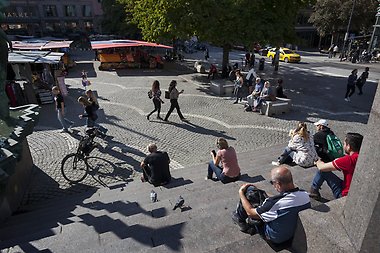
How have people’s living conditions in Sweden changed over time? What differences exist between various groups in society – and how have these developed up to today? A new website is now being launched that makes unique data from the Swedish Level of Living Survey easily accessible through an interactive visualisation tool.

SLOSH is a long term study that follows people over time to better understand the link between living conditions and health. Since the start 20 years ago, twelve data collections have been completed in SLOSH. It is now time for the 2026 survey. A separate data collection is conducted for young individuals this year as well.

The Swedish Level of Living Survey was first conducted more than half a century ago. Since then, researchers have completed seven rounds of data collection. The eighth wave of the survey is now underway.
In the past few years, REWHARD data have been used in over 400 scientific publications. In the last six months, 28 more papers have been published.