News

  • DEEP seeks PhD student in wetland ecology – apply by 31 October

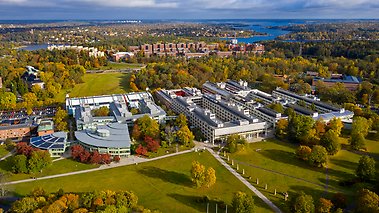
    The Department of Ecology, Environment and Plant Sciences (DEEP) at Stockholm University is looking for a PhD student in wetland ecology. The position is part of the interdisciplinary research project BALANCE wetlands, funded by Formas.

    Department of Ecology, Environment and Plant Sciences

  • Big nets, tiny larvae – Follow along as researchers map herring in the Stockholm Archipelago

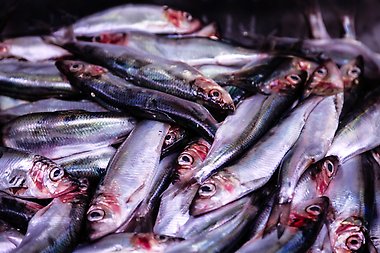
    To be or not to be: the future of herring in the Stockholm Archipelago has been a hot topic in recent years, with coastal fishermen warning that large industrial trawlers have emptied the archipelago of fish that were once abundant. Scientifically, however, the archipelago's herring stocks have been poorly studied. To address this, researchers at Stockholm University are now conducting their fourth annual trawling expedition, using meter-long nets to catch tiny, newly hatched herring larvae.

    Stockholm University Baltic Sea Centre
  • Polarization: we care more about who is speaking than what is being said

    Why do people who hold a specific view on the climate issue also tend to hold similar views on taxes or vaccinations, even though the topics are unrelated? A new study a mathematical model showing how the mechanism of "source filtering" quickly divides a population into two opposing camps that disagree on almost everything.

    Department of Psychology
  • Genetic mapping of Baltic Sea herring important for sustainable fishing

    Herring from different parts of the Baltic Sea belong to distinct populations genetically adapted to local differences in salinity and temperature. However, these populations can also mix with each other, according to a new study by researchers from Uppsala University, Stockholm University and the Swedish University of Agricultural Sciences. These results have important implications for the management of the Baltic herring. The study is published in the Proceedings of the National Academy of Sciences.

    Department of Zoology
  • The world’s oldest RNA extracted from woolly mammoth

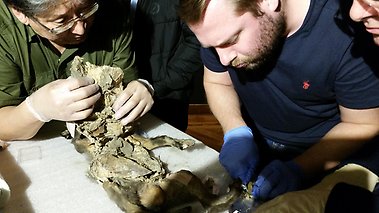
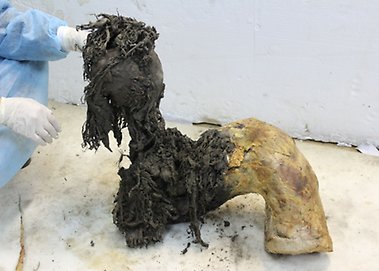
    Researchers from Stockholm University have – for the first time ever – managed to successfully isolate and sequence RNA molecules from Ice Age woolly mammoths. These RNA sequences are the oldest ever recovered and come from mammoth tissue preserved in the Siberian permafrost for nearly 40,000 years. The study, published in the journal Cell, shows that not only DNA and proteins, but also RNA, can be preserved for very long periods of time, and provide new insights into the biology of species that have long since become extinct.