News

  • Local dwarf galaxies may preserve a record of the infant Universe, says Azadeh Fattahi

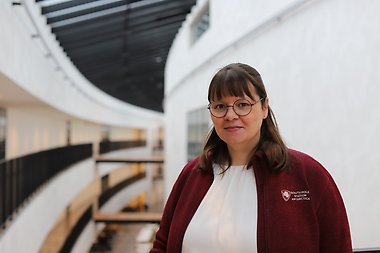
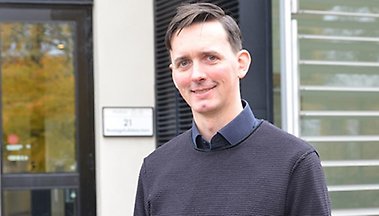
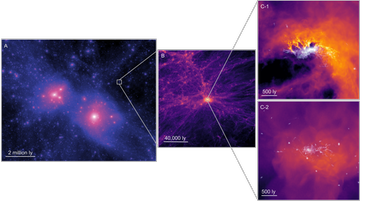
    Ultra-faint dwarf galaxies, tiny satellite galaxies orbiting the Milky Way, have long been seen as cosmic fossils. Now, a new study by researchers at the Oskar Klein Centre and the LYRA collaboration uses an unprecedented set of simulations to show just how powerfully these faint systems can reflect the conditions of the early Universe and tell us why some galaxies grew and others did not. Azadeh Fattahi is a researcher at the Oskar Klein Centre (OKC) and the Department of Physics, where she leads the research group that carried out the study.

    Department of Physics
  • Foivos Perakis new professor at Fysikum

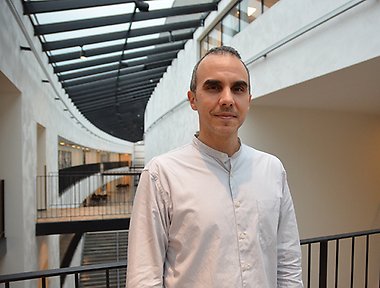
    In February and March 2026, eleven people were appointed as professors at Stockholm University. Three visiting professors and one adjunct professor were also appointed. The Vice-Chancellor has appointed Foivos Perakis as Professor of Experimental Chemical Physics, specialising in liquids and glasses, at the Department of Physics.

    Department of Physics
  • Stockholm University recommended to lead four strategic research areas

    The Swedish Research Council recommends that the Government award Stockholm University funding within four strategic research areas. Professor Emil Bergholtz from the Department of Physics is the project leader for the Alliance for Quantum Technology: From Fundamental Science to Future Applications. Linköping University and Uppsala University are participating in the project, and the proposed funding amounts are: SEK 20,000,000 in 2027 and SEK 40,000,000 in 2028.

    Department of Physics
  • Experimental Discovery of a New Critical Point in Water

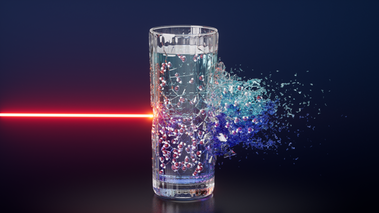
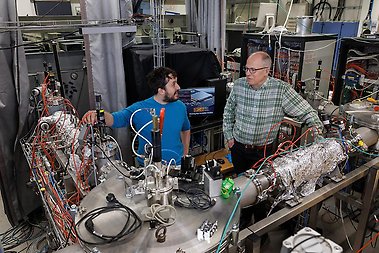
    Using x-ray lasers, researchers at Stockholm University have been able to determine the existence of a critical point in supercooled water at around -63 °C and 1000 atmosphere. Ordinary water at higher temperatures and lower pressures is strongly affected by the presence of this critical point, causing the origin of its strange properties. The findings are being published in the journal Science.

    Department of Physics
  • Gravitational waves leave imprints on light emitted by atoms

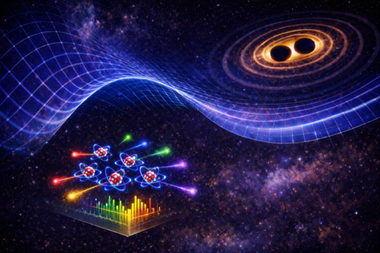
    Gravitational waves are ripples in spacetime produced by violent cosmic events, such as the merging of black holes. So far, direct detections have relied on measuring tiny distance changes over kilometer-scale instruments. In a new theoretical study accepted for publication in Physical Review Letters, researchers at Stockholm University, Nordita, and the University of Tübingen propose an unconventional approach: tracking how gravitational waves reshape the light emitted by atoms. The work describes a possible detection route, but an experimental demonstration remains for the future.

    Department of Physics
  • IceCube upgraded with Swedish technology

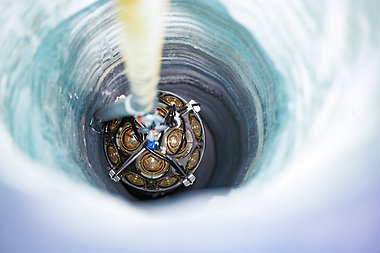
    Deep in the glacier ice at the South Pole lies IceCube, one of the world's most advanced observatories for studying neutrinos that reach us from outer space. Now, a comprehensive upgrade has taken place in which Swedish scientists have played a significant role. The upgrade is expected to lead to new discoveries in neutrino astronomy and particle physics.

    Department of Physics
  • How molecules form in space

    Temperatures in the thin gas and dust between the stars in the universe can be as low as minus 270 degrees Celsius. Yet new molecules can be created there. How is this possible? Henning Schmidt’s research team is attempting to understand fundamental processes behind the formation of new stars.

    Department of Physics
  • Exploring physics beyond the Standard Model

    Anna Obertacke comes from Germany and conducted research in Japan for several years before joining as a senior lecturer at Fysikum. "I'm searching for particles or phenomena predicted in theories that nobody has ever detected or measured before. The tool for my search is the IceCube Neutrino Observatory located at South Pole in Antarctica."

    Department of Physics
  • The strong force may have flipped a switch — and the universe still hums

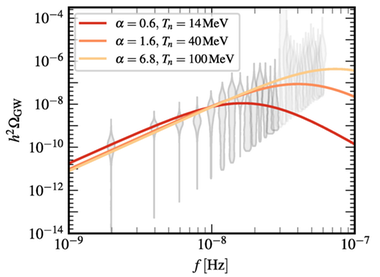
    In a new study, researchers at Stockholm University and the Oskar Klein Centre have found that a theoretically well-motivated extension of the standard description of the strong nuclear interactions could have made the early moments of Big Bang cosmology more tumultuous, leading to a prediction of gravitational waves remarkably consistent with emerging observational hints.

    Department of Physics
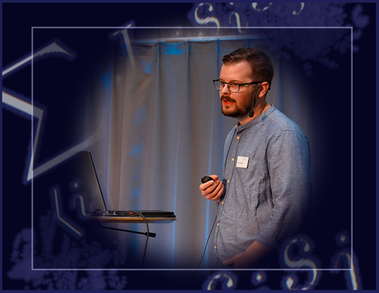
  • An image of Marcus standing on a stage holding a laser pointer in front of a computer while speaking to a crowd.

    Bridging physics and statistics with a century-old model

    In a new report from the Oskar Klein Centre at Fysikum, Stockholm University, researchers Marcus Högås and Edvard Mörtsell show how classic Ising formulas can replace brute-force statistics when dealing with a very common problem: binary (“yes/no”) uncertainties in data. They package the result as two practical “recipes” that any scientist can plug into their existing analysis.

    Oskar Klein Centre
  • David Marsh is an educational ambassador

    David has been appointed one of the university's four educational ambassadors for 2026 and has been awarded the vice-chancellor's fund for quality development in education. His project aims to develop new forms of continuous assessment. “Generative AI's rapidly improving skills in physical problem solving threaten to make all forms of assignments less effective as educational tools,” says David Marsh.

    Department of Physics