


Minister for Finance: ”Swedes need hope for the future”
On September 25, Minister for Finance Elisabeth Svantesson attended an economics lecture at Stockholm University, where she outlined the government’s new budget and took questions from students.
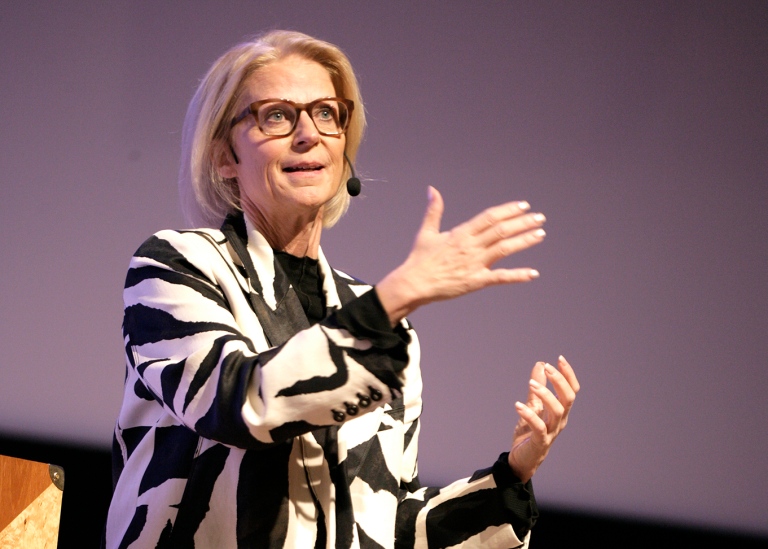
Minister for Finance Elisabeth Svantesson during the lecture at Stockholm University. Photo: Mårten Larsson/Stockholms universitet
Households in focus
Svantesson stressed that her top priority over the past three years has been to curb inflation.
”High inflation during a weak economy benefits no one. We need an economic boost.”
She pointed to factors such as war, rising crime, and uncertainty in the U.S. administration as contributing to household anxiety. High housing costs and weak purchasing power are also hitting many families hard.
”Right now, the recession is almost entirely about households,” she noted. The budget focuses on strengthening household finances, through measures like lower VAT on food, tax cuts, and increased housing allowances. Preschool fees will also be reduced.
”Swedes need to feel confidence and hope for the future.”
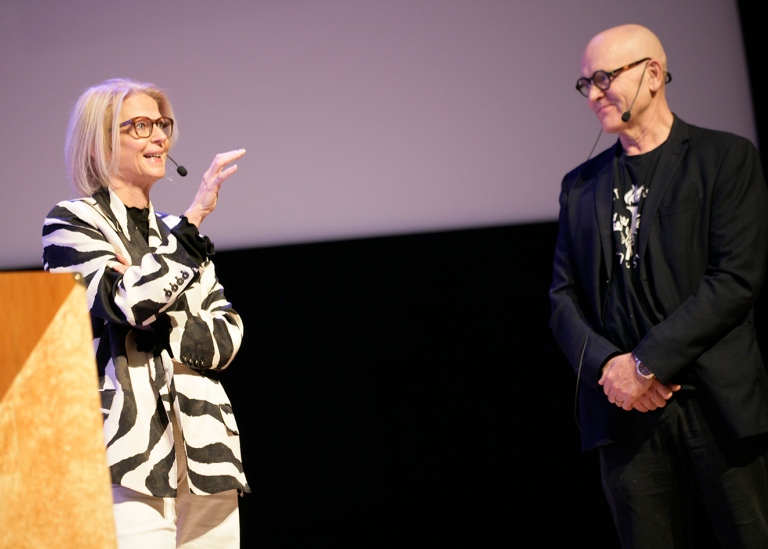
John Hassler, Professor of Economics at Stockholm University, acted as moderator for the session. Photo: Mårten Larsson/Stockholms universitet
Prosperity and national defense
Svantesson drew parallels between today’s challenges and Sweden’s development in the 20th century.
”My grandmother was born in 1892, when Sweden was one of Europe’s poorest countries. We built prosperity through strong institutions, a vibrant civil society, and competitive businesses. We can do it again,” she said, while acknowledging that crime and war create new demands for fiscal policy.
She also highlighted the country’s security concerns, including the war in Ukraine and Sweden’s NATO membership. The government is allocating billions of Swedish kronor to defense.
”We are investing heavily to ensure Sweden remains a safe country.”
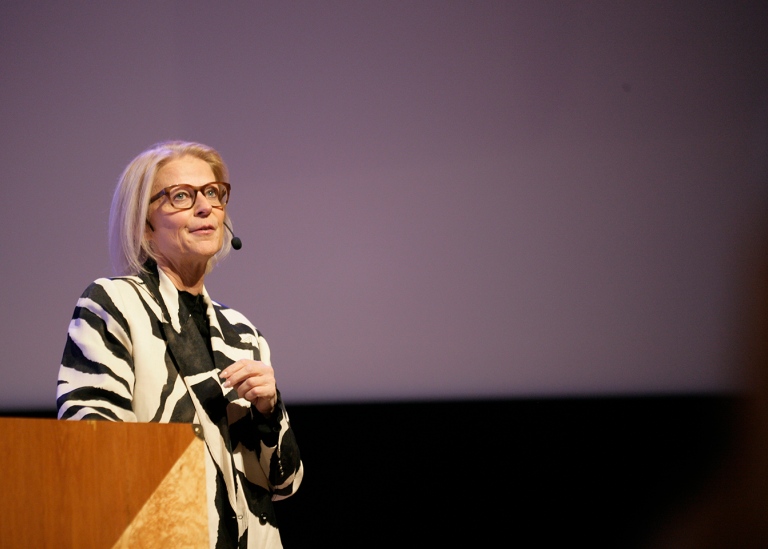
Photo: Mårten Larsson/Stockholms universitet
Student questions
Among those attending was Karl Walentin, a professor at Uppsala University, who criticized some of the reforms as expensive and not grounded in conventional economic theory. He also noted that, under normal circumstances, it is the Riksbank – not the government – that is responsible for stabilizing the economy.
Students asked about food VAT, the global situation, and the challenging housing market for young people. Svantesson said the government is working on a support program to make it easier for young people to access housing, and to restart construction, including by streamlining the building permit process.
Svantesson presents the Budget in 5 minuter
Last updated: 2025-09-25
Source: Department of Economics