


DSV continues to attract master students
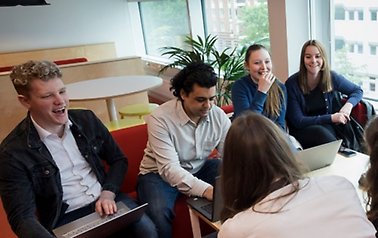
Master’s programmes at DSV were very popular for the 2024 intake.
Department of Computer and Systems Sciences
Master’s programmes at DSV were very popular for the 2024 intake.
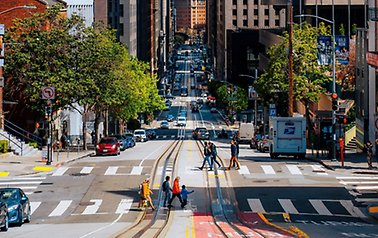
Stopping dead seems to be a default setting when driverless cars encounter a problem. This can cause chaos on roads, writes professor Barry Brown in The Conversation.
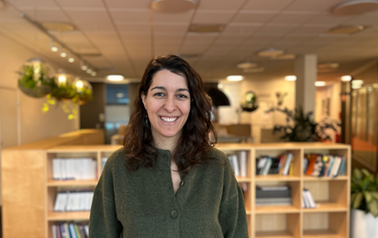
In the fast development of technology, DSV has together with the Department of Statistics, developed a new master’s programme, aiming to meet the demand for future data scientists. This program takes a new approach by combining three subjects: data science, statistics and decision analysis. Ioanna Miliou, one of the programme coordinators and creators, talks about the inspiration for the courses’ design, its structure and the thoughts behind the programme.
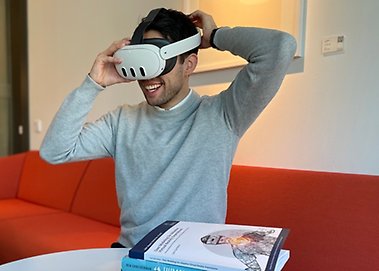
Sweating, facial expressions and increased heart rate. Our bodies send signals about our emotions – signals that can be picked up by sensors. The input can then be used to design our next workout, meal or learning experience. Luis Quintero’s research provides a sneak peek into the future.
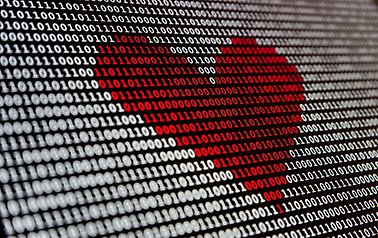
Data is available in abundance. However, to utilize this raw material we need to sort it so that patterns and trends become visible. Zed Lee develops algorithms that are useful for industry as well as healthcare.
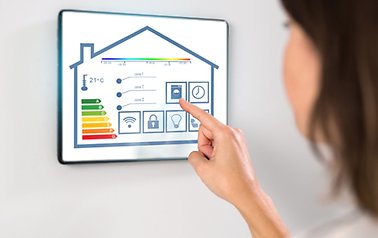
How many connected devices are there in the world? No one knows for sure, but according to a forecast, we might reach 50 billion in a couple of years. This means that enormous amounts of data have to be generated, managed and stored. Today’s cloud solutions won’t be enough, argues Ramin Firouzi.

His research interests are enterprise architecture and threat modelling, and he was recently promoted to associate professor. Meet Simon Hacks, whose next project involves optimising maritime transports.

From “9 to 5” to “open 24/7”. With smartphones and other technical devices, we are always connected. How does that affect the balance between work and other parts of life?
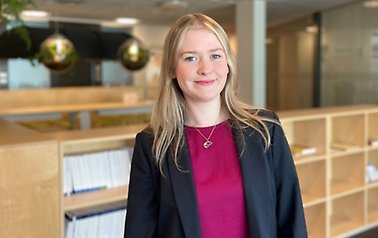
Katie Berns successfully defended her PhD thesis on September 22, 2023, at the Department of Computer and Systems Sciences (DSV). What has her PhD journey been like, and what will she do now? We decided to ask her.
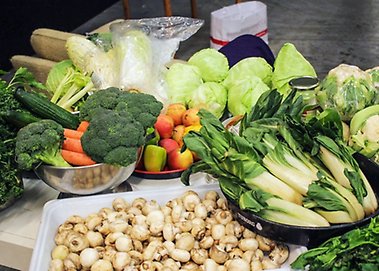
Digital technology that makes it easy for businesses, individuals and volunteers to reach each other plays an important role in the success of today's voluntary organisations. This is shown by a new thesis in computer and systems science from Stockholm University, where work to reduce food waste is in focus.
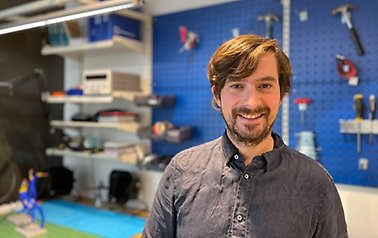
Jordi Solsona Belenguer views himself more as an enabler rather than as a teacher. He is however main teacher, as well as programme coordinator, for the Master's Programme in Design for Creative and Immersive Technology – a two-year master at the Department of Computer and Systems Sciences, DSV. Earlier this year he was awarded “Teacher of the year”. The programme is multidisciplinary and orientates around immersive technologies, such as interaction technologies and human-computer interaction. “Theory of immersion and extended reality are not just about VR glasses. Books, for example, are also immersive”, says Jordi Solsona Belenguer.
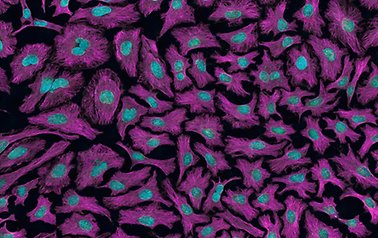
AI technology is breaking new ground in all areas, not least in medicine. What can we expect in a near and distant future? PhD students and supervisors from five countries gathered at Stockholm University to discuss their projects and learn from each other.