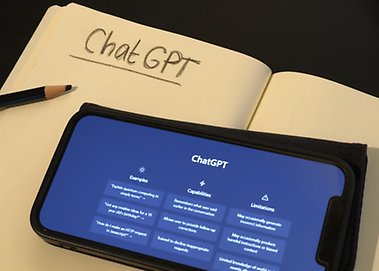
In a new study university teachers blindly assessed student and ChatGPT-written responses to home examination questions. The findings show that ChatGPT texts achieved a high passing grade and that teachers were more critical when grading student-written texts.
The Swedish tax agency is a rare success story when it comes to digital transformation in the public sector. Most attempts fail, says Gideon Mekonnen Jonathan. Organizational culture is often the reason for failure.
Work related stress can have a negative impact on our wellbeing. Could an ICT-based tool help us cope with stressful workdays? Manoja Weerasekara has explored the topic in her PhD thesis.
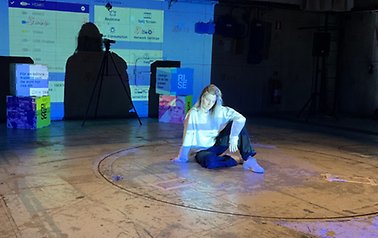
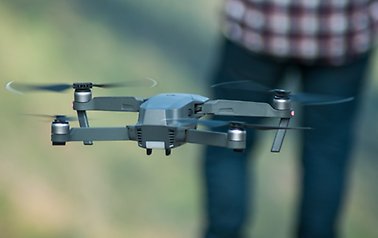
How can humans and flying drones interact in aesthetic ways? The topic was explored in the Second Drone Arena Challenge. A DSV student team won third prize and was the favourite of the audience.
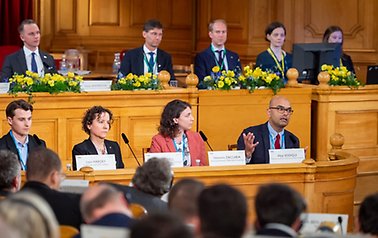
New tech solutions will not solve all our energy problems. To become more sustainable, most of us need to change our lifestyles too. Professor Afzal Siddiqui was very clear when he delivered this message to members of the European parliament.
One best paper award and three honorable mentions. DSV proved its strong position in the Human–Computer Interaction research field at this year’s CHI conference in Germany.
We’ve had our head in the cloud for some years, but now there’s a shift towards living on the edge. Bringing computing power closer to data sources will allow for smarter applications.
Increasing environmental sustainability is on top of agendas around the world. Mohamed Sapraz has designed a digital platform to help citizens and government officials communicate around environmental sustainability.
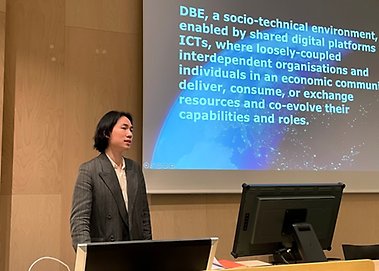
Modern, knowledge-intensive organisations are entangled in sophisticated networks of suppliers, competitors, customers and other actors. These ecosystems are the focus of Daniel Chen Hsi Tsai’s research interest.
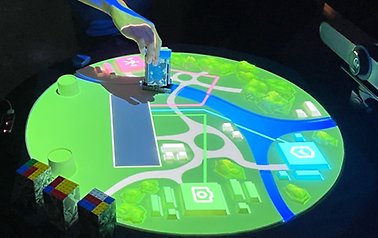
By merging virtual and physical on an interactive display, students at DSV have created a mixed reality tabletop experience. The project has been guided by the concept “ease of use”. We took the opportunity to pose a few questions to Erik Lopez, Hoda Ismail, Sharad Poudel, Stella Millwood and Leo Nordén. They are all final year students in the Master’s programme in Design for Creative and Immersive Technology and have spent the past months working together as a project team. What was your assignment in this course? “Firstly, we were required to develop an interactive prototype by applying concepts of design processes, focussing on knowledge that we gained throughout the programme. Secondly, we were assigned to collaborate with external stakeholders. We have been working with Adrià Cruz, XR designer and developer at Ericsson. He has supervised and contributed with key design guidelines for the project. And lastly, we generated empirical knowledge through data collection and analysis to write a paper.”
Cyber threats and cybersecurity have been in focus more than ever lately, intensified by the war in Ukraine. European experts are coming to Stockholm University to discuss this urgent matter.
Aron Henriksson, researcher and teacher at the Department of Computer and Systems Sciences (DSV), has been promoted to associate professor. His research is in natural language processing, and has important implications for healthcare.