Baltic meetup at Stockholm University
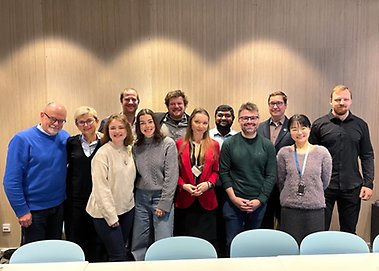
How do we build smart and sustainable cities? This was one of the topics on the agenda when partners from Poland, Estonia, Finland and Sweden met up for a workshop in Stockholm.

How do we build smart and sustainable cities? This was one of the topics on the agenda when partners from Poland, Estonia, Finland and Sweden met up for a workshop in Stockholm.

When health care providers meet patients, communication is key. If the nurse doesn’t ask relevant questions, important information may be left out which could lead to the wrong diagnosis and treatment. Virtual patients are here to help with clinical reasoning.

Academia and industry are often seen as two different spheres. In his PhD thesis, Kazi Masum Sadique has taken the best from both worlds and explored decentralized IoT in practice.

Researchers from Stockholm University, in collaboration with experts from India and Italy, are working to establish comprehensive guidelines for deployment of AI in healthcare. These guidelines aim to inform and support the development of new healthcare legislation in India.

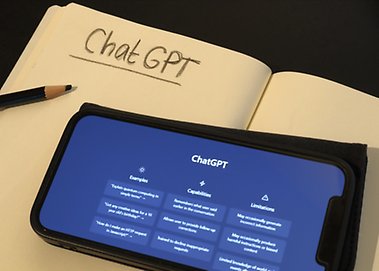
The new study is a crucial step in consolidating knowledge about AI in education and in particular AI chatbots, urging caution against overly optimistic or pessimistic views, and calling for more grounded research approaches to better understand the true impact of AI chatbots in the classroom and on teaching and learning practices.

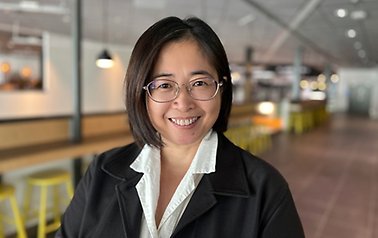
AI should be inclusive, ethical and beneficial for all. This is not the case today, but Shengnan Han is working towards this goal. Meet the most recently appointed professor at the Department of Computer and Systems Sciences (DSV).

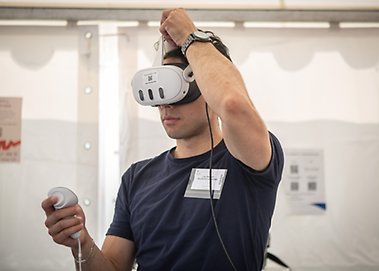
The purpose of Järvaveckan is to bridge the gap between citizens, politicians, civil society, business leaders and governing bodies. The Department of Computer and Systems Sciences (DSV) was one of 375 participating organisations in 2024. We had a quick chat with DSV researcher Luis Quintero who planned and participated in the event.

In order to advance intelligent data analysis, there is a need for novel and potentially game-changing ideas. This assumption is the foundation for the IDA symposium which in 2024 was organised at Stockholm University. Explainable AI was one of the important themes.

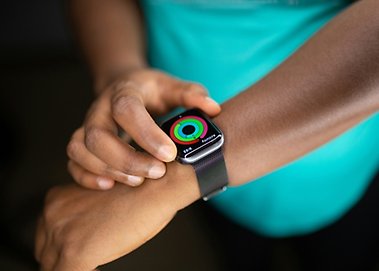
A new wave of wearable devices will collect a mountain of information on us. And there are privacy implications, writes Luis Quintero in The Conversation.

Complicated datasets which contain many different features are challenging to work with. A new PhD thesis explores how the challenge of dimensionality can be tackled.

What is quantum computing and how can it be used? This emerging technology shows a lot of potential. A new course developed at DSV gives you a head start.

AI in healthcare is a promising – and challenging – field. Analysing massive amounts of multimodal patient data could result in better treatments. But first, medical doctors need to trust the models.