In a new dissertation from the Departement of Law, Stockholm University, Dr Monica Seifert investigates and compares how the legal systems of three distinguished international arbitration jurisdictions have addressed the problem of arbitral jurisdiction in multi-contract relations.
Anna Jörngården, Associate Professor of Comparative Literature, has written a chapter in the new book Literary Landscapes of Time: Multiple Temporalities and Spaces in Latin American and Caribbean Literatures (De Gruyter).
Previous studies have shown that widows and widowers run a higher risk of dying themselves, compared to those of the same age whose partner is still alive. This is often referred to as the ‘widowhood effect’. A new thesis from Stockholm University shows that excess mortality is higher among widowers with a higher socio-economic status compared to other widowers. For widows, it is the other way around – the risk of dying is greater among those who are worse off.
In contrast to what many believe, Swedish men and women with higher incomes have more children, new research from Stockholm University shows. This pattern is particularly clear for men and grows stronger over time: the more money, the more children. But after four children, things change.
Aron Henriksson, researcher and teacher at the Department of Computer and Systems Sciences (DSV), has been promoted to associate professor. His research is in natural language processing, and has important implications for healthcare.
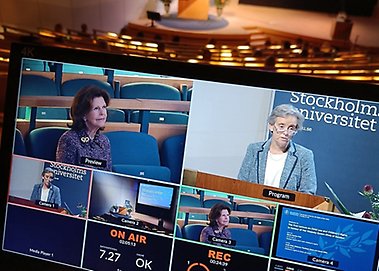
Stockholm University's first Lecture on Child Law and Children's Rights in honour of HM Queen Silvia took place on 21 November 2022, featuring the internationally recognised-expert in children's rights, Marta Santos Pais.
Will a better understanding of families lead to improved welfare states? That’s the hope of a big new research project in six European countries, coordinated by sociologist Rense Nieuwenhuis at Stockholm University.
Cross-disciplinary research can lead to new types of solutions to societal problems. Nanda Wijermans is up for the challenge. With a strong background in human behaviour and sustainability, she is now looking forward to collaborate with new colleagues in computer and systems sciences.
Machine learning can support clinicians, for example in recommending treatments. But what does it take for a doctor to trust a computer? Jonathan Rebane has deep dived into this topic and successfully defended his PhD thesis.
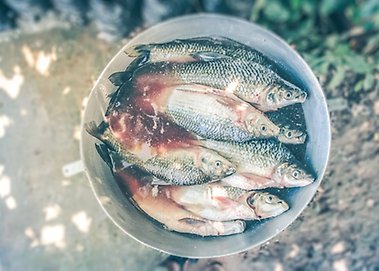
The Baltic Sea suffers from serious oxygen deficiency. Even large inflows of oxygen-rich seawater have in recent decades only provided short-term relief from oxygen deficiency in the deep water. In the latest issue of Ambio, a new method for quantifying the total oxygen debt from Öresund to Åland is presented. By using existing data dating back to the 1960s, the researchers show that we have gone from a supply of about 10 million tons of oxygen in the deep water to a net oxygen supply close to zero, with an oxygen debt of up to 4 million tons caused by accumulated hydrogen sulfide and ammonium. In the last 20 years, the oxygen debt has also spread to near-halocline waters west of Gotland. The extent of so-called dead bottoms in the Baltic Sea is one of the largest in the world, with an area almost twice that of Denmark. Virtually all water below the halocline, i.e. deeper than 60–80 meters, is now deficient in oxygen and hard or impossible for animals to live in. – The main cause of the lack of oxygen is eutrophication, says Carl Rolff, researcher at the Baltic Sea Centre and lead author of the article. The supply of nutrients from agriculture and sewage increased sharply until the 1980s. Since then, powerful measures from countries around the Baltic Sea have reduced the supply of the nutrients phosphorus and nitrogen by approximately half and a third, respectively. This has, however, not yet produced visible results in the form of reduced oxygen deficiency. A two-edged sword
What can we learn from makers and the global maker movement? Quite a lot, according to a new PhD thesis. Makers can help us see opportunities in new technology, be more playful – and mindful of resources.
Preparatory meeting with Stockholm Univesity's research delegation at the Nordic Institute of Latin American Studies (NILAS), October 26, 2022 On November 7-11, 2022, the Universidad de Magallanes, Punta Arenas, Chile hosts the third research week within the framework of the ACCESS collaboration, Academic Cooperation Chile Sweden. Two-hundred-fifty participants from Swedish and Chilean universities, embassies and research institutes gather to discuss possible collaborative projects in education, research and innovation. More information www.accesschilesweden.org To prepare Stockholm University's research delegation for the conference, Nordic Institute of Latin American Studies (NILAS) invited them to a meeting followed by a reception at the Chilean embassy. Ten university researchers from widely different fields such as criminology, microbiology, international economics, economic history and subject didactics will participate in various working groups, all of which are connected to the global sustainability goals.