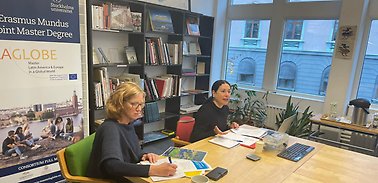
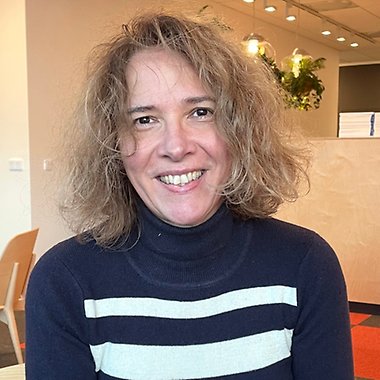
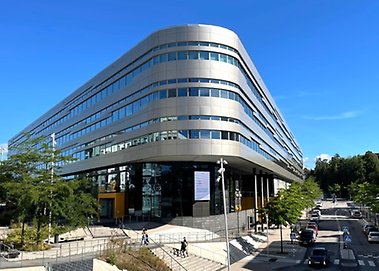
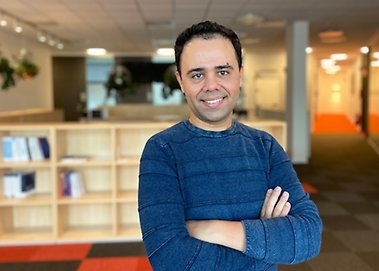
During this meeting SIDA presented its structure and work areas and NILAS’ staff and affiliated researchers presented their ongoing research projects on Latin America The SIDA-NILAS workshop took place at the library of the Nordic Institute of Latin American Studies . The Agency’s activities towards Latin America and the Institute’s activities were presented. Other discussion topics were the common denominators and possible synergies between cooperation activities and research on Latin America. During the second part of the day, SIDA’s Latin America unit held its internal planning meeting at NILAS’ library .
The digital transformation brings great opportunities – and equally big challenges. To tackle problems and design our future digital society, we need to combine knowledge and experiences from different stakeholders. This is exactly what happened on October 19–20, 2022 at Stockholm University. Digital twins, 6G, crypto wars, integrity, hybrid architectures and fairness. The yearly conference Digitalize in Stockholm included a wide array of topics and perspectives. First up was Swiss professor Aude Billard. In her keynote, she presented results from crash tests between cobots – collaborative robots, designed to interact with humans – and people in a crowd. The cobots did not perform well at a fair when faced with irrational humans who stopped to say hello to friends, or made a rapid turn.
The digital transformation affects us as individuals and societies, all over the world. What research, development and innovation will guide the way to our digital future? And how digital do we want to be? These questions will be discussed October 19–20 at Stockholm University.
Amin Jalali was promoted to associate professor at the Department of Computer and Systems Sciences (DSV) on August 15, 2022. We had a quick chat to hear what he’s up to next.
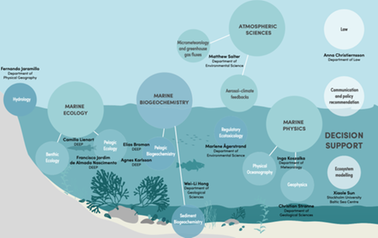
A progress report for the strategic research area funding to marine research at Stockholm University is now published. The report concludes that the research group Baltic Sea Fellows, which is financed by the strategic funding, has published 200+ publications and managed to double the funding with external grants.
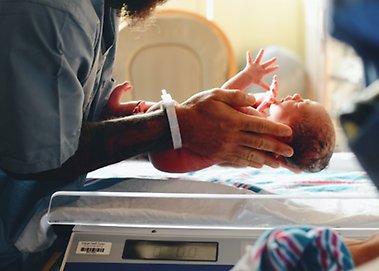
In a new study, the researchers found large birthweight inequalities among the descendants of non-western immigrants compared to the descendants of Swedes. The largest differences were found in the third generation. The researchers warn inequalities may continue to widen in subsequent generations.
In a new study from Stockholm University and several US universities, the researchers found that children in the US aged 9-13 from different social classes spent roughly the same number of hours in front of a screen, on average. However, there were class differences in how the children spent their screen time and in parenting rules related to digital technology use. In the era when TV watching predominated children’s technology use, pediatricians advised parents to limit children’s TV time since research suggested it could impede their development. Previous research has shown that parents from higher socioeconomic groups were more likely to follow these expert recommendations than were parents from lower socioeconomic groups. Despite the dramatic change in the digital landscape and the nature of technology use over the last decade, the American Academy of Pediatrics still recommended one to two hours of screen time per day at the time the new study was initiated in 2014, at the same time as schools were sending tablets and computers to the homes for children to do their homework on them. Stefanie Möllborn, researcher in sociological demography at Stockholm University, decided to explore this further together with colleagues at University of Colorado Boulder, Midwestern State University and University of Michigan. “So, in this situation where the medical advice is still old school but digital technology has changed so fast – what is happening around social class? I think one of the most important results in our study is that there is not a substantial class difference regarding time on screens anymore in the United States”, says Stefanie Möllborn, first author of the new study that was recently published in Journal of Marriage and Family .
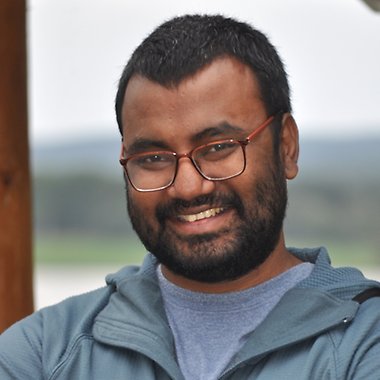
Mahbub Ul Alam, PhD student at the Department of Computer and Systems Sciences, DSV, at Stockholm University, participated in an international conference in July. The paper he presented was awarded for being one of this year’s best student papers.
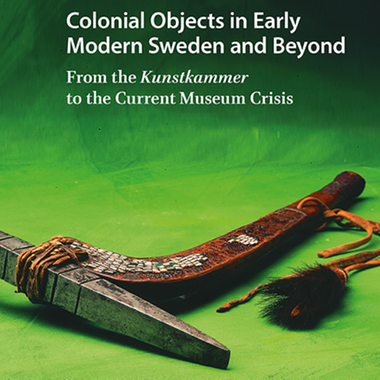
Mårten Snickare, Professor of Art History at Stockholm University, has written about objects acquired in colonial contact zones and displayed by Swedish elites in the seventeenth century.
Formas funding to create a deeper understanding of climate change in the Arctic. Director of Tarfala Research Station (TRS), Nina Kirchner have together with interim operative station manager Annika Granebeck recently received 1,778,966 SEK from Formas. The project will make research conducted at TRS more available for non-scholars and create a deeper understanding of climate change in the Arctic.