The project is Towards high-performance zero-cobalt cathode materials of Li-ion batteries for energy storage applications (ZCOCA) and he will spend some time at UC Irvine. For further info please visit FORMAS site (Swedish only) https://formas.se/arkiv/alla-utlysningar/utlysningar/2022-03-31-mobilitetsstod-for-forskare-tidigt-i-karriaren.html
Congratulations to Elisabetta Nocerino, Post doc fellow in the Bergström group on being awarded the Young Scientist Prize of the Swiss Neutron Science Society for the outstanding scientific achievements for her PhD thesis!
Tore Bengtsson and his group at the Department of Molecular Biosciences, The Wenner-Gren Institute, have been awarded a SEK 2 million grant from Diabetes Wellness Sverige for their research on a new treatment of type 2 diabetes. The grant is awarded the project "Novel selectively targeted stimulation of the β2-adrenoceptor for the treatment of type 2 diabetes", in which Tore Bengtsson and his group introduce a new way for the body to control its blood sugar levels. The novel method helps the body to lower its blood sugar levels by stimulating a cellular receptor called the β2-adrenoceptor (β2-AR) in a new way. This has the potential to lead to the development of new drugs, and to revolutionize how doctors treat diabetes. Read more (in Swedish)
In the latest issue of the journal Nature, astronomers from Stockholm University reveal the origin of a thermonuclear supernova explosion. Strong emission lines of helium and the first detection of such a supernova in radio waves show that the exploding white dwarf star had a helium-rich companion.
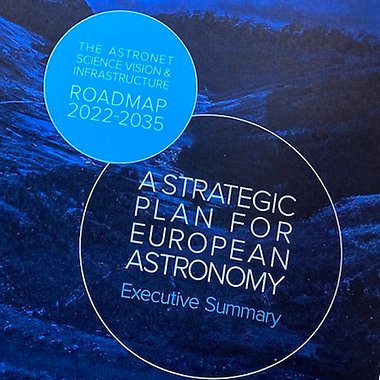
A new report by an international consortium of leading astronomers sets out recommendations to transform our understanding of the Universe in the next decade. Astronomers from Stockholm were involved in writing this report.
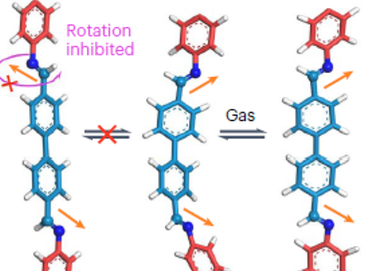
Developing technologies that can capture greenhouse gases is crucial to address the urgent challenge of climate change. These technologies can significantly reduce greenhouse gas emissions from various sources, including power plants, industrial processes, and transportation, and mitigate the negative effects of climate change. Given the urgency of the climate crisis, it is essential to prioritize the development and deployment of these technologies to ensure a livable planet for future generations.
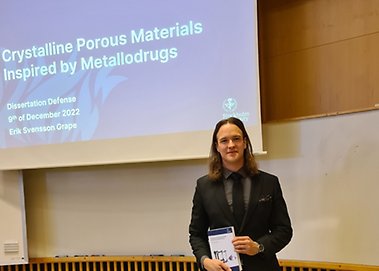
Congratulations to Erik Svensson Grape who won the 2022 “Högskoleföreningens pris” in natural sciences for outstanding scientific achievement for his doctoral thesis!
Water pollution from industry, agriculture and cities puts pressure on both humans and the environment. Monitoring water quality, using lab-on-a-chip and citizen science may be a new way of safeguarding our water supply and is also the scope of this new project from professor Nicole Pamme’s group within the WISE collaboration.
Dirk Gindt, Professor of Theatre Studies at Stockholm University, presents new research on The Church of Sweden’s Performative Apology to the Sámi People from 2021. The article is published in the journal Scandinavian-Canadian Studies/Études Scandinaves au Canada and is available in open access online. Grounded in performance theories and Indigenous methodologies, this essay focuses on the 2021 solemn service in Uppsala Cathedral, when the Church of Sweden apologized for its historical complicity in the colonization of Sápmi. The essay discusses key rhetorical features of the Archbishop’s apology and analyses how the service incorporated Sámi visual, material, oral, and performance cultures. Of specific interest are five Sámi testimonies about settler colonialism and artist Anders Sunna’s redesign of the sanctuary. To tease out the contextual specificities (and limitations) of the apology and situate it as part of unfolding decolonial processes across the circumpolar North, the essay draws selective comparisons to Canada’s Truth and Reconciliation Commission and former Prime Minister Stephen Harper’s 2008 formal apology to First Nations, Inuit, and Métis Peoples. The article at Scandinavian-Canadian Studies/Études Scandinaves au Canada About Dirk Gindt
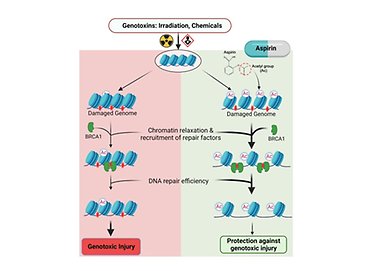
Acetylsalicylic acid (aspirin) is arguably the oldest drug in the history of medicine. In a study published in Cell Research, researchers at Stockholm University and the University Medical Center Freiburg, have identified a new mechanism of aspirin. They show that aspirin promotes genome repair and can protect mice and cells against the toxic effects of irradiation and mutagenic chemicals. This new mechanism may help explain many of the health benefits of aspirin including cancer prevention. Genotoxic injury due to irradiation or chemical mutagens is a major health concern. The search for agents to protect against radiation has been on for almost a century, since the devastation witnessed following the nuclear detonations during the Second World War and has continued through the subsequent radiological accidents around the world. A radioprotector is also required for prophylactic use by staff working at radiation sources, pilots, and astronauts at high risk of space radiation or patients undertaking lengthy radiological procedures. Despite decades of research, a safe, efficient, and cost-effective radioprotector is yet to be unveiled. Acetylsalicylic acid (aspirin) is probably the oldest drug in the history of medicine and has been used for over 4000 years for the treatment of pain, inflammation, fever, and more recently for cardiovascular prophylaxis and cancer prevention. “Bone marrow failure is the major cause of suffering and death upon exposure to irradiation. Inflammation is a key outcome and driver of irradiation-induced tissue injury. Given the well-established anti-inflammatory effects of aspirin, we inquired if aspirin could protect against irradiation. Indeed, when we administered it into mice, we found that aspirin could protect mice against irradiation-induced bone marrow ablation and extended their survival. We also found that aspirin could protect mice defective in several inflammatory pathways against irradiation-induced bone marrow suppression. This led us to conclude that radioprotection by aspirin was uncoupled from its anti-inflammatory effects” explains Patrycja Swacha, a graduate student at Stockholm University and a co-author of the study. “The discovery that aspirin, a safe, affordable and readily accessible drug is a potent radioprotector is a significant development with the potential to change the quality of life of those at high risk of radiation exposure or patients undergoing prolonged radio/chemotherapy“ Double-stranded DNA breaks are the most deleterious outcomes of irradiation. Upon further investigation, the authors found that following irradiation or exposure to DNA damage inducing anti-cancer chemotherapy drugs, cells treated with aspirin repair DNA breaks faster. How does the aspirin promote the repair of the genome? The estimated length of DNA in a single mammalian cell is about 2 meters. In order to fit inside the nucleus of an average size of 6 µm, DNA does not exist as free linear strands but is wrapped around nucleosomes – complexes of histones. Nucleosomes in turn interact with each other and in a compacted manner to form chromatin. When the genome incurs damage, the chromatin undergoes relaxation to allow the recruitment of DNA repair factors to the damage sites. Histone acetylation - the conjugation of acetyl group onto lysine amino acid residues on histones is a key regulator of chromatin structure and repair. Acetylation of histone H4 at lysine K16 (Ac-H4K16) is vital for decreasing the nucleosome–nucleosome stacking and chromatin folding, to permit the recruitment of repair proteins. The authors showed that by virtue its acetyl-donating potential, aspirin induced H4K16 acetylation thereby causing chromatin relaxation and recruitment of DNA repair proteins to the damaged sites (schematically illustrated in Figure 1 ).
The BIO-Lush consortium led by professor Aji Mathew from MMK/SUCCeSS has been awarded almost 5 M€ in funding from the EU-call Circular Bio-based Europe (CBE). The four-year project is planned to start in 2023 and will address a growing need to utilize biomass for sustainable and high-quality fibre extraction.