Let's have a chat about ChatGPT:
Research projectA study of how private actors and chatbots are challenging the role of universities and (perhaps) influencing how we understand professional boundaries
Discover the research at Stockholm University through our pages for research subjects, projects and research groups!
They also lead you to our researchers profile pages, our departments and courses and programmes.
Showing 1401-1420 of 2793 results
A study of how private actors and chatbots are challenging the role of universities and (perhaps) influencing how we understand professional boundaries
This project investigates interpersonal psychotherapeutic interactions and their effect on treatment outcomes using AI and time series analysis.

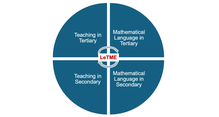
How does one learn mathematics language? LeTME researches mathematical language in relation to transitions between different levels in the school system.
Research at the Level of Living-unit includes studies of individuals' living conditions, social stratification and economic and social inequality. Here we study what living conditions in society look like today for both adults and children, and how the standard of living in society has changed over time and between generations.
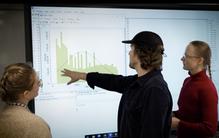
By level of living research is meant theoretically grounded empirical studies of individuals’ living conditions, where living conditions are measured by micro-level indicators (data on individuals).

In a context of political backlash, climate crisis, and economic instability, LGBTQI+ young people are coming of age - navigating and plan for their futures, despite persistent inequalities in wellbeing. This cross-national European research project is exploring how queer youth navigate these multiple forms of crisis, build resilience, and envision collective futures.
PhD Research Project about the right to compensation and liability for damages caused by processing of personal data.
In the present study, we unpack the values and calculations (necropolitics) on which pest controllers and hunters rely when they cull undesirable animals in urban and rural geographies respectively.
Life course criminology is a collective concept that captures a research tradition that in the broadest sense is about studying individuals' lives over time.

Identification of the risk factors that predict early signs of Alzheimer's disease and related dementia and the underlying mechanisms may lead to the identification and development of effective personalized preventive strategies that can protect against cognitive dysfunction.
Applying a life-course perspective to health involves the recognition that living conditions during earlier stages of life - or even in earlier generations - matters for the development of health and well-being at both the individual and population levels.

Researchers within life-long learning, knowledge acquisition, and the development of civil society are interested in learning as a life-long process, which is not exclusive to formal education.

Today, AI is repeatedly presented as a technology that will change learning and work in the future. A parallel discourse is that individuals will need to adapt to such a future by educating themselves. But what exactly are we supposed to learn in the ‘fourth education revolution’?

In the project we explore medical doctors' learning in the clinical practice, both regarding their medical, pedagogical and administrative learning.
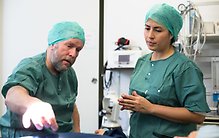
Are older adults dependent on a good relationship for their health and well-being? What are the correlations between health and well-being, economic hardship and gender equality among older adults living in relationships in Sweden?

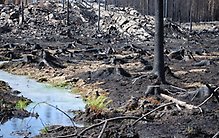
Forest loss is a global crisis. In Sweden, diverse old growth forests are replaced by clearcuts and vulnerable monocultures. Everyday experience of life with local forest loss is increasing, but is critically understudied.
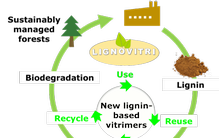
Fundamental science and explorative applied research will be combined in the SUSLIG project to pave the way for new lignin-based materials. The produced material prototypes will be scalable and net positive to the environment, building on interdisciplinary materials chemistry and the principles of green chemistry and engineering.
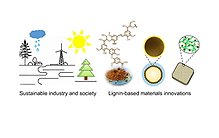
The overreaching hypothesis for the project LignoLife: Lignin or its purified fractions can be added to the microbial growth media to fabricate a new class of hybrid living materials with tailorable properties and stimuli-responsive functionality triggered by lignin and displayed by the microbial system.
The project will contribute to resource-efficient use of lignin and lay the foundation for lignin-based recyclable resins and composite materials.