Research catalogue

Discover the research at Stockholm University through our pages for research subjects, projects and research groups!

They also lead you to our researchers profile pages, our departments and courses and programmes.

Refine
Research type

Research type

Status

Research areas

Research areas

Departments

Departments

Showing 101-120 of 2793 results

  • An Evaluation of Higher Vocational Education

    Research project

    This project aims to provide the first comprehensive economics evaluation of Higher Vocational Education (Yrkeshögskolan). Four separate studies test if HVE influences participant’s labor earnings, participant’s likelihood of employment, occupational or geographical mobility, and the marginal participant’s labor earnings.
  • A new epoch for applied stellar spectroscopy

    Research project

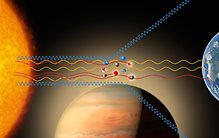
    The spectral signatures of stars offer a roadmap to cosmic nature and history. In recent years, stellar spectroscopy has seen revolutionary progress both on the modelling and theory side. In this project, we build upon the advances to address astrophysical problems with novel techniques.

  • A new era for the Swedish labour law model

    Research project

    Research project exploring how the collaboration between the government, employers, and unions shapes labor dynamics and adapts to modern challenges.

  • A new tool in spectral geometry

    Research project

    The aim of this project is to understand extremal properties of eigenfunctions of certain differential operators in mathematical physics.

  • Anger Management: Neuronal Network Organization, Plasticity and Sex-Specificity in Aggression

    Research project

    No man (or woman) is an island. We cooperate, we fight, we make friends and we raise our young; all selected from a repertoire of social behaviours that afford us opportunities for learning, access to food and possibilities to reproduce. To understand how social behavior is organized constitutes a critical step towards understanding ourselves.

  • Animal Behaviour

    Research subject

    Animal behaviour is the study of how and why animals act the way they do. By examining behaviour in both natural and experimental settings, researchers uncover how behaviour evolves and is shaped ecological and evolutionary processes.

  • Animal Conservation

    Research subject

    Animal conservation studies populations to understand the causes of decline, erosion of genetic diversity and adaptive capacity, and extinction risk, generating knowledge that supports the long-term persistence and evolution of species.

  • Animal Ecology

    Research subject

    Animal ecologists study how animals interact with other organisms and their environment, aiming to understand how these interactions influence evolutionary change as well as the distribution and abundance of species.

  • Animal Evolution

    Research subject

    Animal evolution investigates the origins, diversification, and adaptation of animals across geological time, linking genomic mechanisms to macroevolutionary patterns across the tree of life.

  • Animal Genomics

    Research subject

    Animal genomics explores the genetic blueprints of life. Researchers use population, comparative, and functional tools to study how DNA drives biodiversity and evolution, investigating genetic variation both within and across species.

  • Animal Palaeobiology

    Research subject

    Recovering animal genomes from fossils and museum specimens makes it possible to reconstruct the evolutionary history of animals, and thus to investigate how climate change, hybridization and natural selection have shaped biodiversity through time.

  • Animal rights organizations as activist entrepreneurs

    Research project
  • An inclusive and sustainable Swedish labour law – the way ahead

    Research project

    The Swedish labour law model with its characteristics – an extremely high collective agreement coverage without government intervention and independent trade unions and employers’ organizations – has been well suited to handle rapid development and change. The model has long delivered both economic growth and good employment conditions.

  • An integrated in vitro and in silico test strategy for estimation of developmental neurotoxicity

    Research project

    The objective of this project is to map modes of action for developmental neurotoxicity (DNT) by using human neuroblastoma SH-SY5Y and mouse neural progenitor C17.2 cell lines, with the aim to establish non-animal methods as alternatives to regulatory test guidelines.

  • An Integrated View on Coupled Aerosol-Cloud Interactions (INTEGRATE)

    Research project

    Despite their abundance in the Earth’s atmosphere, cloud formation and evolution are still poorly understood. This is particularly true for the interactions clouds have with atmospheric aerosol particles and their precursor vapors, which hampers our knowledge on the role that clouds and precipitation play in the climate system and in governing air quality.

  • Anna Forsby's research group

    Research group

    The main interest our research group is the study mechanisms for chemically induced acute, developmental neurotoxicity by using neuronal cell models. The usefulness of the cell models for risk assessment is evaluated by integrating in vitro data from the cell models with in vivo data from rat and clinical observations from human in predictions models.

  • Anna-Lena Ström's research group

    Research group

    Neurodegenerative diseases like Amyotrophic lateral sclerosis (ALS), Alzheimer’s and polyglutamine diseases are characterized by the gradual loss of neurons in the central nervous system (CNS). While these disorders are distinct in their clinical manifestations, they share pathological hallmarks like protein misfolding, aggregation and oxidative stress.

  • Anna vs. Judith: Comparing AI-Delivered PDT and CBT for Social Anxiety

    Research project

    The Anna vs. Judith project explores whether AI chatbots can effectively deliver evidence-based therapy for social anxiety. By comparing psychodynamic and cognitive behavioral approaches in a smartphone format, we are investigating the future of accessible psychological treatment.

  • Anneli Kruve group

    Research group

    We use modelling and machine learning to understand ionization processes in electrospray (ESI) and developing semi-quantitative non-targeted analysis methodology.

  • A non-canonical role of POU/Oct proteins in regulation of mitosis, proliferation and cancer.

    Research project

    POU/Oct transcription factors are frequently implicated in cancer, yet the mechanisms by which they promote tumor cell proliferation remain incompletely understood.