Research project Anna vs. Judith: Comparing AI-Delivered PDT and CBT for Social Anxiety
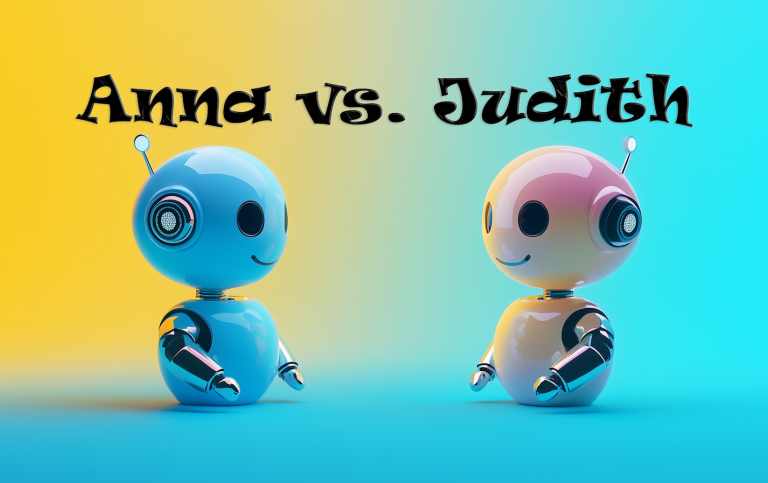
The Anna vs. Judith project explores whether AI chatbots can effectively deliver evidence-based therapy for social anxiety. By comparing psychodynamic and cognitive behavioral approaches in a smartphone format, we are investigating the future of accessible psychological treatment.
Midjourney prompt: Two very different chat bots in a friendly competition about psychotherapy.

Midjourney prompt: Two very different chat bots in a friendly competition about psychotherapy.

The STePS project at Stockholm University is taking a bold step into the future of psychiatry by developing and evaluating two AI chatbots for treating social anxiety. The project builds on previous promising results from internet-based treatment studies, but now moves therapy to users' smartphones with the support of artificial intelligence.

The two digital therapists – Anna who delivers psychodynamic therapy (PDT) and Judith who offers cognitive behavioral therapy (CBT) – are named after children of what are often considered the founding fathers of these therapeutic orientations. Both chatbots are trained on evidence-based treatment protocols that have previously shown good results.

In this randomized controlled trial, 90 people with social anxiety are randomly assigned to one of three groups: AI-assisted CBT, AI-assisted PDT, or a waitlist control. Both active treatments have been condensed into four-week interventions where traditional therapist support has been replaced with AI assistance.

The study measures treatment effects through various validated questionnaires that track changes in social anxiety, depression, and general anxiety. Therapeutic alliance and patient satisfaction are also examined to understand how participants experience the interaction with the digital therapist.

If effective, these AI chatbots could democratize access to psychological treatment, make it independent of geographic and economic limitations, and potentially revolutionize how psychiatric care is delivered in the future.

Members

Internet Interventions, 45 – Hlynsson, J. I., Mechler, J., Lindqvist, K., Andersson, G., & Carlbring, P. (2026). Anna vs. Judith: A randomized comparison of AI-delivered psychodynamic and cognitive behavioral therapies for social anxiety disorder. Internet Interventions, 45, 100960.

Internet Interventions, 38 – Johnson, C., Egan, S. J., Carlbring, P., Shafran, R., & Wade, T. D. (2024). Artificial intelligence as a virtual coach in a cognitive behavioural intervention for perfectionism in young people: A randomised feasibility trial. Internet Interventions, 38, 100795.

Internet Interventions, 36 – Jain, G., Pareek, S., & Carlbring, P. (2024). Revealing the source: How awareness alters perceptions of AI and human-generated mental health responses. Internet Interventions, 36, 100745.

Internet Interventions, 35 – Egan, S. J., Johnson, C., Wade, T. D., Carlbring, P., Raghav, S., & Shafran, R. (2024). A pilot study of the perceptions and acceptability of guidance using artificial intelligence in internet cognitive behaviour therapy for perfectionism in young people. Internet Interventions, 35, 100711.

Internet Interventions, 32 – Carlbring, P., Hadjistavropoulos, H., Kleiboer, A., & Andersson, G. (2023). A new era in Internet interventions: The advent of Chat-GPT and AI-assisted therapist guidance. Internet Interventions, 32, 100621.

Journal of Technology in Behavioral Science – Lopes, E., Jain, G., Carlbring, P., & Pareek, S. (2023). Talking Mental Health: a Battle of Wits Between Humans and AI. Journal of Technology in Behavioral Science.