Research catalogue

Discover the research at Stockholm University through our pages for research subjects, projects and research groups!

They also lead you to our researchers profile pages, our departments and courses and programmes.

Refine
Research type

Research type

Status

Research areas

Research areas

Departments

Departments

Showing 1141-1160 of 2793 results

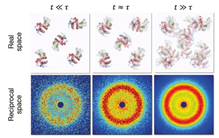
  • How do biomolecules behave in the cell’s cramped environment?

    Research project

    The inside of a cell is packed with proteins, RNA, and other biomolecules. Researchers have discovered that this crowding in the cell results in a kind of condensate of biomolecules, like small molecular droplets, which appear to be important for the cell’s function
  • How does meltwater affect marine microbial metabolic diversity, production and nutrient cycling?

    Research project

    - a study in the Central Arctic Ocean

  • How does the tax and benefit structure of the welfare state shape popular support for redistribution

    Research project

    Why is it more likely that people support redistribution in some countries than in others? This question has been studied extensively because a broad support for redistribution to a large extent explains governments’ welfare state efforts.

  • How do perceptions of the city inform neighbourhood selection and housing search?

    Research project

    A comparison of second-generation migrants and natives in Uppsala.

  • How do POU/Oct factors control wing development in insects?

    Research project

    The Drosophila POU2F orthologs nub and pdm2 are strongly expressed in the pouch of the larval wing imaginal disc where they promote wing development in a functionally redundant manner. Despite that the first nub mutant fly was isolated already in the 1940-ies, the molecular roles of Nub and Pdm2 during wing development and wing size remain largely unknown.

  • How families impact the life course of those who came to Sweden as refugees

    Research project

    This project examines the role of the family in the integration of refugees in Sweden.

  • How firms compete: business models and competition law in ecosystems and AI markets

    Research project

    This legal research project develops a systematic framework for analysing firms’ business models within competition law, with a particular focus on digital markets, platforms, and AI ecosystems.

  • How forests buffer climate extremes – the interplay between canopy and soil water

    Research project

    Forests are natural air conditioners: During hot and dry periods, they can cool the understory and all life below the canopy by shading the ground and evaporating water. However, this climate buffering capacity is under threat.

  • How have policies influenced changes in everyday life one year after the coronavirus outbreak?

    Research project

    How have policies influenced changes in everyday life one year after the coronavirus outbreak? Cross-national analysis of parents’ experiences with employment, work and care

  • How home prices reduce migration

    Research project

    When the town’s big industry starts to lay off workers and the local prospects worsen, why don’t pack up their lives, sell the house, and leave?

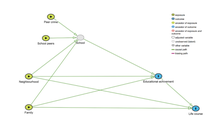
  • How neighbourhood, school and crime redirect the individual’s life course

    Research project

    This project investigates how spatial context, that is, neighbourhood, school, and crime rates in the environment, shapes young people's educational achievements and life course trajectories.

  • How norms shaped the City City Planning in Stockholm 1725-2020

    Research project

    The project is a book that shows how the local and national building codes and the different city planning laws from 1725 up until today shape the City of Stockholm with town-plans, decisions in the City Council and pictures.

  • How problematic are they? - Assessing the Toxicity of Airborne Nanoparticles from Airports and the Associated Health Risks

    Research project

    Airborne nanoparticles may be particularly harmful to human health. In this project, we will evaluate how the toxicity of nanoparticles at airports compares with those emitted from other transport-related sources.

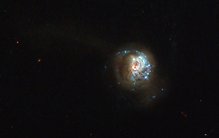
  • How the Universe was Reionized

    Research project

    Since the universe was formed during the Big Bang, it has undergone a number of large-scale phase transitions.

  • HRJust

    Research project

    States’ Practices of Human Rights Justifications: A study in civil society engagement and human rights through the lens of gender and intersectionality

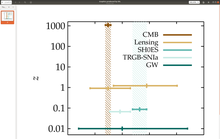
  • Hubble trouble

    Research project

    How fast is the universe growing in size?

  • Hubble trouble: A new measure of the universal expansion using lensed supernovae

    Research project

    Measurements of the expansion rate of the universe give different results. We want to understand why, using lensed supernovae. An explanation could be that our model of the universe is not complete and that there is new physics to discover.

  • Hui-Xin Wang’s research lab

    Research group

    Wang’s lab focuses on the influences of life-course psychosocial factors, biomarkers and their interactions with genetic/biologic factors on the risk of developing different health outcomes.

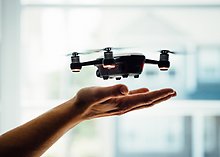
  • Human–Computer Interaction

    Research subject

    Personal computers, mobile phones, smartwatches and voice-controlled speakers. Digital technologies are present in almost every aspect of daily life. As computers continue to develop and human demands change, we need to work on new ways to interact.

  • Human–Computer Interaction for Economic Encounters

    Research project

    There is an increasing trend towards organizing economic and social exchange with the help of online platforms. The transportation service Uber and the short-term rental service Airbnb are two examples. This project focuses on economic encounters in relation to these new marketplaces.