Research catalogue

Discover the research at Stockholm University through our pages for research subjects, projects and research groups!

They also lead you to our researchers profile pages, our departments and courses and programmes.

Refine
Research type

Research type

Status

Research areas

Research areas

Departments

Departments

Showing 1161-1180 of 2793 results

  • Human Developmental Cell Atlas and the National Spatial Omics Infrastructure

    Research project

    Developmental disorders are often debilitating and untreatable, resulting in great suffering. We have formed a Swedish consortium – the Human Developmental Cell Atlas​: a comprehensive molecular atlas of human prenatal development, describing every cell type in molecular detail and showing the spatial distribution of cells in three dimensions and over time.
  • Human Geography

    Research area

    Human geography is about societies and their spatial patterns and relations.

  • Humanities in Transition

    Research project

    This project endeavors to map landscapes of humanities research in Sweden. It sets out to explore, on the one hand, trends and patterns of publishing and, on the other, ways on which research policy impacts on the humanities in Sweden as compared to the situation in other countries.

  • Human Rights and Democratic Consolidation in South Korea

    Research project

    The study investigates whether South Korea has respected human rights since the revision of the Constitution in 1987 that introduced direct presidential elections and how respect has changed throughout time.

  • Humor as serious business: Power and resistance in multiethnic educational contexts

    Research project

    Humor can work both inclusively and exclusively and be both normative and subversive. Humor also enables a conversation space, where it can be pronounced that otherwise may not be said.

  • Hybrid perovskite solar cells seen in the new light of theoretical simulations

    Research project

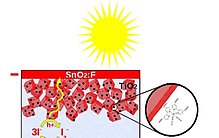
    Hybrid perovskite solar cells have had an unprecedented increase in power conversion efficiency. With theoretical simulations we are investigating the materials to resolve intrinsic problems with toxicity and stability.

  • Hydrogeodesic assessment of artificial interruptions between rivers and their coastal systems

    Research project

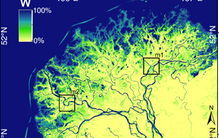
    The flow of water in river and stream networks is dramatically affected by human activities, with important deleterious implications for coastal ecosystems.

  • Hydrogeodesy Lab

    Research group

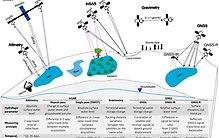
    By using geodetic methods to measure or infer hydrological quantities and their changes over time, Hydrogeodesy supports hydrological monitoring, management, and research via measurements that standard hydrological observations cannot obtain.

  • Hyping Agriculture and Transit (HAT) in 15-minute Cities (15mC)

    Research project

    Food-growing public transport-oriented communities driving urban transitions as green Proximity Oriented Developments (PODs.

  • iADHD

    Research project

    A diagnosis of ADHD often comes with benefits such as medical treatment and educational interventions. An ADHD diagnosis can also lead to negative aspects such as stigma and exclusion in social settings or from certain jobs.

  • ICBT for adolescents with autism spectrum disorder and sleep problems

    Research project

    The objective of this study is to investigate the efficacy of the Internet-delivered cognitive behavior therapy for insomnia (iCBT-I) in adolescents with ASD and sleep problems.

  • IceCube - Neutrino Astronomy at the South Pole

    Research group

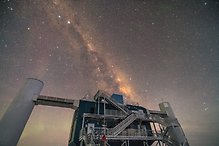
    As members of the IceCube Collaboration, we use the IceCube Neutrino Observatory at the South Pole to study the most extreme processes in the Universe and to search for new physics.

  • Identification and Characterization of Lipophilic Fluorinated Organics in Blubber of Marine Mammals

    Research project

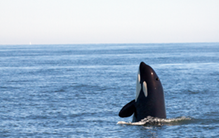
    While most known PFAS accumulate in protein-rich tissues like blood and liver, recent discoveries suggest some may instead prefer storage lipids such as blubber. By developing cutting-edge methods to detect these overlooked contaminants, IDing-LFOs aims to transform our understanding of PFAS exposure and their risks to health and the environment.

  • Identification of genetic factors influencing low-level antibiotic resistance

    Research project

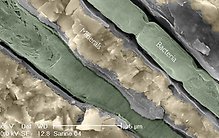
    In this project, we aim to identify the genetic determinants of low-level antibiotic resistance in clinically relevant bacterial pathogens by using several different custom-designed antibiotic biosensors to measure single-cell antibiotic uptake in real time.

  • Identifying a new marine endosymbiosis as a model to study the origin of plastids

    Research project

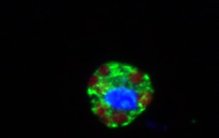
    Meringosphaera are a widespread genus of marine planktonic unicellular eukaryotes that are globally distributed, yet poorly characterized.

  • Identifying function and fitness proteins required for N and C transfer

    Research project

    The experiments are performed in an open ocean symbiotic cyanobacterium by expression in heterologous systems.

  • Identifying geospatial and temporal patterns in human-wolf interactions

    Research project

    This doctoral research project focusses on human-wolf interactions from a geographical perspective and aims to identify geospatial and temporal patterns in interactions between livestock farmers and wolves in Italy and Sweden.

  • IGV's Geochemistry group

    Research group

    Geochemistry is the study of planetary chemical processes. The field encompasses the study of organic, inorganic chemistry and biogeochemical processes.

  • IGV's Geology group

    Research group

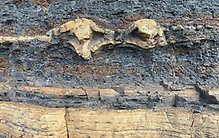
    The Geology group studies planet Earth as a dynamic system through integrated applications of geological, geochemical and geophysical methods.

  • IGV's Marine Geology group

    Research group

    The Marine Geology group studies the geology and history of the oceans through analyses of marine sediment archives and submarine landforms.