


Research catalogue
Discover the research at Stockholm University through our pages for research subjects, projects and research groups!
They also lead you to our researchers profile pages, our departments and courses and programmes.
Refine
Showing 1061-1080 of 2793 results
Group Wheatcroft
Research groupGroup Wiberg
Research groupGroup Winder
Research groupWe study drivers of food web interactions and community dynamics to better understand the ecological impacts of environmental change on ecosystem functioning.
Group Visa
Research groupOur research aims at understanding the mechanisms by which RNA and RNA degradation by the exosome contribute to chromatin regulation, gene expression and genome integrity.
Group Wojcik
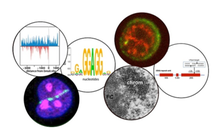
Research groupWe are interested in biological and physical factors affecting cellular and molecular effects of ionising radiation. Focus is on DNA damage and repair, chromatin structure, low doses, low dose rates, mixed radiation qualities, fractionation and modulation by chemical and physical factors.
Group Wäneskog
Research groupWe study how bacteria and fungi respond and adapt to cytotoxic stress caused by chemicals, microbial toxins, and viral infections by using a combination of custom-designed synthetic biology tools, high-throughput assays, and multi-omics approaches.
Group Åström
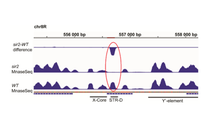
Research groupWe explore how cells maintain genome stability using yeast cells as a model. Specifically, we investigate repetitive DNA such as telomeres and the rDNA loci. We are interested in both telomere maintenance and DNA repair mechanisms.
Group Östlund Farrants
Research groupOur lab studies the functional role of chromatin changes and non-coding RNAs in gene regulation; in the regulation of ribosomal transcription in response to cellular states and in the regulation of the human immune response to pathogens.
Growing older, working longer: the role of working conditions
Research projectProlonging working lives is an important means to promote healthy aging and the sustainable development, thus is a high priority on the agenda of policy makers. Understanding workplace factors in shaping a longer working life appears as a frontier issue.
Growing up girl in deprived areas
Research project– lived experiences, stakeholders and community work
Grupp Bradshaw
Research groupEffects of human and natural disturbances on marine and brackish water ecosystems.
Gunnar von Heijne's research group
Research groupMembrane proteins serve a number of very important functions in both prokaryotic and eukaryotic cells. They are built according to structural principles different from those of globular proteins.
GUT MICROBES AS MODULATORS OF CHEMOTHERAPY TOXICITY
Research projectWe investigate how the gut microbiota and microbe-derived molecules influence chemotherapy-induced toxicity and recovery of intestinal and immune functions.
Göran Widmalm group
Research groupThe research is focused on structure of glycans and their interactions with proteins. To study these biologically active sugar molecules we carry out chemical synthesis and use NMR spectroscopy and molecular dynamics simulations to analyze them.
Hadal trenches as global sink for hazardous pollutants (HADAL-POP)
Research projectIn HADAL-POP we will perform a cruise to hadal trenches, which represent the deepest part of the ocean, to investigate the occurrence of persistent organic pollutants and how biogeochemistry governs the sediment capacity to accumulate these pollutants.
Half a decade of structural change – a period of attitudinal stability?
Research projectWomen's attitudes to the welfare state during the housewife era and today.

Hanna Boström group
Research groupOur research group focuses on crystal engineering and structure-property relationships in a range of coordination polymers, often metal-cyanide frameworks.
Harmful use in working life – prevention and intervention
Research groupHarmful use of, for example, alcohol, drugs or gambling for money in working life can lead to negative consequences for both the individual and the employer. At the same time, the workplace is an important arena for reaching out with both preventive and supportive measures.

Harm reduction and control
Research projectPolicing people who use illegal drugs in a changing drug political landscape