Research catalogue

Discover the research at Stockholm University through our pages for research subjects, projects and research groups!

They also lead you to our researchers profile pages, our departments and courses and programmes.

Refine
Research type

Research type

Status

Research areas

Research areas

Departments

Departments

Showing 401-420 of 2793 results

  • Complex carbonaceous molecules and clusters: Charge exchange, energy transfer, and molecular growth

    Research project

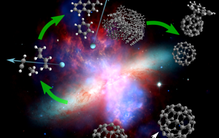
    This project aims to significantly advance the understanding of charge exchange, energy transfer and bond formation processes in interactions between isolated molecules or clusters and atomic or molecular ions.
  • Complexity emerging from microbial interactions: understanding lichen symbiosis through spatial multi-omics

    Research project

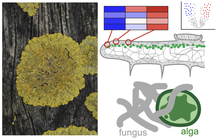
    How do lichens create complex, highly organised structures from communities of microscopic organisms? This project investigates how fungi, algae, bacteria, and other symbiotic partners coordinate their growth to form stable lichen bodies with specialised structures and functions.

  • Comprehension under pressure

    Research project

    In the present project we will investigate brain responses of semantic processing when comprehension is put under pressure.

  • Compulsive care of young people - significance of gender, ethnicity and social class for assessments

    Research project

    This study seeks to investigate the significance of gender, ethnicity and social class when decisions of compulsory care of young people are being made. Throughout history, the control of boys have concerned their externalizing behaviour while control of girls primarily has focused on restricting and disciplining their sexual behaviour.

  • Computational Astrophysics

    Research subject

    This research field develops and uses advanced computer models to study complex astrophysical processes. By constructing advanced computer models of the essential physical processes, we can better interpret observational results and improve our understanding of the inner workings of astrophysical environments.

  • Computational Astrophysics group

    Research group

    At the Department of Astronomy, the development of computational tools spans research areas from solar physics to cosmology.

  • Computational linguistics

    Research subject

    Computational linguistics bridges the gap between linguistics and computer science, focusing on developing techniques to understand and analyze human language. This field facilitates the development of applications such as automatic translation, speech recognition, and text analysis, advancing language processing in the digital age.

  • Computational Mathematics

    Research group

    The research group Computational Mathematics works with mathematical modeling and method development for the study of systems, encompassing mathematical proof structures as well as physical structures spanning from the molecular to the planetary level.

  • Computational Mathematics

    Research subject

    Within computational mathematics we work with mathematical modeling and method development for the study of systems, encompassing mathematical proof structures, climate related problems, computational biology, numerical analysis, and physical structures at the molecular level.

  • Computer and Systems Sciences

    Research area

    Digitalisation and new advances in information and communication technologies (ICT) have changed how we work, live and play, and the transformation continues. We study how to develop ICT, and monitor what happens when humans and ICT interact.

  • Computer gaming, aesthetic practices and informal learning

    Research project

    The projektet investigates childrens' interaction and gaming within different practises.

  • Computer gaming and educational outcomes among youth

    Research project

    Computer gaming and educational outcomes among youth: how does gaming relate to achievement and school relevant behavior? Using a multidimensional perspective on education and unusually detailed measures of computer gaming, this project addresses mechanisms suggested by theories in the field.

  • Concealed categories of stakeholder categories

    Research project
  • Conceptual Change

    Research group

    The research is based on a constructivist perspective with a focus on conceptual change, where students revise and reconstruct prior knowledge as they encounter concepts and theories addressed in teaching. The main areas are geography and social studies with a particular emphasis on economics.

  • Concurrent Collaboration

    Research project

    Reading development in newly arrived high school students addresses a well-defined educational need: the automatization of decoding in second language learner reading. Decoding is critical for comprehension and therefore for learning.

  • Concurrent growth on lattice and graphs

    Research project

    When two entities, like epidemics, business brands or opinions, evolve in competition for space, can they occupy large parts of the available space simultaneously, or will one of them outcompete the other?

  • Condensed Matter and Quantum Optics

    Research subject

    The research of Condensed Matter and Quantum Optics is both experimental and theoretical.

  • Confirmation teaching in the Church of Sweden

    Research project

    What knowledge do young people think they have gained after their confirmation, and how important is this for their participation in the Church of Sweden after the confirmation period? These are the questions we investigate in this project.

  • Congested but underutilized infrastructures:

    Research project

    How information can be used to regulate demand in healthcare

  • Conjunctive relations in adult learner’s written production in L2 Swedish at beginner level

    Research project

    The purpose of the research project is to increase knowledge about the development and use of connection in written production among adult learners of Swedish at beginner level.