


Climate Economics
Research subjectClimate economics at Stockholm University researches the economic consequences of climate change as well as economic policies to reduce emissions and abate climate change.

Discover the research at Stockholm University through our pages for research subjects, projects and research groups!
They also lead you to our researchers profile pages, our departments and courses and programmes.
Showing 361-380 of 2793 results
Climate economics at Stockholm University researches the economic consequences of climate change as well as economic policies to reduce emissions and abate climate change.
Discover more about our research groups and research projects in this subject below.

Climate change increases health risks even in temperate countries like Sweden, particularly through heatwaves and air pollution. This project examines how these climate-related stressors, together with psychosocial work stress, influence emergency healthcare use in Region Stockholm, with a focus on cardiorespiratory conditions.

Climate, environment and sustainability are important research fields at Stockholm University. On this page we have gathered all our research project connected to this area.

Gustaf Hugelius, together with Christina Biasi, University of Innsbruck, Pierre Friedlingstein, University of Exeter, and Philippe Ciais, Laboratoire des Sciences du Climat – CEA, leads a project to investigate how peatlands in the northern hemisphere responds to climate change and future warming.
How do conditions such as ADHD, autism and anxiety arise? What underlies the everyday difficulties experienced by children and adults with these conditions? What is the best method to assess these conditions and what is it like to live with a diagnosis?

Clinical psychology refers to professional activities that aim to prevent, cure and alleviate human suffering and mental components of ill health, as well as systematic exploration of the origin, development, diagnosis, assessment, treatment and prevention of clinical mental conditions.

The research group conducts scientific research to increase our knowledge in clinical psychology, primarily interventions for mental health problems in people with and without neurodiversity such as autism and ADHD as well as mechanisms and neural correlates in the brain.
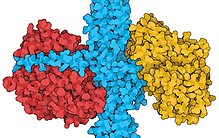
We propose to study the clostridial neurotoxins, a family of protein toxins that include the closely related tetanus and botulinum neurotoxins, which are the most toxic substances known. Even though these toxins can be deadly, the botulinum neurotoxins are extensively used therapeutically.
A continued change in the atmospheric content of greenhouse gases and particles is estimated to result in future warming well above 1.5°C, compared with pre-industrial levels. It is uncertain how much heating is masked by the cooling effect of the particles, especially the effect of the particles on the distribution and properties of the clouds.
Aerosol-cloud interactions (ACI) remain the largest source of uncertainty in past, present, and future radiative forcing, impeding credible climate projections.

The digital transformation of education enhanced our awareness that some face-to-face teaching models may not be appropriate as certain groups of students may be under-privileged. In this new landscape, academics ought to adapt their teaching and their curricula, listening at the same time to voices that may have been underestimated, like those of students.

COASTAL is a unique collaboration between 29 partners from 8 EU Member States, representing entrepreneurs, administrations and scientific experts in coastal and rural enterprises who engage actors and stakeholders at all levels by combining local knowledge and scientific expertise in a co-creation process.
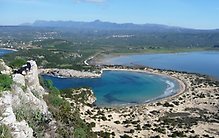
CoastClim is an interdisciplinary consortium of researchers and advanced research infrastructure that facilitates addresing questions regarding the links between coastal biodiversity and our climate. It brings together expertise in modelling, marine ecology, biogeochemistry and atmospheric research as well as policy analysis and communication from Stockholm University and University of Helsinki.

Our research combines knowledge from geology, oceanography, biogeochemistry, ecology, and economics to provide a broad, interdisciplinary understanding of coastal ecosystems in the Baltic Sea and how they are affected by human activities, pollution, and climate change.

Developments in artificial intelligence (AI) has raised concerns: Will human skill be replaced by AI-based technologies? This project investigates how AI tools may be used as constructive resources in programming and creative design contexts. We adopt a perspective of co-creativity between user and technology.

Code, Narrative, History: Making Sense of Ancient DNA in Contemporary Society is an interdisciplinary research project based at Stockholm University in Sweden. The project aims to investigate how archaeogenetic research is crafted into historical narratives.
The overall aim of the research project is to study the importance of personal resources (e.g. cognitive ability) and different demands and resources at work in relation to work- and health-related outcomes in a military context.
Extending past work, the aim of this project is to investigate functional and neural mechanisms of memory for multiple intentions.

Cognitive psychology deals with how people understand their surroundings and themselves and how they develop and use different skills.
