


Research project COASTAL | Collaborative land-sea integration platform
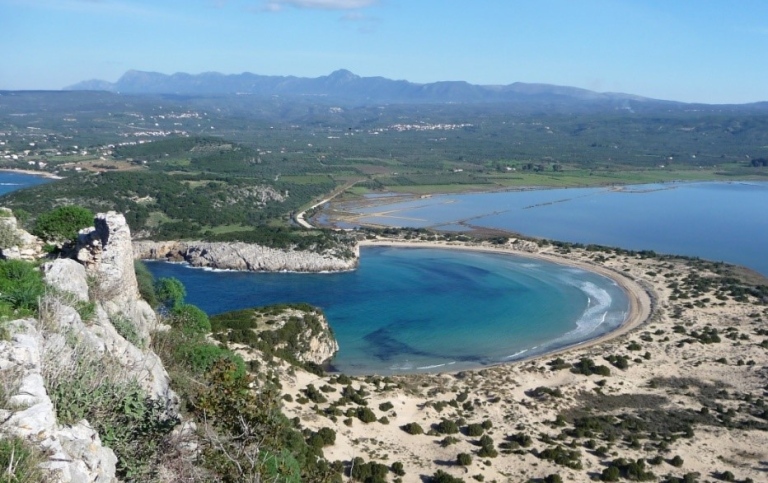
South-West Messinia, Greece
By combining local knowledge and scientific expertise in a co-creation process the COASTAL project engages actors and stakeholders at all levels to improve coastal-rural interdependence and collaboration by identifying problems and setting up evidence-based business roadmaps and policy solutions, focusing on economic growth, marine spatial planning, and environmental protection, including inland water quality. COASTAL contributes to integrated coastal-rural planning and coastal-rural synergy in six case study regions and the wider EU territory, and develops a durable, online platform for knowledge exchange about coastal-rural interactions with concrete examples and tools for supporting land-sea collaboration and sustainable development.
COASTAL is a multi-actor collaboration of coastal and rural sectors to formulate and evaluate business and policy solutions, aimed at improving coastal-rural synergy for sustainable regional development and environmental protection. This is achieved by developing, demonstrating and applying a generic toolset and performance indicators by combining a multi-actor approach with system dynamics modelling. This allows us to understand the interactions with market, demographic, environmental and climate forecasts, and quantify the positive and negative externalities. The project is organized around seven interacting work packages (WPs), each of which oversees and/or is responsible for various parts of the work during the four-year project period. These WPs are followed in six complementary European Multi-Actor Labs (MALs), exchanging their tools and expertise, building new knowledge in relation to their own specific challenges, and contributing to the COASTAL Knowledge Exchange Platform for dissemination to relevant stakeholders.
The multi-actor approach applied for analysing the social-environmental and economic land-sea interactions will highlight potential cross-sectoral interactions and innovation that could emerge from greater cooperation between sea-based and land-based businesses or organisations while also considering the short-, mid- and long-term impacts of decision making and feedback mechanisms on coastal and rural development.
THE PROCESS
- Local actors and experts participate in collaborative exercises to analyse problems, the underlying causes, propose and discuss solutions, and validate and interpret the impacts of simulated business and policy decisions.
- Qualitative and quantitative techniques are combined in this co-creation process supported by graphical tools to gain in-depth understanding of the systemic transitions underlying the land-sea interactions.
- These systemic transitions are synthesized and analysed with system dynamic models to produce multiple transition scenarios for key business and policy indicators.
- From these, practical business roadmaps and policy solutions are derived, which are easily updated in the models used to support the analyses.
In this project, Stockholm University (SU) leads the work on the Swedish Norrström/Baltic Sea coastal case study and co-leads the work on the Greek South-West Messinia coastal case study, as SU also operates the Navarino Environmental Observatory (NEO) with focus on the climate and environment of the Mediterranean region.
Coastal water quality interactions, changes and solution pathways. 12th Baltic Sea Science Congress. Destouni, G. 2019.
Coastal-marine solute spreading from different Baltic coastlines. 12th Baltic Sea Science Congress. Chen, Y., Cvetkovic, V., Destouni, G. 2019
Dominant Hydro Climatic effects on eutrophication management efficiency in a Swedish coastal bay. Vigouroux, G., Chen, Y., Jönsson, A., Cvetkovic, V., Destouni, G. 2019.
A Baltic coast case study. 12th Baltic Sea Science Congress (BSSC), 19-23 August, Stockholm, Sweden.
The Norrström/Baltic Multi-Actor Lab within the EU Project. Destouni, G. 2020.
Partners
- Flemish Research and Technology Organisation (VITO), Belgium (https://vito.be)
- Hellenic Centre for Marine Research (HCMR), Greece (https://www.hcmr.gr)
- Stockholm University, Sweden (https://www.su.se)
- SINTEF Ocean AS, Norway (https://www.sintef.no)
- National Research Institute for Agricultural, Food and Environment (INRAE), France (https://www.inrae.fr)
- National Institute for Maritime Research and Development “Grigore Antipa”- NIMRD, Romania (https://www.inrae.fr)
- Research Institute for the Economy of Agriculture and Rural Development, Romania (http://www.iceadr.ro)
- International Centre for Research on the Environment and the Economy (ICRE8) (http://www.icre8.eu/home)
- National Research Council (CSIC), Spain (https://www.csic.es/en/csic)
- Geonardo Environmental Technologies LTD, Hungary (https://geonardo.com)
- Ostend science park, Belgium (https://ostendsciencepark.be/bluebridge/bluebridge)
- Agence flamande terrienne (Vlaamse Landmaatschappij), Belgium (https://www.vlm.be/nl)
- Port of Ostend (Haven van Oostende) Autonoom Gemeentelijk Havenbedrijf (AGHO), Belgium (https://www.portofoostende.be)
- Flanders Marine Institute - Vlaams Instituut Voor de Zee Vzw (VLIZ), Belgium (https://www.vliz.be)
- POM West-Vlaanderen, Belgium (http://www.pomwvl.be)
- Stockholm Environment Institute (SEI), Sweden (https://www.sei.org)
- NIRAS Sweden AB (NIRAS), Sweden (https://www.niras.se)
- Campus Roslagen AB (CRAB), Sweden, (https://campusroslagen.se/innovationscenter)
- Global Utmaning (GLOB), Sweden (https://www.globalutmaning.se)
- Natural Resources Institute - Luonnonvarakeskus (LUKE), Finland (https://www.luke.fi/sv)
- Asociatia GAL Delta Dunarii (GAL DD), Romania (https://gal-deltadunarii.ro)
- Local Action Group Dobrogea Centrala (GAL DC), Romania (https://enrd.ec.europa.eu/leader-clld/lag-database_en)
- Touristic Enterprises of Messinia S.A. (TEMES), Greece (https://www.costanavarino.com/about-temes)
- Captain Vassilis and Carmen Konstantakopoulos Foundation (CVF), Greece (https://www.cvf.gr/)
- Development Agency of Messinia (DOAM), Greece (http://www.anmess.gr)
- Consejería de Agua Agricultura y Medio Ambiente de la Región de Murcia (CARM), Spain (http://www.carm.es/web/pagina?IDCONTENIDO=80&IDTIPO=140&RASTRO=c$m22660)
- Federacion De Cooperativas Agrariasde Murcia (FECOAM), Spain (www.fecoam.es)
- Chambre Régionale d'Agriculture De Nouvelle Aquitaine (Aquitaine-Limousin-Poitou Charentes) (CRANA), France (https://nouvelle-aquitaine.chambres-agriculture.fr)
- FRAB Nouvelle Aquitaine (FRAB), France (http://www.bionouvelleaquitaine.com)