Research catalogue

Discover the research at Stockholm University through our pages for research subjects, projects and research groups!

They also lead you to our researchers profile pages, our departments and courses and programmes.

Refine
Research type

Research type

Status

Research areas

Research areas

Departments

Departments

Showing 2481-2500 of 2793 results

  • The Nature and Nurture of Economic Success (SUCCESS)

    Research project

    This project examines how inherited traits and the environments in which people grow up jointly shape economic outcomes, and how the transmission of advantage changes as societies develops.

  • The Nature of Moral theory: an exploration of the medieval notion of moral knowledge

    Research project

    This project focuses on the Aristotelian tradition in moral philosophy and more specifically the Parisian Master of Arts John Buridan (c. 1300–1362) and his influential commentary on Aristotle’s Nicomachean Ethics.

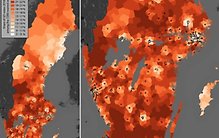
  • The Neighbourhood Revisited: Spatial polarization and social cohesion in contemporary Sweden

    Research project

    Research programme 2019-2024.

  • The new generation of youth feel worse than in the past

    Research project

    Youth mental health is an important asset for modern societies. During the last three decades, a progressive deterioration of youth mental health has occurred. However, the reason for this decline is largely unknown. This project aims at filling these gaps.

  • The new inequalities: gender/class divides and labour market flexibilization

    Research project

    In this project, we investigate how the flexibilization of working life shapes the maneuvering space of women (and men) in work and family and how this, in turn, contributes to gender and class inequality in wages and (un)health

  • The non-governmental organization of crime prevention

    Research project
  • The Nordic research network for evidence-based, high-quality preschool for social justice

    Research group

    High quality preschool activities are crucial for children's development and learning and have significant potential for building equal and resilient democratic societies based on social justice.

  • The North Atlantic and Arctic Oceans

    Research group

    In the North Atlantic, a mighty current system conveys, via the Gulf Stream and North Atlantic Current, warm surface waters to northerly subpolar areas where deep water is formed. This current system, which is an important link in the global ocean circulation connecting the Atlantic and Pacific Oceans, also carries warm Atlantic water into the Arctic Ocean.

  • The ontological controversy over sex differences – a science study of evolutionary biology 1979-2021

    Research project

    In public debates biology is often used to assert essential sex differences. Yet, evolutionary biologists themselves disagree over sex differences and their causes. This project aims at understanding how and why this controversy over sex differences emerged.

  • Theoretical chemistry

    Research subject

    Theoretical chemistry research activities at the Department of Chemistry are concerned with the application of quantum chemical methods to the study of catalytic processes.

  • The organization of the expert society

    Research project
  • The organohalogen iceberg

    Research project

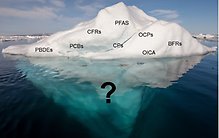
    The project aims to identify known and unknown organochlorinated, -brominated and fluorinated compounds in water and sludge from a sewage treatment plant using combustion ion chromatography and suspect screening.

  • Theory and Policy – Swedish Criminal Law in Transformation

    Research project

    The main purpose of this project (written in Swedish) is to analyse and discuss the current Swedish criminal law and policy discourse.

  • Theory Development for High-Resolution RIXS Experiments on Liquid Solutions and Solid Materials

    Research project

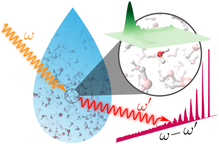
    The theoretical modelling of X-ray induced electronic transitions needs to be improved to describe resonant inelastic X-ray scattering (RIXS) in condensed phase due to the strong influence of the environment and dynamical effects.

  • Theory succession and finality claims in fundamental physics

    Research project

    The project will carry out an investigation into final theory claims in contemporary fundamental physics and relate them to other core characteristics of the field.

  • The Other Corridor – Preconditions for Patients’ Encounters with outpatient Psychiatric Health Care

    Research project

    How do patients experience their encounters with psychiatric outpatient care - and what influences how these encounters turn out? This thesis examines what shapes everyday life in psychiatry with a focus on institutionalization, the exercise of power and patients' different conditions.

  • The People’s Home: The History of a Swedish Keyword 1900–2020

    Research project

    The People’s Home, Folkhemmet, is the premium concept in Sweden's modern history. It is also a word with several different uses and meanings that seem to change over time. This project investigates both how the term was used in the 20th century and how contemporary research has established it as an interpretative framework.

  • The Performance of International Organizations

    Research project

    The Performance of International Organizations: Institutional Design and Policy Output in Global Governance.

  • The Perversion of Sustainability by Marketing: Excess, Simulacra, and Ecological Terminality

    Research project

    Can sustainability efforts contribute to the very problems they are meant to solve? This project examines how well-intentioned initiatives can be perverted when they become part of companies’ regular operations and are subordinated to the same logic of growth that they were originally intended to counteract.

  • The physicochemical code for cellular function and extreme adaptation.

    Research project

    The rapid advancement in establishing biomolecular structures and functional pathways has brought new focus to a number of questions regarding the mechanism of life at the physicochemical level. For instance, how does the crowded and chemically turbulent interior of cells affect the innate properties of protein structures and their interactive functionality?