Research catalogue

Discover the research at Stockholm University through our pages for research subjects, projects and research groups!

They also lead you to our researchers profile pages, our departments and courses and programmes.

Refine
Research type

Research type

Status

Research areas

Research areas

Departments

Departments

Showing 2461-2480 of 2793 results

  • The Lost Navy. Sweden's "Blue" Heritage ca 1450-1850

    Research group

    This interdisciplinary research program maps, documents, and studies the Swedish Navy from different perspectives. Stockholm University collaborates with The Swedish National Maritime, Transport and Military Museums (SMMTF) and the Finnish National Board of Museums.
  • The making of the heaviest elements in the Universe

    Research project

    About 14 billion years ago, the Universe began with the Big Bang. A few minutes later, hydrogen, helium, and traces of lithium were formed during the Big Bang Nucleosynthesis. However, the Universe expanded and cooled, leading to the end of this process after 20 minutes. Where, when, and how were the remaining elements of the periodic table produced?

  • The Many Faces of School Management

    Research project

    A study of management practices in organizing process.

  • The market makers

    Research project

    Advertising and the socio-economic transformation of Sweden ca 1970–2000

  • The Marketplace Activity Index

    Research project

    Towards real-time economic monitoring in remote and conflict-affected regions using satellite imagery.

  • The MATS satellite

    Research project

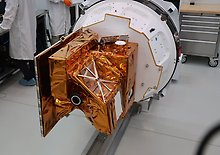
    MATS (Mesospheric Airglow/Aerosol Tomography and Spectroscopy) is a Swedish satellite mission designed to investigate atmospheric waves. Large uncertainties in the distribution of such waves is a limiting factor for atmospheric models in predicting future changes in the mesosphere, the region bordering space at 50-100 km altitude.

  • The matter of drawing. Copies and tracings in 18th-century architectural practice and design

    Research project

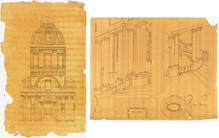
    Research project in Art history that examines the role of copies in 18th-century architectural practice.

  • The meaning and significance of prostheses: biotechnologies and the posthuman future of embodiment

    Research project

    The interface of bodies, biologies and technologies increasingly challenges not only normative embodiment, but also the understanding of what counts as human. My research opens up the significance of both inorganic and organic prostheses across disability, transplantation and at the cellular level in the microbiome and microchimerism.

  • The meaning of masculinity. A phenomenological investigation of the psychotherapeutic situation

    Research project

    How does masculinity take shape in the therapy room? What does masculinity mean and how can it be given meaning - for the patient and for the therapist? In this project, the different meanings of masculinity are interpreted within the framework of psychodynamic psychotherapy.

  • The Meanings and Workings of the Gift: From Modernity to the Era of New Technologies

    Research project

    The project brings together sociology, philosophy/bioscience, literary studies, and art to challenge existing knowledge about the ubiquitous social phenomenon of the gift in the light of contemporary social challenges including the digitalization of our everyday life, recent genetic discoveries, and refugee crises.

  • The Mechanization of Philosophy between the 14th and 16th century

    Research project

    The project traces some fundamental changes in the metaphysics of substance and causality from the 14th through 16th centuries. The project will show how Ockham’s and Buridan’s views of substance undermined the Aristotelian distinction between form and matter.

  • The Medieval Seminar

    Research group

    The Medieval Seminar is interdisciplinary and the meeting place for scholars from a wide range of university departments and from large research institutions outside the university. The main purpose of the seminar is to present and discuss new research in any topic related to the Middle Ages.

  • The mega project New Karolinska Solna

    Research project
  • The metabolism of lipids 

    Research subject

    Studies of the interactions between membrane proteins and lipids has long been a focus at the department of biochemistry and biophysics. It is a challenging area of research where the study of the dynamic aspects of interactions of the lipids is paramount.

  • The method and model of IBIC (The Individual´s needs in focus) – a critical perspective

    Research project

    The over-all aim of this study is to scrutinize if and how the working model IBIC contributes to facilitate social support and to realize the intentions of the Swedish Social Act.

  • The Miracle Bean: Agrofood globalization from the lens of the soybean

    Research project

    This project aims to provide a thorough investigation of the journey of the soybean, from a key food staple in ancient Asia to today’s expansive biotech agriculture in South America producing the fundamental ingredient behind “cheap” meat.

  • The missing link: how does the climate affect human conflicts and collaborations through water

    Research project

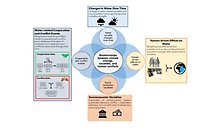
    Knowledge about how changes in water flows affect conflicts is largely lacking. The goal of this project is to increase understanding of how people and the climate affect water flows and how, in turn, these changes affect cooperation and conflicts over water.

  • The Moral Demands of Equality in Aging Societies

    Research project

    The aim of the project is to understand the demands of equality in aging societies. Aging will change substantially the age composition of the populations of developed countries, and it raises challenges for maintaining and promoting equality between age groups and generations.

  • The multilingual situation of deaf refugees in Sweden (MULDER)

    Research project

    The project aims to generate knowledge about deaf adult refugees’ language situation. The integration of this group is strongly linked to their varied linguistic background, which is further complicated by the fact that many of these refugees are language delayed due to having had no or limited access to any language during childhood.

  • The Narrative Forms of Experience and the Modern Novel

    Research project

    The modern novel is usually connected to the birth of the modern subject. However, despite the central role that the subject plays for our understanding of the modern novel, surprisingly little has been said about the novel’s relationship to one of the very defining features of being a subject: experience.