News

  • From a trip to Rome

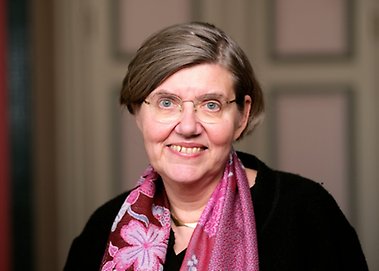
    President’s blog 13 May, 2024. I spent the last long weekend in Rome as a participant in a roundtable discussion on peace and humanity, which resulted, among other things, in a declaration of peace. It was hosted by the Fratelli Tutti Foundation, chaired by Cardinal Mauro Gambetti, together with Nobel Peace Prize laureate Muhammad Yunus. The meeting was also attended by several former Peace Prize laureates – along with the husband of last year's winner Narges Mohammadi, who is still imprisoned in Evin prison in Tehran – but also several representatives of civil society organisations from around the world. The focus was of course on Ukraine and Gaza, but also on the many other wars and conflicts going on around the world that do not always make it into the media spotlight: Sudan, Myanmar, Congo, Yemen, Ethiopia... the examples are endless. The meeting also established a ”task force” to promote dialogue and mediation in conflicts. At the same time, it fully highlighted the problems of global peace dialogues; starting points and conditions are so different that it can be difficult to agree even on formulations in a document. As a university, we subscribe to a set of fundamental core values and, like so many other public and private actors, we naturally and rightly react as staff and students – as human beings – when they are not respected, especially when this is done through terror or military force. There are many ways to work for peace, and a current debate centres on how best to do so. Recently, as President of Stockholm University, I have received several similar emails, via the Registrar, calling for the immediate severance of all relations with Israeli universities, as well as individual other emails, including those based on the appeal circulated to send emails on the issue, the wording of which in turn provoked a strong reaction. Universities should be open and provide space for the exchange of views. My conclusion is therefore different from that of the letter writers. As the Chicago Declaration put it in 1967: ”The instrument of dissent and criticism is the individual faculty member or the individual student. The university is the home and sponsor of critics; it is not itself the critic”. As a university, our primary role is to conduct higher research and higher education, based on both critical thinking and active dialogue. Conducting diplomacy in and through academic exchanges is an important aspect of this, and cancelling academic exchanges in other countries is very rarely the right way to promote peace and justice in global conflicts – and when it happens, it also means great losses. On the contrary, when universities fulfil their role as protectors of critics, continued exchanges can contribute to this necessary work, ”to speak truth to power”. This can only be done jointly, not on the basis of a polarisation that makes dialogue impossible. It is therefore my conviction that one of our most central academic missions, for staff and students alike, is to continue dialogue and debate – even today, when it may seem most impossible.  Astrid Söderbergh Widding President Read more from the President’s blog
  • Hans Adolfsson proposed as Stockholm University’s new President

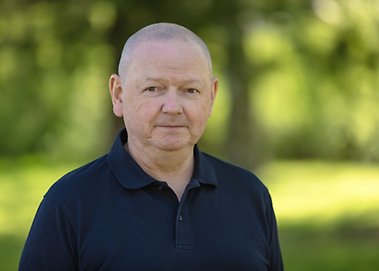
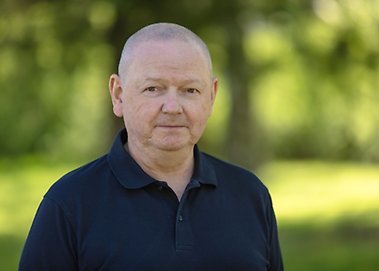
    The University Board at Stockholm University decided today, Friday 14 June, to propose Professor Hans Adolfsson, President of Umeå University, as the new President of Stockholm University. His candidacy will be considered by the Swedish Government, which takes the final decision on the matter.

  • Bladderwrack to be sent into space

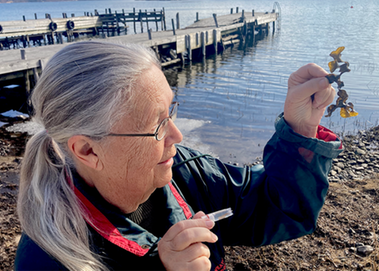
    How does bladderwrack in the Baltic Sea "know" when it is time to reproduce? To answer that question, researchers at Stockholm University will send the seaweed into space.

  • Jan Ellenberg appointed Director for SciLifeLab

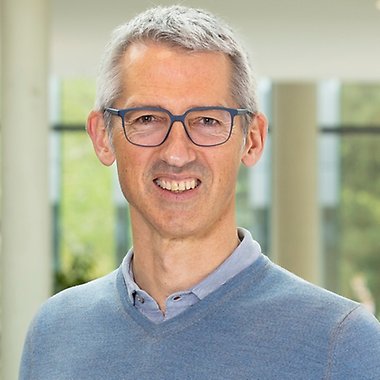
    The SciLifeLab board has appointed Professor Jan Ellenberg as the new Director. Alongside this role, Professor Ellenberg will also be appointed as a Professor at Karolinska Institutet and Affiliated Professor at Stockholm University and KTH Royal Institute of Technology. He succeeds Professor Olli Kallioniemi, who has served as SciLifeLab Director since 2015. Professor Ellenberg is moving into his new responsibility from the European Molecular Biology Laboratory (EMBL) in Heidelberg, where he serves as the Head of the Cell Biology and Biophysics Unit at as well as the Head of the EMBL Imaging Centre. 

  • Lignin can replace bisphenol A

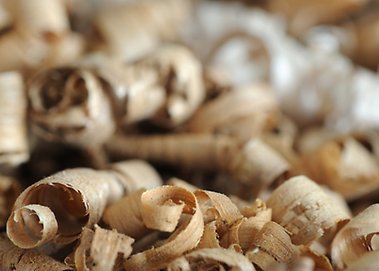
    In a new study, researchers at Stockholm University have developed a method in which lignin from the forest can be used to replace the hazardous chemical bisphenol A – but also generate an alternative to cotton.

  • Heading for Greenland to study melting glaciers

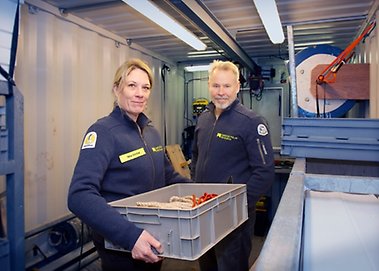
    In August, the icebreaker Oden will go to northern Greenland's hard-to-reach waters. Researchers on board will study how much and how rapidly melting glaciers can contribute to raising global sea levels. At the beginning of August, Swedish icebreaker Oden will leave the port of Thule in northwest Greenland with about 40 researchers on board from ten universities and research institutes in Sweden, the USA, Denmark, Australia and Switzerland. Oden will be at sea over six weeks before she returns to Thule or Longyearbyen on Svalbard. The ice situation can be very difficult in northern Greenland and the adjacent Arctic Ocean, so the expedition needs several alternative routes. The primary geographical focus region of the expedition named North of Greenland 2024 is Victoria Fjord, into which CH Ostenfeld glacier drains. The research plan includes studies of various aspects of the frozen surface of the Earth (the cryosphere), such as its history and development regarding future climate change. The expedition is part of a broader research programme, the North Greenland Earth-Ocean-Ecosystem Observatory (GEOEO).   Melting glaciers affect sea level The focus is on investigating how much and how fast the ice sheet in North Greenland can contribute to the global sea-level rise. Knowledge is currently unsatisfactory about what happens when glaciers meet the sea and become seawater through melting. It is important to know in more detail how these processes are going and at what speed, mainly in order to be able to develop scenarios for how much the global sea level will rise in a warmer climate. This knowledge is also important for climate models.   Scientific leaders from Stockholm University

  • Shedding new light on dark matter

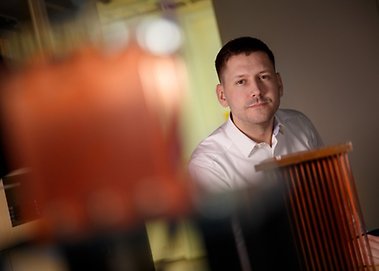
    No one has yet managed to show what dark matter is made of, even though it appears to make up over 80 percent of the mass in the universe. At Stockholm University a new kind of sensor is being built to study hypothetical particles called axions. If these invisible particles do in fact exist, they may provide a solution to the mystery of dark matter.

  • Wild birds possess genetic predispositions to learn population-specific songs

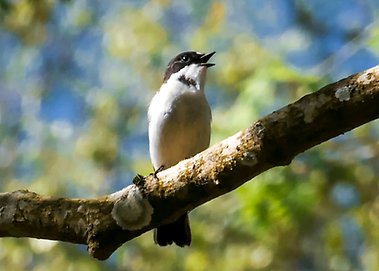
    Genetic predispositions guide population-specific song learning in wild birds, shows new research from Stockholm University. By studying adult pied flycatchers that had been translocated as eggs from the Netherlands to Sweden, the researchers found that the songs of translocated birds resembled both their social environment in Sweden as well as their ancestral Dutch population. These results show how genetic differences can impact cultural change in birdsong and how they can together, contribute to mating barriers between bird populations.