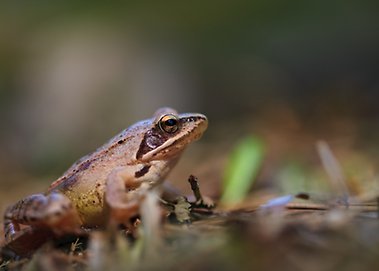
Buying fish, sausage or meat saves you from breaking a social taboo in some industrialized nations, especially when hunting and fishing are conducted for recreation. In an article in Nature Sustainability, a research team including Erica von Essen at Stockholm Resilience Centre, adds a new perspective to the topic of "recreational use of wild animals".
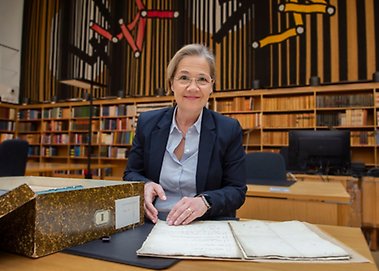
Throughout history ciphers have been used to preserve many secrets. Beáta Megyesi leads an interdisciplinary project involving linguists, computer scientists and historians, among others, to use AI to decode secret documents.
A new global study shows that more than half of the studied populations are too small to maintain enough genetic diversity to safeguard adaptive capacity. Genetic indicators for 919 species, representing more than 5 000 populations, have been assessed.
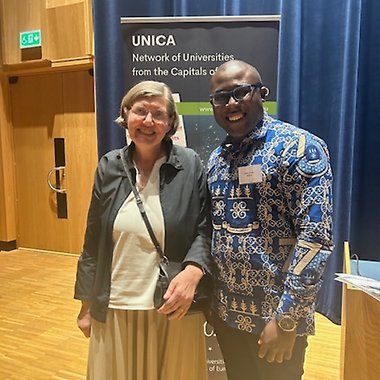
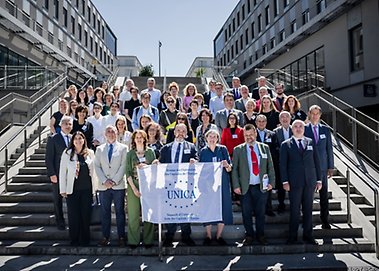
President’s blog 28 June, 2024. For three days, Stockholm University has had the pleasure of hosting UNICA, the network of universities from the capitals of Europe, which held its 34th General Assembly at Stockholm University, followed by a rector’s seminar on the theme “Strengthening the Africa-Europe Cooperation: The Role of University Networking”. Both the meeting and the seminar were well attended, with both physical participation in our premises in Albano and the opportunity to participate online. The rector’ seminar on Africa and Europe was highly relevant for us at Stockholm University, which has a partnership through CIVIS with six African universities, in Morocco, Mozambique, Senegal, South Africa, Tunisia and Uganda – and in addition through the “Polycivis” project with another four universities – and also participates in the Swedish-African SASUF collaboration, which brings together no less than 40 universities in South Africa and Sweden.
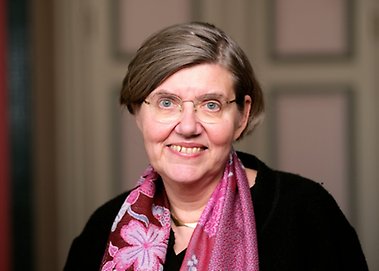
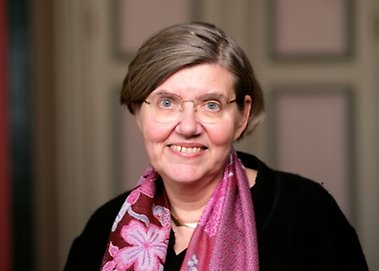
Africa was in the spotlight when university presidents, vice-presidents and other higher education institution representatives from the capitals of Europe gathered in Albano in June. President Astrid Söderbergh Widding opened the rectors’ seminar and chaired one of the panel discussions.
In a groundbreaking study published in the journal Cell, researchers from the Centre for Palaeogenetics in Stockholm have analyzed the genomes from 21 woolly mammoths to uncover the evolutionary changes that led up to the species’ extinction. The study offers unprecedented insights into the long-term genetic effects that species face following severe population declines.
A new study by demographers at Stockholm University shows that gender equality, measured in the share of days fathers take off work to care for a sick child, is higher after union dissolution than it was when the parents still lived together. This silent revolution in family behaviour is mainly explained by 50/50 living arrangements of the children.
A comprehensive study conducted by researchers at Stockholm University and the Stockholm School of Economics sheds light on the profound economic implications of stress-induced occupational illnesses, particularly burnout.
The University's account activation tool su.se/activate has been given a facelift. The functionality is the same as before, but the application has a clearer and more modern interface. The tool that all students use to activate their university accounts, su.se/activate , has been significantly redesigned. The new version of Activate has a more modern and attractive interface and is more accessible. The functions are the same as before, but the new interface will hopefully make it easier for students to activate their university accounts. The new Activate will be launched on Wednesday June 26, 2024.
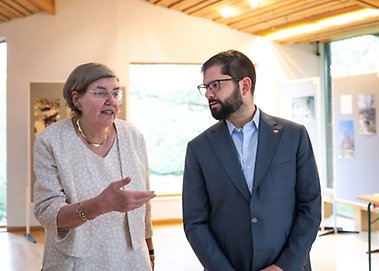
"Last night I met two Chilean PhD students outside my hotel. They were here to take part in the ACCESS Forum 2024 and I felt so proud. It's an honour for Chile to be here. Despite the fact that our countries are far apart, we have developed a collaboration where we really understand each other." Chile's President Gabriel Boric Font spoke with great enthusiasm and fondness of Swedish-Chilean relations and academic collaboration from the stage in the Aula Magna auditorium, as he visited Stockholm University during a sustainability conference on 13 June. ACCESS Forum 2024 The Academic Collaboration Chile Sweden (ACCESS) platform aims to facilitate and deepen the academic relations between Chile and Sweden. Read more at ACCESS (accesschilesweden.org) "The collaboration between our countries began more than 200 years ago, and many Chilean exiles found a home in Sweden as they fled the dictatorship following the military coup in Chile in 1973. The bonds forged with countries that supported them at that time still exist."
President’s blog 13 April, 2024. I have spent the past week travelling, first in The Hague with my Swedish president colleagues, on a trip jointly arranged by the Swedish Higher Education Authority (UKÄ) and the Association of Swedish Higher Education Institutions (SUHF) within the framework of UKÄ’s promotional assignment from the government to train and develop us presidents. We met our president colleagues in the Netherlands, where a large number had joined us, leading representatives of the country’s accreditation organization, NVAO, as well as representatives of the Ministry of Education, Culture and Science, which in the Netherlands is joint. Sometimes these kinds of trips can feel a little dutiful, with many, and long, draws of varying quality. This time, however, it was highly rewarding, with open exchanges of experience and discussions that were mutually beneficial. Comparing conditions is interesting. In the Netherlands, for example, universities are not allowed to set up their own programmes; this is controlled by the government. Maybe that is where we are heading in Sweden too, judging by the signals? At the same time, our colleagues were shocked, for example, by the level of detail of learning outcomes in our professional education and training programmes. On the research side, various measurements showed that they were doing well – roughly in the same place in the charts as Sweden, for example. We also had interesting discussions about merit assessment, where the Dutch universities have been at the forefront of a broader and more qualitative view of merit. From the sun and warmth of The Hague, we travelled to a cool and rainy Swansea, which was, however, offset by the university’s fantastic location right by the sea. The view from the meeting room at the opening board meeting is something to be envied. Here, the European University Association (EUA) held its annual general assembly, which was preceded by a number of meetings and followed by the annual conference, this time on the theme of academic integrity in every sense of the word. The concept, which as such is not very well established in Sweden, includes integrity in academic leadership, but also research ethics as well as ethics in education and degrees (where we were shown horrific examples of the industrialized production of fake degrees with fake grades from fake universities). This also includes integrity in international cooperation, not least from a security perspective – what we usually call responsible internationalisation. And the final plenary session was devoted – once again – to merit assessment, now with the integrity perspective in focus. It was clear that this topical subject is deeply engaging – the participants were numerous and active, and here too we were reminded that academia is international, that knowledge exchange and dialogue are highly valued, and that we have much to learn from each other. Slightly off the main theme, one session of the conference was also devoted to presenting and discussing the EUA’s new vision for the European Commission’s 10th Framework Programme for Research, also launched last week: ”Paving the way for impactful European R&I, the EUA’s vision for FP10”, the result of the work of a task-and-finish group that I had the pleasure of chairing. It is particularly important, at a time when needs other than research and higher education dominate policy, that we as universities are proactive in defining and justifying our own vision of needs and resources. Research and higher education in international co-operation are in so many ways key to the development of society, both in terms of addressing challenges together and in seeing and seizing opportunities. Astrid Söderbergh Widding President Read more from the President’s blog
President’s blog 21 May, 2024. Today, together with the Vice President and the University Director, I have received and listened to representatives of the pro-Palestinian demonstrators who have set up camp on the Stockholm University campus in protest against the war in Gaza. Already in December last year, I met and listened to the students’ association Stockholm Academics for Palestine, and received a petition from them. Since then, other university staff members have also met and listened to representatives of this association. Since the beginning of October last year, the war between Hamas and Israel has caused immense human suffering and bloodshed among the civilian population. It is a humanitarian tragedy that is unfolding and I am not alone in calling for an immediate ceasefire and a prompt peace. Strong opinions and a deep commitment surround the Middle East conflict. Around Sweden, as in many other countries, there are protests of various kinds, not least on university campuses. Students as well as staff at Stockholm University have an unconditional and constitutionally protected right to participate in the democratic dialogue and to express their opinions. It is important though, that demonstrations and expressions of opinion are carried out with respect for all staff and students and in a way that allows the University’s activities to continue. The University is firmly resolved to ensure a good working environment, safety and security for all students and staff. Stockholm University is also committed to promoting respectful dialogue and mutual understanding on campus. A higher education institution is not just any organisation. It is a place of free research and education. It is a place where ideas and knowledge are created and exchanged regardless of political affiliation, religion or nationality. Academic freedom, openness and intellectual diversity are the very foundations of universities. This also means that openness, dialogue and critical thinking are important, including on issues that may be perceived as controversial. As expressed in the Chicago Statement, which I have quoted previously in this blog: the university should be the home and patron of critics, it should not be a critic itself. Stockholm University is also an administrative authority under the jurisdiction of the Swedish government, and as such is governed by the Government and must comply with Swedish law, guidelines and directives. As a government agency, the University can neither act as a political organisation nor pursue its own foreign policy. Stockholm University is committed to international academic cooperation, which generates new knowledge for the benefit of humanity. Researchers and universities can contribute to consensus and promote peace by maintaining an open dialogue and international exchanges of knowledge. For some time now, there have been discussions and demands on universities to take a stand on different questions. There is pressure to take action and impose sanctions of various kinds and to suspend academic cooperation with universities in different countries – at the moment this concerns our cooperation agreements with Israeli universities. At today’s dialogue meeting, several comparisons were made with the suspension of cooperation with Russian universities, where however – as I have previously blogged about – both the Swedish government and European bodies imposed sanctions on Russia and called for the suspension of all government cooperation with Russian counterparts. Stockholm University will not take a public stance in relation to Israeli higher education institutions. The same applies to the Association of Swedish Higher Education Institutions (SUHF), which today published a statement that can be read on suhf.se. “Uttalande med anledning av kriget mellan Israel och Hamas” (in Swedish). A university should allow for a pluralism of opinions and perceptions, but also the possibility to remain neutral and not take a political stance. In this conflict, as in so many others, the University’s researchers are involved in providing context, analysing and interpreting complex events from different perspectives, in order to contribute to the collective knowledge of the surrounding society. Finally, many of us have a sincere desire for peace and an end to the suffering of all those affected by the horrors of war today. Astrid Söderbergh Widding President Read more from the President’s blog