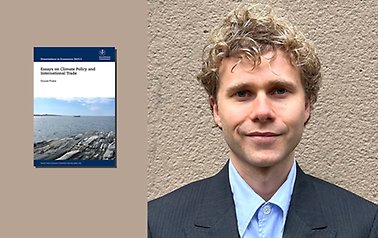
In his doctoral thesis, Ossian Prane explores how climate policy and international trade shape the green transition in the manufacturing sector. His thesis defense is on 12 June 2025 at Stockholm University.
Why do disadvantages persist in some families across generations, while others seem to escape the cycle? A new thesis from Stockholm University, sheds novel light on this question by tracing how socioeconomic and psychosocial disadvantages are associated with mental health problems across three generations. But it also reveals that it is possible to break such a vicious cycle of multigenerational disadvantages for improving mental health of future generations.
Childhood adversity is linked to an increased risk of mental health problems and physical diseases, such as cancer and cardiovascular conditions, across the life course. It can also contribute to long-term socioeconomic disadvantage. A new thesis from Stockholm University explores patterns in disadvantage, and pathways leading from early adversity to later health and socioeconomic outcomes.
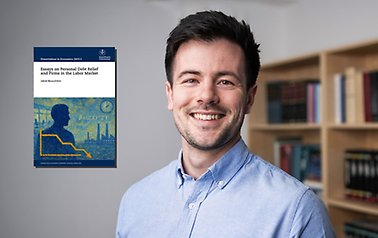
In his doctoral thesis, Jakob Beuschlein investigates how personal insolvency programs may discourage debtors from working. His thesis defense is on 10 June 2025 at Stockholm University.
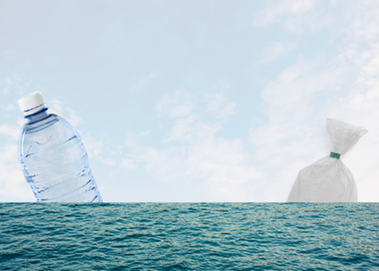
In a quiet seminar room at the Department of Environmental Science, two researchers sit across from a laptop, ready to simulate the afterlife of a plastic bag that escaped into the environment—blown away from a picnic on the beach for example. How long does it stay there? What does it become? And what damage might it do in the meantime?
Using advanced electron crystallography techniques, researchers at Stockholm University have succeeded in determining the structure of the historically significant red pigment carmine. It turns out that the substance, used today in products such as candy and paint, has a complex porous structure.
A study published in Molecular Cell reveals that both CBP’s presence and its enzymatic function are essential for proper gene activation at the start of development. Disruptions in this process lead to severe developmental defects, the study shows.
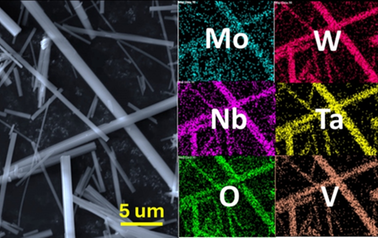
In a study recently published in Science, an international team of researchers from Stockholm University, the University of Illinois Chicago, and several collaborating institutions has unveiled a new class of materials that could revolutionize technologies operating under extreme conditions–from the heat of a jet engine to the crushing pressure deep underground.
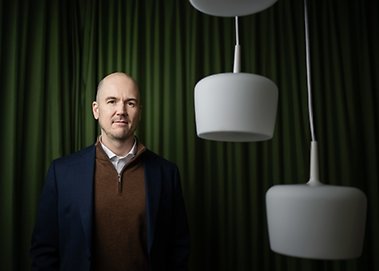
Carbon pricing is often highlighted as a key tool for reducing emissions and driving the green transition. But does it actually work in practice? Gustav Martinsson, a professor of Finance at Stockholm Business School, studies whether putting a higher price on carbon leads to lower emissions.
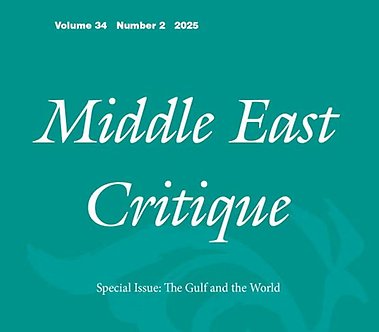
Isa Blumi, professor at the Department of Asian and Middle Eastern Studies at Stockholm University, is together with Jaafar Alloul the guest editor for a special issue of the journal Middle East Critique. The issue focuses on the Gulf region and its global connections. The new special issue, Volume 34, Issue 2 (2025), sheds light on the geopolitical tensions and economic power structures that arise in the encounter between regional and international interests. In the introduction, Blumi and Alloul discuss the latest research findings on the increasing global influence of Gulf states and their impact on the rest of the world. Two former students of Middle Eastern Studies at Stockholm University - Hanna Andersson and Fatemeh Mohammadi - also contribute articles. The special issue of Middle East Critique is available online at: https://www.tandfonline.com/toc/ccri20/34/2 Isa Blumi has also recently participated in an international conference, "Frontiers in the Umma: On the Sunni-Shii Borderlands in the Ottoman Middle East", at the French Institute for Anatolian Studies in Istanbul, where he gave a research presentation titled "From the Balkans to the Gulf: Correcting Blurred Frontiers in the Umma, 1850-1924". Isa Blumi is Professor of Turkish and Middle East Studies at Stockholm University.
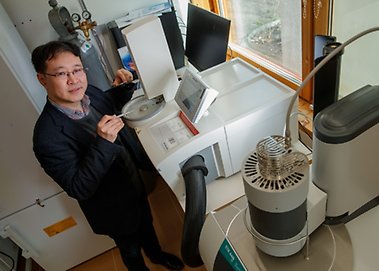
Can carbon dioxide become a raw material for producing plastic? Researcher Jiayin Yuan hopes so, as he develops a method to replace current oil-based raw materials with carbon dioxide to achieve significant climate benefits.
Research from Stockholm University offers insight into how having a close classroom friend from a wealthier background can significantly improve an individual's income in adulthood. Especially for children from low-income families. The study was recently highlighted by the Danish newspaper Weekendavisen.