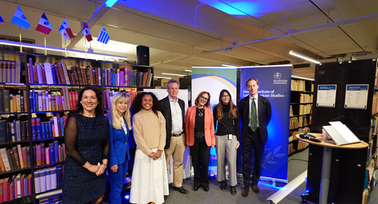
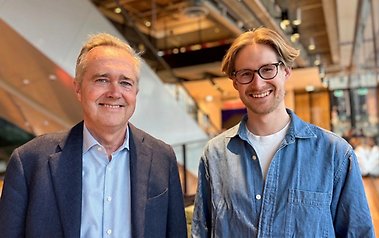
Researchers from Brazil and Sweden met at NILAS, Stockholm University to commemorate 200 years of diplomatic and cultural ties through a shared exploration of archival heritage.
A new research project at the Department of Law has received SEK 3 million in funding from Region Stockholm. The project will explore how healthcare systems can derive greater benefit from data used in the development of artificial intelligence.
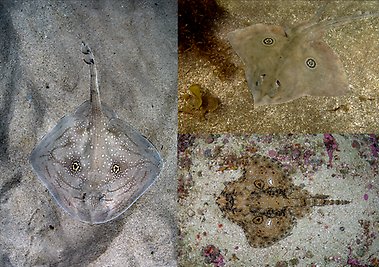
From butterflies to peacocks, bold circular "eyespots" are among nature's most eye-catching patterns. But why do they appear in some animals and not others? A new study of skates and rays finally provides an answer – and it lies in the full range of defences an animal has at its disposal.
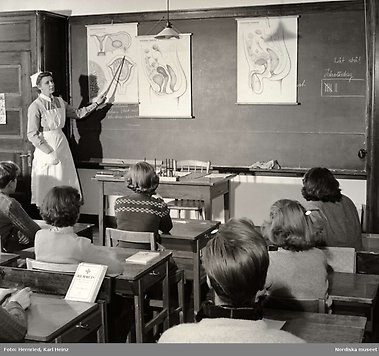
The research initiation funded by the Swedish Foundation for Humanities and Social Sciences: “Intimate Connections in Europe – Transnational perspectives on the history of school sex education” was held as a 3-day workshop in Stockholm (April 8–10), with 12 teaching researchers from five European countries: Germany, Sweden, Austria, the Czech Republic, and Switzerland participating.
Ultra-faint dwarf galaxies, tiny satellite galaxies orbiting the Milky Way, have long been seen as cosmic fossils. Now, a new study by researchers at the Oskar Klein Centre and the LYRA collaboration uses an unprecedented set of simulations to show just how powerfully these faint systems can reflect the conditions of the early Universe and tell us why some galaxies grew and others did not.
The scientific journal Tellus has been relaunched as a unified, independent, and scientist-led platform for Earth system science. The first set of publications reflects this renewed scope, bringing together research that advances understanding of the processes and interactions shaping the Earth system in a changing climate. With an expanded editorial structure and broader scientific scope, Tellus aims to publish high-quality, interdisciplinary research across the atmosphere, oceans, land, cryosphere, and biosphere—fields that are increasingly interconnected in the study of global environmental change.
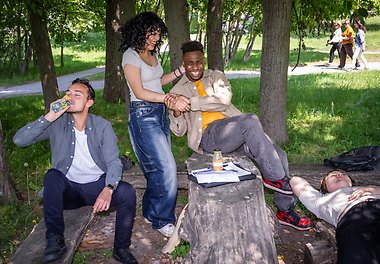
Stockholm University is looking for students to take part in a half-day photo shoot to help showcase university life. The shoot will include both still images and short video clips. Are you outgoing, positive, and patient? Then you might be just who we’re looking for!
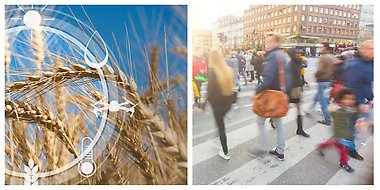
Employment rate among people with foreign backgrounds in Sweden is higher than previously calculated. This is according to a new model for population estimates which has now been applied to Swedish register data. The study also shows that fertility and mortality estimates for migrants should be adjusted.
Gaining insight into the job market and exchanging perspectives are just some of the benefits of mentoring. At Stockholm University, the Mentorship Programme brings students and alumni together in conversations that support both personal and professional growth.
Three projects at Stockholm University received funding this year within the Marie Skłodowska-Curie Actions Doctoral Networks (MSCA-DN) call. Two of them involve researchers from DSV.
Researchers at the Department of Computer and Systems Sciences and the Stockholm Resilience Centre are part of a transdisciplinary European collaboration to advance crisis preparedness by training a new generation of scholars. The project has received a grant of 4.8 million euros from the Marie Skłodowska-Curie Actions programme.