


Takeshi Miyakawa: Recipient of the 2026 Svend Pedersen Lecture Award
Professor Takeshi Miyakawa, this year’s recipient of the Svend Pedersen Lecture Award, conducts research that highlights how cultural traditions shape mathematics teaching and learning, linking students’ mathematical development with teachers’ professional learning from an international perspective.
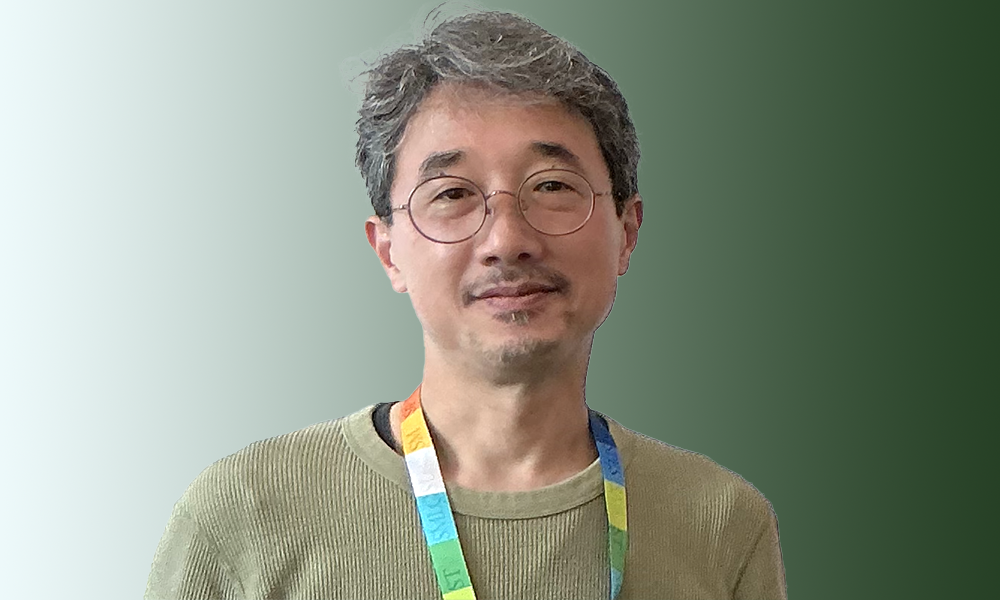
Professor Takeshi Miyakawa. Photo: Private.
Svend Pedersen (1935–2020) was a pioneer in subject-specific education research and played an important role in the development of teacher education from the 1980s onwards. In recognition of his contributions and lasting influence, the Department of Teaching and Learning at Stockholm University annually presents the Svend Pedersen Lecture Award to individuals who have made significant contributions to mathematics education or science education research.
Takeshi Miyakawa received his PhD in mathematics education in France in 2005. He subsequently held research positions at, among others, the University of Tsukuba in Japan and the University of Michigan in the United States. His research focuses on how students develop mathematical reasoning and the ability to construct proofs, as well as how teachers develop their knowledge and teaching practices. He is an established international researcher with extensive international collaborations and publications in leading academic journals.
Citation for the 2026 Award
Takeshi Miyakawa is awarded the 2026 Svend Pedersen Lecture Award in recognition of his significant contributions to international research in mathematics education. Through sustained and rigorous theoretical and empirical work, he has advanced knowledge in two central and closely interconnected areas: students’ development of mathematical reasoning and proof, and teachers’ professional learning and the development of teaching practices.
One particularly significant contribution is his comparative research on mathematical proof in French and Japanese schools. This research has highlighted how cultural and institutional conditions shape what is considered mathematical proof and how proof is addressed in teaching. His work has thus deepened our understanding of how different educational traditions shape mathematics teaching and influence students’ mathematical development.
Through his longstanding research on the Japanese tradition of Lesson Study, he has also contributed new theoretical perspectives on teachers’ collaborative learning and the institutional conditions that enable professional development. By bringing an overarching international and cross-cultural perspective to these research areas, Takeshi Miyakawa has made significant contributions to advancing our understanding of mathematics teaching, learning, and teacher education.
How did you feel when you received the Svend Pedersen Lecture Award? What does the award mean to you?
– I was very surprised when I learned that I had been awarded the Svend Pedersen Lecture Award. When I first received the email, I actually thought it might be spam! This is the first international award I have received, so I feel truly honoured.
– The award means a great deal to me, not only personally and as an individual researcher, but also in relation to the wider mathematics education research community in Japan. I am very grateful that my work is being recognised in this way.
What are the most important factors in helping students develop their mathematical understanding?
– In my view, mathematics is not just about solving problems or mastering different computational techniques. Even more important is understanding mathematical objects, their structures, and the relationships between them by asking questions such as: “Why does this happen?”
– I believe it is essential to foster students’ curiosity about the mathematical world and the mechanisms underlying it, just as curiosity about nature is central to the natural sciences.
– Therefore, I hope that teachers, in their everyday teaching, encourage students not only to find the correct answers or become skilled at different problem-solving techniques, but also to explore mathematics, ask questions about why things work the way they do, and deepen their understanding of the underlying mathematical relationships.
What are the most important insights from your research for the future development of mathematics teaching and teacher education?
– One of the most important insight from my research is that mathematics teaching and teacher education need to be understood within their cultural and institutional contexts. Within the international field of mathematics education research, researchers sometimes discuss what they believe to be the same issues, such as the teaching of mathematical proof or different classroom teaching practices. However, their perspectives may differ considerably due to underlying cultural and institutional assumptions of which they are not always aware.
– This can create an illusion of transparency, where we assume that we understand one another simply because we use the same terminology.
– Through my research, and particularly by studying Japanese mathematics education practices from an international comparative perspective, I hope to make some of these implicit assumptions visible and encourage researchers and teachers to reconsider things they may otherwise take for granted.
Which contribution from your research are you particularly proud of? And what do you hope it will contribute in the long term?
– From an international perspective, I am proud to have had the opportunity to work in different geographical and research contexts throughout my career. My experiences in Japan, France, and the United States, along with collaborations with many international colleagues, editorial work for international journals, and involvement in organising international conferences, have been particularly valuable. These experiences have helped me recognise and reflect on the cultural dimensions of mathematics education.
– In the long term, I hope that my research on the cultural dimensions of mathematics teaching and teacher education will make a meaningful contribution to the field.
– From a Japanese perspective, I am particularly proud of my efforts to introduce and promote French theories in mathematics education in Japan. My own research has benefited greatly from these theories, especially the Anthropological Theory of the Didactic (ATD). I am pleased that these theoretical perspectives have become increasingly familiar in Japan and that several Japanese researchers are now working with them.
How do you think mathematics teaching needs to develop in the future, particularly in the light of AI?
– I believe that mathematics teaching should not focus exclusively on problem-solving, but above all on understanding the mathematical world.
– With the rapid development of generative AI, I believe this aspect will become even more important. AI can help us solve mathematical problems, but if we do not simultaneously deepen our understanding of mathematical objects and their structures, problem-solving risks becoming a rather meaningless activity.
– For researchers in mathematics education, it is therefore becoming increasingly important to investigate how our understanding of the mathematical world can be developed through problem-solving and other activities, for example, through the development of theories.
– In this context, I believe that the perspective known as Questioning the World, which has been developed within the Anthropological Theory of the Didactic (ATD) over the past two decades, can offer valuable insights. It involves allowing teaching to start from questions and inquiry rather than from ready-made answers and methods. Students should be encouraged to explore mathematical relationships, ask why things work the way they do, and thereby develop a deeper understanding of mathematics.

Don’t miss the lecture on 1 December!
In conjunction with the award ceremony, Takeshi Miyakawa will give a lecture in which he shares new ideas and perspectives on mathematics education from a cultural perspective. The lecture draws on his many years of international experience in mathematics education research.
Last updated: 2026-11-16
Source: Department of Teaching and Learning