


The Sven Pedersen Lecture Award 2026: Professor Takeshi Miyakawa
Professor Takeshi Miyakawa is the recipient of the 2026 Svend Pedersen Lecture Award in recognition of his contributions to the internationalisation of Japanese Lesson Study, his innovative research on paradidactic infrastructure, and his influential cross-cultural studies of mathematical proof.
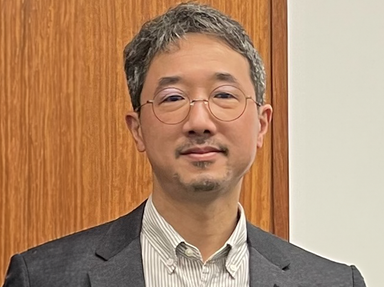
Takeshi Miyakawa. Photo: Private.
The Svend Pedersen Lecture Award is presented annually to an internationally distinguished researcher who has made significant contributions to mathematics education or science education, with a particular focus on advancing teacher education.
Rethinking Mathematics Education from a Cultural Perspective: Insights from Japanese Traditions
In this talk, Takeshi Miyakawa will share some ideas he has recently developed concerning mathematics education from a cultural perspective, drawing on his many years of international experience in mathematics education research. Through this experience, he has deepened his understanding of various aspects of mathematics, mathematics education, and mathematics teacher education. At the same time, the more he has learned about mathematics education in different educational and cultural contexts, including Japan, the more he has become aware of fundamental differences between Japanese and Western traditions, which have sometimes made him realise just how culturally distant Japan is from Western countries.
Through several examples drawn from Japanese traditions, he will illustrate how our understanding and practices of mathematics, mathematics education, and mathematics teacher education are shaped by fundamental assumptions of which we are often unaware, and how these activities are more deeply embedded in cultural traditions than we usually recognise. He hopes this talk will provide an opportunity for the audience to reflect on mathematics education in their own cultural contexts.
Motivation for the award
Takeshi Miyakawa is professor at the Department of Mathematics, School of Education, Waseda University, Tokyo, Japan. His research is at the forefront of mathematics education internationally because it brings together a sustained theoretical and empirical engagement with two interconnected questions: how students learn to reason and prove in mathematics, and how teachers develop the knowledge and practices required to support such learning. These two strands are united by a consistently comparative and cross-cultural perspective that reveals what is specific to particular educational traditions and what may be shared across them.
Since completing his doctoral thesis in 2005 at the Université Joseph Fourier – Grenoble 1 in France, and following research fellowships at the University of Tsukuba and the University of Michigan, Miyakawa has produced a substantial body of scholarship with a coherent intellectual thread: the effort to understand mathematical knowledge and its teaching not as universal and self-evident, but as shaped by institutional, curricular, and cultural conditions.
Takeshi Miyakawa comparative analyses of proof in French and Japanese secondary schools have illuminated how the very nature of proof to be taught—and the pedagogical reasoning surrounding it—differs across national contexts in ways that have significant consequences for students' mathematical development. At the same time, his long-standing engagement with the Japanese practice of lesson study has opened new theoretical perspectives on how teachers learn collectively, and on the institutional infrastructure that makes such learning possible.
His sustained research provides both theoretical resources and concrete empirical models for how collaborative teacher professional development can be organised, studied, and understood—including through the lens of the Anthropological Theory of the Didactic, which he has brought into productive dialogue with lesson study traditions from Japan, Europe, and beyond. His international collaborative network spans researchers in France, Switzerland, Denmark, Italy, China, and the United States, and his work has consistently appeared in the field's leading venues, including Educational Studies in Mathematics, the Journal of Mathematics Teacher Education, and ZDM – Mathematics Education. He has served on the editorial boards of these and numerous other journals, and as a member of the International Program Committee for ICME-14.
Last updated: 2026-11-12
Source: Department of Teaching and Learning