On Friday, March 6, 2026, Isabella Badolati will defend her doctoral thesis, “Deciphering immune, microbial and metabolic signatures in allergic diseases,” at Stockholm University. In this interview, she explains the research behind her thesis and what she hopes it can contribute to the field.
Department of Molecular Biosciences, The Wenner-Gren Institute
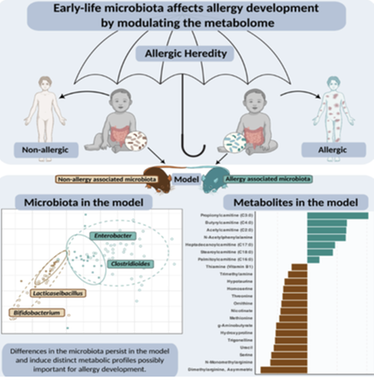
Human microbiota-associated (HMA) models are used to allow in vivo studies of the human gut microbiome and its effects on host physiology. In particular, alterations in early life microbiota have been linked to allergy development during childhood. In this study, Ymke de Jong et al investigated how pools of human microbiota collected from infants with different allergy risk thrive in mice and their offspring, as well as how they influence the host metabolome.
Department of Molecular Biosciences, The Wenner-Gren Institute
Diabetes is one of the fastest-growing diseases in the world. According to the World Health Organization (WHO), the number of people living with the condition has quadrupled globally since the 1980s. Several major research projects at Stockholm University are exploring fundamental factors that may help prevent or even reverse diabetes, including approaches that aim to activate the body’s own immune system.
A new study reveals that sons born to mothers with type 1 diabetes may develop early vascular dysfunction – independently of metabolic health. The finding may help shape future strategies to prevent cardiovascular disease early in life. Children of women with type 1 diabetes are known to be at increased risk of developing cardiovascular diseases. A new study by researchers from Stockholm University and Karolinska Institutet and others is the first to show that the risk is linked to early dysfunction in blood vessel cells in sons, even before any metabolic issues arise. The study is published in Cell Reports Medicine. The researchers used a combination of animal models, Swedish and Danish health registries, and a small clinical study to explore the link. Results show a sex-specific effect: only sons displayed early vascular changes.