Research catalogue

Discover the research at Stockholm University through our pages for research subjects, projects and research groups!

They also lead you to our researchers profile pages, our departments and courses and programmes.

Refine
Research type

Research type

Status

Research areas

Research areas

Departments

Departments

Showing 1961-1980 of 2793 results

  • Putting a price on health: Knowledge claims and ethical considerations in the field of health econom

    Research project

    The project “Putting a price on health” focuses on the difficult art of measuring health. More precisely, it explores how epistemological ambiguities and ethical dilemmas been discussed within, and in relation to, the field of health economics.

  • Putting locals first: mapping cultural values across rivers of the world

    Research project

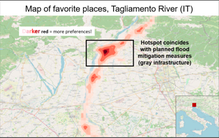
    The project will evaluate proxies of socio-cultural services provided by the river, such as mapping locals' favorite places on the river.

  • Pål Stenmark's research group

    Research group

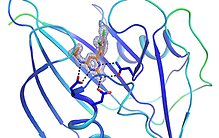
    The botulinum neurotoxins are the most toxic substances known. Despite this, their therapeutic properties are becoming increasingly evident. We study these toxins using a variety of methods, including X-ray crystallography, to understand their mechanism of action, thereby enabling the development of their therapeutic properties. 

  • QCMD: Molecular Simulations

    Research group

    In the group, we use molecular dynamics simulations and modern quantum chemical calculations to investigate electrolyte solutions and solar cell materials.

  • Quality Development Project: A Doctoral Course in Medical Law & Ethics in Collaboration with Karolinska Institutet

    Research project

    This project aims to develop a new doctoral-level course in Medical Law & Ethics in collaboration with Karolinska Institutet—the first of its kind in Sweden.

  • Quality of Teacher Education Programme for Primary School, School-Age Education and Care

    Research project

    Quality of Teacher Education Programme for Primary School, School-Age Education and Care.

  • Quantification of contaminants with LC/HRMS and graph-based machine learning

    Research project

    Understanding the toxicity of real-world complex mixtures, and identification of the most toxic chemicals is an essential starting point for the intelligent design of water treatment solutions and chemical regulation.

  • Quantifying methane emissions from the subsea permafrost tipping system (SuPerTip)

    Research project

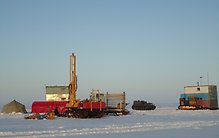
    Subsea permafrost represents a tipping system of carbon-climate interactions that puts large uncertainties on methane emissions from a warming Arctic. SuPerTip aims to quantify the extent of current and future emissions from this system.

  • Quantitative analysis of non-equilibrium systems

    Research project

    Non equilibrium systems abound in nature on all scales but general principles that guide their working are not known. This project concerns investigating an aspect that all non-equilibrium systems have in common- entropy generation.

  • Quantitative Criminology

    Research group

    The Quantitative Criminology Research Group was established in 2022. An interest in quantitative methods in criminology – its possibilities and limitations – is what unites the group.

  • Quantum and Complex Systems

    Research group

    The Bergholtz group explores the world of quantum and complex systems — what it is and what it could be — from the perspective of mathematics and theoretical physics.

  • Quantum Dynamics and Sensing Theory Group

    Research group

    Our research group explores how quantum systems behave and interact, and how their quantum dynamics can be harnessed for precision sensing and tests of new fundamental theories of physics.

  • Quantum dynamics and theory of open quantum systems

    Research group

    We are interested in various aspects of theoretical quantum mechanics. Currently, our main focus is on quantum simulations using quantum optical systems and the theory of open quantum systems.

  • Quantum Frontiers

    Research group

    The Wilczek group explores several frontiers of quantum theory where new or hitherto impractical theoretical concepts are making contact with experimenters’ increasing ability to explore and control the quantum world.

  • Quantum Information and Quantum Optics

    Research group

    Our research is focused on the field of quantum optics and quantum information. This include tests of quantum theory foundations, quantum communication, quantum encryption, quantum sensing, photonic-based quantum processor, and topological photonics.

  • Quantum Information in Quantum Gravity Group

    Research group

    The aim of our group is to explore quantum gravity and black holes using quantum information and quantum complexity.

  • Quantum materials characterization

    Research group

    The Quantum Materials Characterization group at Stockholm University investigates superconductivity, magnetism and quantum phase transitions through thermodynamic, transport and structural measurements. We combine experimental studies of quantum materials with the development of sensitive instruments for small samples at low temperatures and in strong magnetic fields.

  • Quantum Materials with Anisotropic Heavy Fermions

    Research project

    Quantum materials are materials with strong electronic correlation and emergent orders. In this research project we will experimentally study quantum materials in systems with strongly anisotropic properties.

  • Quantum molecular dynamics

    Research group

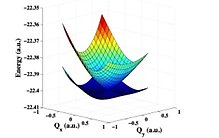
    We perform theoretical studies of molecular reactions that require a solid quantum description of both electrons and nuclei.

  • Quantum photonics

    Research group

    Semiconductor devices and non-linear processes can generate a wide spectrum of quantum states of light that can be employed in tasks of communication, simulation, and sensing. We use best tools and methods available to modern science to generate quantum light, harness its unique properties, and bring it closer to real-world application.