


Organic synthesis
Research subjectOrganic synthesis is about the production of organic compounds.
Discover the research at Stockholm University through our pages for research subjects, projects and research groups!
They also lead you to our researchers profile pages, our departments and courses and programmes.
Showing 1741-1760 of 2793 results
Organic synthesis is about the production of organic compounds.
Within this field we are interested in how individuals learn and develop, as well as leadership in a constantly changing working life. Central to these questions are influencing processes and processes of change, as well as skill, professional, and organizational development.

As societies are increasingly ethnically diverse, social integration is of increasing importance. Organised leisure activities (OAs) are framed as an additional arena of intergroup contact, with conditions especially conducive for promoting social integration. This project examines the extent to which OA-participants experience intergroup contact.

With increasing globalization and cultural complexity, governance takes novel forms. Studying how attempts to govern are organized informs us about how contemporary power is being reconfigured and challenged.

The aim of this PhD thesis project is to study digital transformation in public organizations. We focus on how organizational culture in public organizations is influencing digital transformation.

This project explores how process mining can power organizational digital twins. Our aim is to enable prediction, compliance, and optimization of processes for data-driven decisions and continuous improvement.

Over the past years, Sweden has seen a growing interest in the promotion of sustainable health and well-being in working life. This is for instance reflected in the national work environment strategy and also forms the starting point for this research project.

This research group is one of the leading groups in Swedish research in Education related to organizations and working life. Internationally the group contributes to research within workplace learning, organizational learning and learning organization.

Today, there are 16 mines in Sweden, producing more than 70 million tons ore every year. By 2030, the Swedish government estimates that there will be about 50 mines producing well over 120 million tons.
The OrganoFeed project intends to make lab-grown mini-organs – organoids – more reliable for research. Using AI and microfluidics, it fine-tunes the organoid environment in real time, reducing errors. This could improve drug testing and even help replace animal experiments.
The main objectives of the project involves: Development of new methods for efficient organofluorine synthesis; Stereoselective organofluorine syntheses; DFT studies of the reaction mechanisms; and Fluorine-18 labelling for medical diagnostics.

The project offers insights into whether and how increasing income inequality spills over into disparities in future generations' educational outcomes. The evidence provided is instrumental to understanding the long-term challenges for the Swedish welfare state to provide equal opportunities for its citizens.

At the laboratory, several research projects are underway that concern both animal and human skeletal materials from Mesolithic to modern times.

In this project we are studying automated decision-support in municipal-based work with social assistance. The focus is directed towards, e.g., approval rates, variations in decisions and consequences for applicants as well as professionals.
This project examines and discusses ways of improving current estimation methods using Swedish total population register data.
The project “Overlooked Children in Need (ORCHID)” aims to investigate the impact of parental disability on their children's outcomes from birth to young adulthood in Sweden, as well as to evaluate potential contributing and buffering factors, including the policy environment.
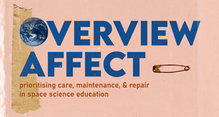
This is a two-part workshop where we explore care, maintenance and repair in the context of space science education. We are developing innovative pedagogical methods to create a greater inclusion of these themes in space science discourses.
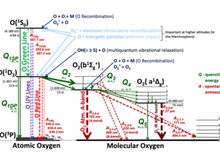
The ORIGIN rocket project addresses the Earth's nightglow, a global emission layer that is the result of reactions between atomic oxygen and other atmospheric species in the upper mesosphere and lower thermosphere, at altitudes between 80 and 110 km.
PAG is a research group for postdoctoral researchers at the Department of Archaeology and Classical Studies at Stockholm University.