


Research project Critical analysis and learning for sustainable development
The project investigates upper secondary students’ challenges in conducting critical analysis in social studies, focusing on international relations, war, and conflict management. It also develops and evaluates instruction that supports students’ understanding and conducting of critical analysis.
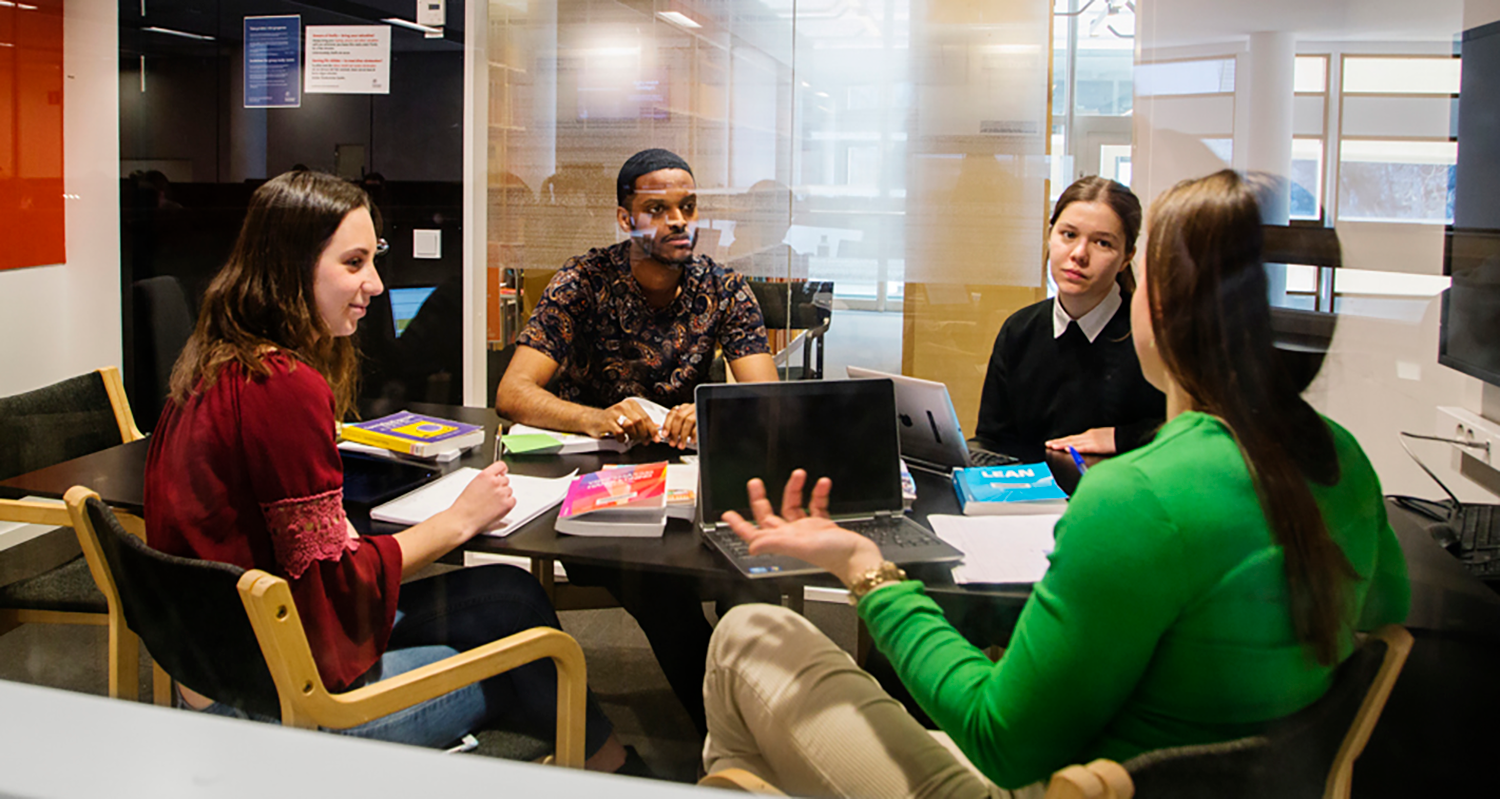
Photo: Lena Katarina Johansson.
In a world characterised by increasing global complexity and societal challenges, it is becoming increasingly important for students to critically analyse social issues. In social studies, international relations and conflict management are key areas in which students need to develop knowledge of societal structures such as the economics, politics, religion, culture, norms, and history of contexts in order to critically analyse conflicts.
The project is grounded in the Dublin Declaration – The European Declaration on Global Education to 2050. The declaration emphasises that education should foster students’ critical thinking and their ability to analyse complex societal issues from multiple perspectives, while promoting global citizenship education. In the Swedish context, this can be related to the concept of education for sustainable development. This concept is used by the Swedish National Agency for Education and several other public authorities to encompass issues such as global challenges, international relations, and conflict management.
The project investigates how students develop and conduct critical analyses of international relations, with a particular focus on war and conflict management. It aims to increase knowledge about the kinds of analyses students produce, how their knowledge, normative beliefs, and emotions relate to these analyses, and instruction that can support students in developing understanding of how to conduct critical analysis.
Research on students’ ability to carry out critical social science analyses remains limited, particularly in the field of international relations. At the same time, this is a core area of social studies, and teachers have identified that students often struggle to move beyond descriptive and explanatory reasoning towards more complex and critical analysis.
Using a design-based research approach with a quasi-experimental design and mixed methods, the project develops and evaluates teaching while simultaneously generating new knowledge about student learning. The findings will contribute to a better understanding of how social studies education can strengthen students’ understanding of what critical analysis entails and how to conduct it, thereby supporting education for sustainable development.