


Research project NANNOARC | Rewriting the Quaternary history of the Arctic Ocean using nannoplankton biochronology
NANNOARC aims to improve the dating of Arctic Quaternary sediments by advancing nannofossil biochronology and integrating AI-based automated imaging, ancient DNA, sediment analyses, and multiple geochronological tools. The outcome will enable more accurate reconstructions of past Arctic sea-ice variability and climate dynamics.
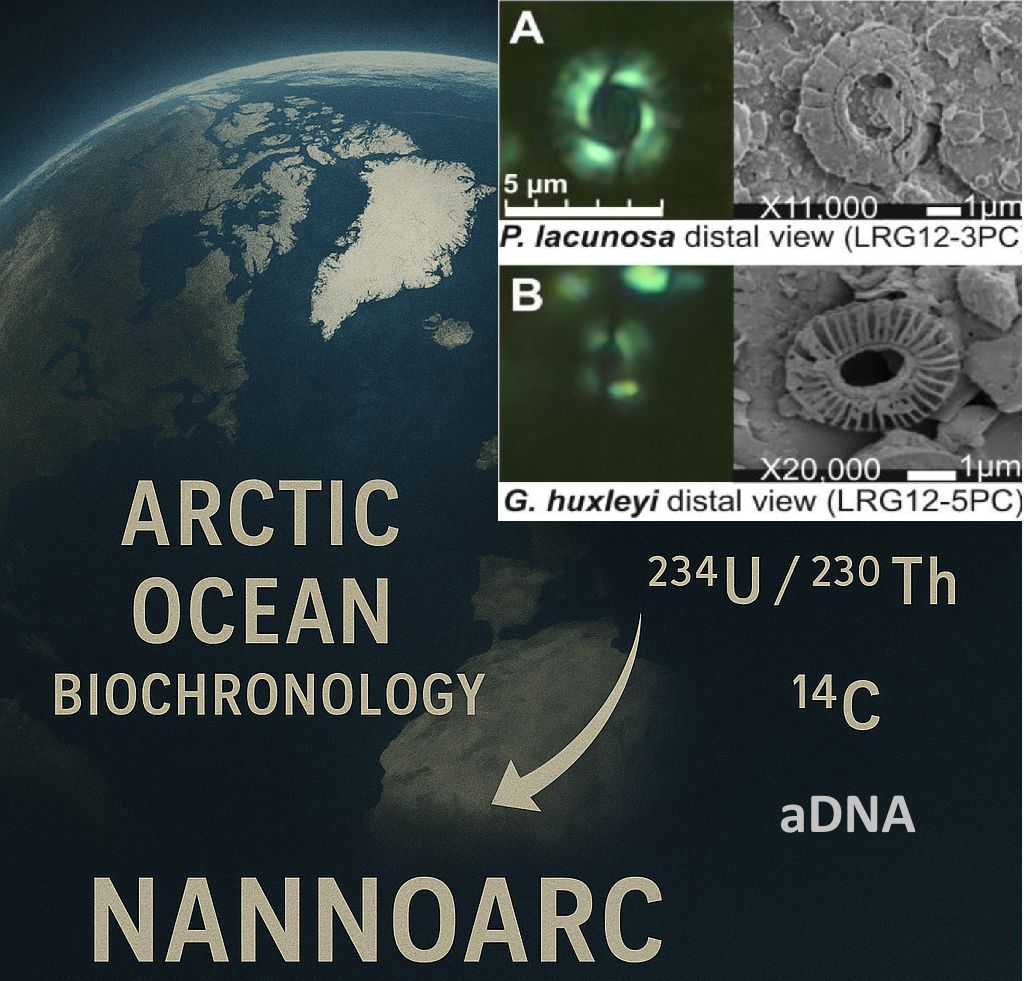
NANNOARC focuses on improving the chronological framework of Arctic Quaternary marine sediments by refining nannofossil-based dating methods and integrating them with AI-assisted imaging, sedimentological analyses, ancient DNA, and complementary geochronological techniques. By strengthening the temporal resolution of Arctic sediment records, the project will support more robust reconstructions of past sea-ice conditions and climate variability, enhancing our understanding of long-term Arctic climate dynamics.
Understanding the history of Arctic sea ice variability on Quaternary glacial time scales is paramount for comprehending Earth climate dynamics and predicting future change. This proposal contributes to this goal by addressing a major obstacle: accurate dating of Quaternary Arctic marine sediments that contain long-term climate histories. NANNOARC will focus on advancing the application of Arctic nannofossil biochronology, a key dating tool that utilizes time-calibrated evolutionary change in fossil algae. My recent findings unveiled previous misidentifications of key nannofossil species, prompting a reevaluation of Arctic sediment age models and highlighting new potential to confidently identify glacial cycles in the Arctic. NANNOARC seeks to optimize this approach by developing innovative imaging techniques, utilizing refined species concepts, and broadening the spatial coverage of dated records to establish a comprehensive pan-Arctic nannofossil biochronology. The biochronology will be used to calibrate proxy records that elucidate past sea ice dynamics, including previous warm phases critical to understanding cryosphere resilience. Collaborative efforts will incorporate AI-equipped automated imaging technologies, ancient DNA analysis, comprehensive sediment analysis, and integration of other geochronological data. The resulting age-calibrated sea-ice proxy reconstructions are essential for data-model comparisons and advancing our understanding of Arctic climate dynamics.