


Research project Raising Every Voice: The Importance of Integrating Caregivers’ Perspectives into Lesson Development for Students with Intellectual Disabilities and Autism
The research project examines how communication, participation, and learning can be promoted for adolescents with intellectual disabilities and autism by making use of caregivers’ knowledge of their children’s communication in school practice.
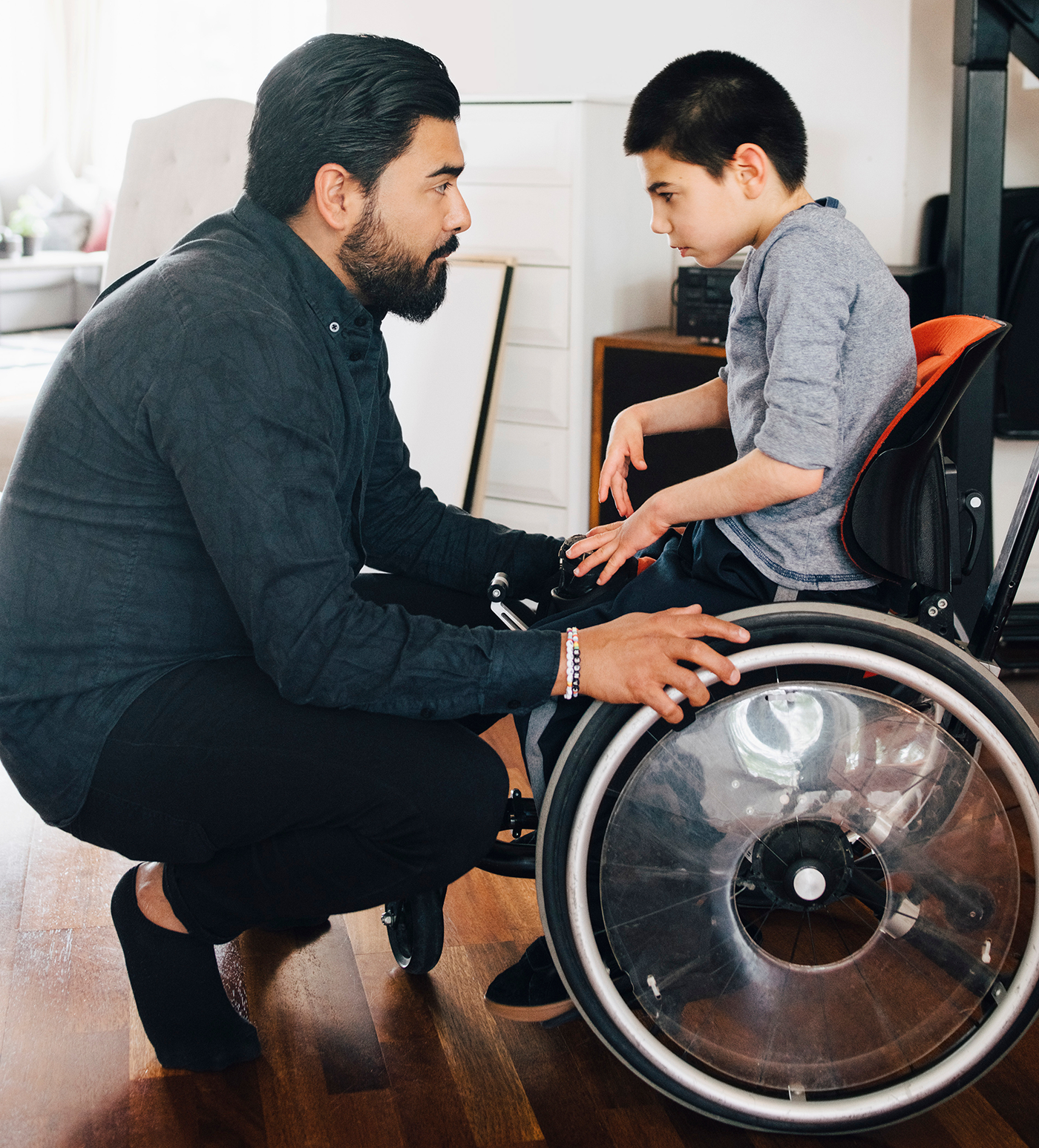
Between 2026 and 2029, the researcher follows four students and studies how they communicate at home and at school. In collaboration with caregivers, strategies are developed to better identify, understand, and support each student’s communication. The strategies are then tested and further developed at school through Lesson Study in collaboration with teachers.
The project aims to develop knowledge and practical approaches that can promote participation and create better conditions for learning, while also strengthening collaboration between home and school.
Adolescents with intellectual disabilities and autism may communicate in many different ways. Glances, gestures, sounds, and body movements can have communicative significance, but these expressions are not always noticed or understood by those around them. Caregivers often have extensive and nuanced knowledge of how their children communicate, but this knowledge is not always systematically used in school practice.
The project examines how caregivers’ knowledge of their children’s ways of communicating can contribute to the development of teaching and to how schools notice, understand, and respond to students’ communication.
Between 2026 and 2029, the researcher follows four students in Stockholm and studies their everyday communication at home and at school. Video recordings and interaction analysis are used to examine how communicative expressions, such as glances, gestures, sounds, and body movements, are noticed, interpreted, and responded to in the two settings.
The video material is subsequently used in participatory workshops with caregivers. The workshops focus on analysing the students’ communicative expressions and exploring how people around them can become better at noticing, interpreting, and responding to their communication. Based on this work, individually adapted strategies and practical tools are developed to support each student’s way of communicating.
The next stage involves testing and further developing the strategies at school through Lesson Study. Teachers, caregivers, and the researcher collaborate in recurring cycles to plan, conduct, analyse, and develop teaching, with particular attention to students’ communication, participation, and learning.
The project aims to contribute knowledge about how caregivers’ experiences and expertise can be used in school practice and in the development of teaching. The project also aims to develop practical tools and approaches that can support collaboration between home and school and help ensure that students’ communicative expressions are more consistently noticed, understood, and responded to.
The project has received ethical approval from the Swedish Ethical Review Authority (Dnr 2026-00031-01).
Participants from Stockholm University:
Kamilla Klefbeck, Department of Special Education
Participating units outside Stockholm University:
Faculty of Education, the University of Tokyo