


Master's Programme in Molecular Life Sciences
This programme offers broad training at the frontier of research. Molecular life sciences aims to understand the structure, function and regulation of biological systems from the molecular to the organismal level. This rapidly growing field, with extensive technological advances and emerging new sub-disciplines, opens up a broad spectrum of career opportunities.
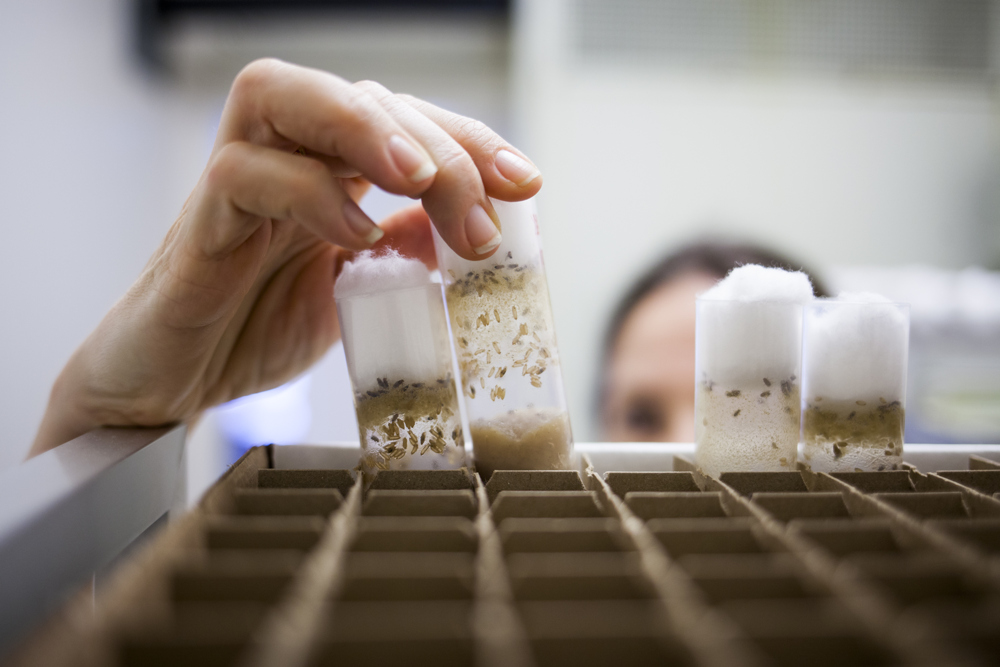
Photo: Niklas Björling
The Master’s Programme in Molecular Life Sciences offers you the opportunity to study at the forefront of research into the molecular processes of life. You will gain a deep understanding of how biological systems function, from the molecular level to the whole organism. The programme combines an international and interactive research environment with a strong focus on laboratory work and experimental methods, preparing you for a career in both academia and industry.
Reasons to choose the Master’s Programme in Molecular Life Sciences:
- Gain broad and in-depth knowledge in molecular biology, cell biology, genetics, immunology, microbiology, and biochemistry.
- Study in an international research environment with close connections to ongoing cutting-edge projects.
- Tailor your studies with up to 45 credits of optional courses within or outside molecular life sciences.
- Conduct your degree project in active research projects at the university or at external research institutes and companies.
- Develop advanced laboratory skills and methodological expertise highly sought after in academia and industry.
- Learn to critically analyse and independently solve complex biological problems.
The Master’s programme offers a selection of courses covering a broad range of subjects within cell biology, molecular biology, biochemistry, genetics, microbiology, developmental biology, molecular physiology, and immunology. The flexible nature of the programme allows up to 45 credits of optional courses, which can be courses in other subject areas such as law or economics.
You are required to choose 30 credits of courses from the list of elective courses (updated each year). You can also include at least 15 credits of optional courses. These may be taken in other subjects.
Year 1
Compulsory courses autumn term
Elective courses autumn term
Radiation Biology and Cellular Toxicology
Elective courses spring term
Molecular Plant-Microbe Interactions
Stem Cells in Developmental and Cancer Biology
Courses offered at other departments
Advanced Methods in Biochemistry
Year 2
Compulsory courses
Degree project in Molecular Life Science
(instructions apply for all degree projects at the department)
See also elective courses year 1.
Independent project
Degree projects, which are 30, 45 or 60 credits, are carried out in ongoing research projects within the current broad research areas of Infection and Immunobiology, Integrative Biology and Molecular Cell Biology at the Department of Molecular Biosciences, The Wenner-Gren Institute (MBW). It is also possible to conduct the degree project externally, at a research institute, organisation or company.
Recent degree projects
- Role of imaginal disc growth factors (IDGFs) in Drosophila immunity
- Investigation of radiosensitizers for tumor initiating cells in lung cancer
- RNA editing in splice sites
- Suitable conditions for quantitative Western blot with analysis of UCP1 protein expression in iBAT and ingWAT of mice under thermal stress, high fat diet and thyroxin treatment
The Master's programme in Molecular Life Science is only open for application in the first round, with deadline for applications in mid-January.
Specific eligibility
This programme requires previous university-level studies in specific subject areas. Read more about the entry requirements and see examples of academic backgrounds that typically meet them.
Selection process
Applicants that meet the eligibility requirements are ranked based on their merit rating. Only students with the highest merit ratings are selected for our programmes. The merit rating is based on the following selection criteria:
- relevance of previous studies in relation to the programme
- grades of academic courses
- relevant work and/or research experience
Required supporting documentation
You need to submit a CV to receive a merit rating for relevant work and/or research experience. The CV should give a clear overview of previous experience and how it is relevant to this particular programme. The CV must be written in English and should be no longer than two pages.
To help us in your evaluation of your application we also ask that you submit a cover letter using our form (updated yearly, only latest version accepted).
Note! The form is only available during the application period, up to the supporting documentation deadline.
After submitting the form, download the generated PDF. Do not make any changes to the resulting PDF!
To be considered your CV and cover letter must be uploaded to you application at University Admissions before the supporting documentation deadline.
Recommendation letters are not considered.
A Master's degree in Molecular Life Sciences opens a broad spectrum of career opportunities both within and outside of the academic sphere. This programme gives you the eligibility to continue with PhD studies.
Important parts of industry and society require deep knowledge within molecular life sciences, from biomedical research and pharmaceuticals development to the effect of the environment on biological systems, quality assurance of foodstuffs, and nutritional science.
Possible career paths
- Opportunities in environmental and food sectors, such as quality control, nutrition, and sustainability.
- Roles in science policy, advisory, or communication, where deep biological knowledge is essential.
- Continue with PhD studies and pursue a research career in molecular life sciences.
- Work in the pharmaceutical and biotechnology industries, including drug development and biomarker research.
- Careers in biomedical research, medical diagnostics, and laboratory services.
- Engage in interdisciplinary projects connecting biology with technology, economics, or law.


