


Master's Programme in Microbiology
Learn about pathogenic microbes, biological diversity, evolution and biotechnology in an environment of world-leading research. Step by step practical and experimental training will equip you cutting edge laboratory skills and techniques as well as provide up-to-date knowledge of the field.
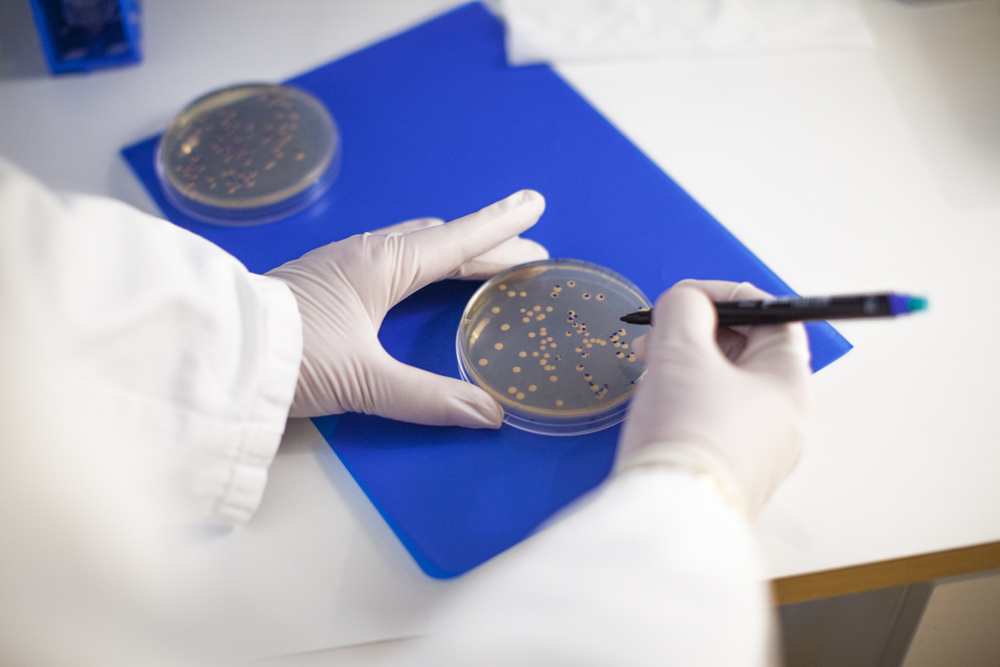.jpg)
Photo: Niklas Björling
Knowledge in microbiology is important in medicine, food industry, agriculture, technology, chemistry, and geology. In this programme you will gain a deeper understanding of how bacteria, viruses, fungi and protozoa interact with the environment and affect biological systems at molecular, cellular and organismal level. You will meet different aspects of microbiology, such as pathogenic microbes, biological diversity, evolution, and biotechnology.
The identification of new emerging microbial pathogens and the global emergence of multiple antibiotic resistance show that pathogenic microorganisms will remain a very significant health problem in the years to come. In-depth knowledge of microorganisms is essential to develop new diagnostic tools, medicines, and vaccines.
The goal of the Master’s programme is to provide a comprehensive understanding of microorganisms through theory, laboratory work, and scientific investigation.
Reasons to choose the Master's programme in Microbiology:
- Strong focus on building practical laboratory skills and techniques at advanced level
- Close connection to world-leading research
The Master’s programme in Microbiology aims to provide a complete understanding of the life of microorganisms with courses in microbiology and infection biology.
During the compulsory degree project (45 or 60 credits) you will apply the knowledge and skills you have developed in conducting a scientific study within microbiology.
If you choose to do a 45-credit degree project, you can also include 15 credits of optional courses. These may be taken in other subjects.
Year 1
Year 2
Compulsory courses
Degree Project in Microbiology
(instructions apply for all degree projects at the department)
Independent project
Degree projects, which are 45 or 60 credits, are carried out within ongoing research projects at the Department of Molecular Biosciences, The Wenner-Gren Institute (MBW).
Recent degree projects
- Can probiotic bacteria alleviate the effects of chemotherapy on gut epithelial cells, with respect to cellular fitness, barrier integrity and inflammatory responses?
- Regulatory role of Caulobacter crescentus Lon on proteins involved in stress responses
- The impact of SARS-CoV-2 on the activity and function of human monocytes and dendritic cells
- Plasmodium fertilization is altered by a self-metabolite during the erythrocytic cycle
The Master's programme in Microbiology is only open for application in the first round, with deadline for applications in mid-January.
Specific eligibility
This programme requires previous university-level studies in specific subject areas. Read more about the entry requirements and see examples of academic backgrounds that typically meet them.
Selection process
Applicants that meet the eligibility requirements are ranked based on their merit rating. Only students with the highest merit ratings are selected for our programmes. The merit rating is based on the following four selection criteria, with equal weight:
- relevance of previous studies in relation to the programme
- grades of academic courses
- motivation letter
- research ideas
Required supporting documentation
To submit your motivation letter and research ideas you must use our cover letter form (updated yearly, only latest version accepted).
Note! The form is only available during the application period, up to the supporting documentation deadline.
After submitting the form, download the generated PDF. Do not make any changes to the resulting PDF!
To be considered your cover letter must be uploaded to you application at University Admissions before the supporting documentation deadline.
Recommendation letters and CVs are not considered.
The skills and knowledge you will attain on the Master's degree in Microbiology open many career possibilities. These include public authorities, universities and especially research and development within biotechnology, and the pharmacological, food and medical industries. The programme gives you the eligibility to continue with PhD studies.


