


Master’s Programme in Animal Behaviour
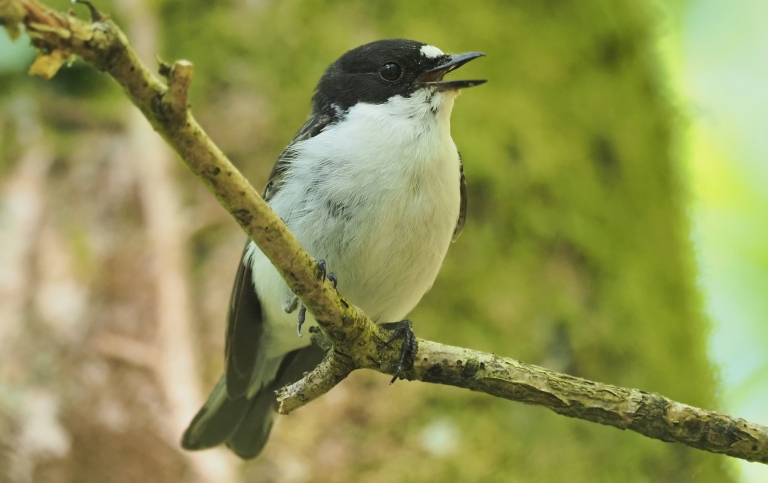
Photo: Tom Wallis
Our Master’s Programme in Animal Behaviour will provide you with a deep understanding of why animals behave the way they do. You will gain a solid theoretical foundation combined with advanced methodological skills, preparing you to analyse complex behavioural phenomena across species.
You will study how animals sense the world and how they communicate, the social structure of their communities, how they form pairs and reproduce, how they acquire and use information and solve problems, and how competition and co-operation arise. In addition, you will learn how behaviour develops during the life of the individual and the influence of learning and experience on behavioural development. Finally, you will gain experience in synthesizing, discussing, and debating key controversies in the study of animal behaviour.
Knowledge of animal behaviour is important in many fields of biology, including ecology, evolutionary biology, neurobiology and conservation biology. Animal behaviour also has applications beyond the scientific sphere. For instance, one important application for animal behaviour concerns the requirements of ethical treatment of animals and animal well-being.
Reasons to choose the Master in Animal Behaviour:
- Broad education covering animal sensory biology, cognition, social and sexual behaviour, communication, and behavioural ecology
- Hands-on training in laboratory methods, fieldwork, and developing rigorous arguments to support your research
- Extensive opportunities for conducting research projects in the laboratory and at Tovetorp research station
- Flexible structure with space for electives and optional courses to tailor the programme to your interests
- An international learning environment with close connections to cutting-edge behavioural research
The courses within the Master’s Programme in Animal Behaviour will give you a strong foundation in the study of animal behaviour, including animal communication and cognition, as well as social and sexual behaviour.
The programme offers flexibility through up to 22.5 credits of optional courses, allowing you to tailor your studies to your academic interests and career goals. Optional courses may be chosen from a wide range of subjects and can also be taken at another university, subject to approval.
During the compulsory degree project, you will apply the knowledge and skills you have developed by conducting an independent scientific study within the field of animal behaviour.
Year 1
Compulsory courses, autumn term
Science in Biological Research and Investigation
Compulsory courses, spring term
Animal Cognition and Communication
Year 2
Compulsory courses
Degree project in Animal Behaviour
(instructions apply for all degree projects at the department)
Independent project
Degree projects, which are 30, 45 or 60 credits, are carried out within ongoing research projects at the Department of Zoology, within the current broad research projects covering: adaptive colouration, animal personality, brain evolution, cognition, collective behaviour, communication, foraging decisions, sexual selection, social behaviour. It is also possible to conduct the degree project externally, at a research institute, organisation or company.
The Master's programme in Animal Behaviour is only open for application in the first round, with deadline for applications in mid-January.
Specific eligibility
This programme requires previous university-level studies in specific subject areas. Read more about the entry requirements and see examples of academic backgrounds that typically meet them.
Selection process
Applicants that meet the eligibility requirements are ranked based on their merit rating. Only students with the highest merit ratings are selected for our programmes. The merit rating is based on the following four selection criteria, with equal weight:
- relevance of previous studies in relation to the programme
- grades of academic courses
- motivation letter
- research ideas
Required supporting documentation
To submit your motivation letter and research ideas you must use our cover letter form (updated yearly, only latest version accepted).
Note! The form is only available during the application period, up to the supporting documentation deadline.
After submitting the form, download the generated PDF. Do not make any changes to the resulting PDF!
To be considered your cover letter must be uploaded to you application at University Admissions before the supporting documentation deadline.
Recommendation letters and CVs are not considered.
A Master’s degree in Animal Behaviour opens up a wide range of career paths. Many graduates continue into PhD studies and academic research, while others apply their knowledge in roles where understanding animal behaviour is essential.
Examples of career opportunities include:
- Doctoral studies and academic research in behaviour, ecology, evolution, or neuroscience
- Positions within environmental and conservation agencies
- Work with zoos, aquariums, and animal parks focusing on welfare, education, and conservation
- Roles in animal husbandry, wildlife management, and nature conservation organisations
- Advisory and consultancy work related to animal welfare, environmental policy, and sustainable management
With strong analytical training, practical research experience, and a solid theoretical base, you will be well prepared for both scientific and applied careers involving animals and their behaviour.


