


Analysis of the new Nature restoration regulation - from a marine perspective
The EU Nature Restoration Regulation was adopted in June 2024, with a narrow majority in a vote in the Council of the EU. The Baltic Sea Centre's policy analysts gives their reflections on the regulation from a marine perspective.
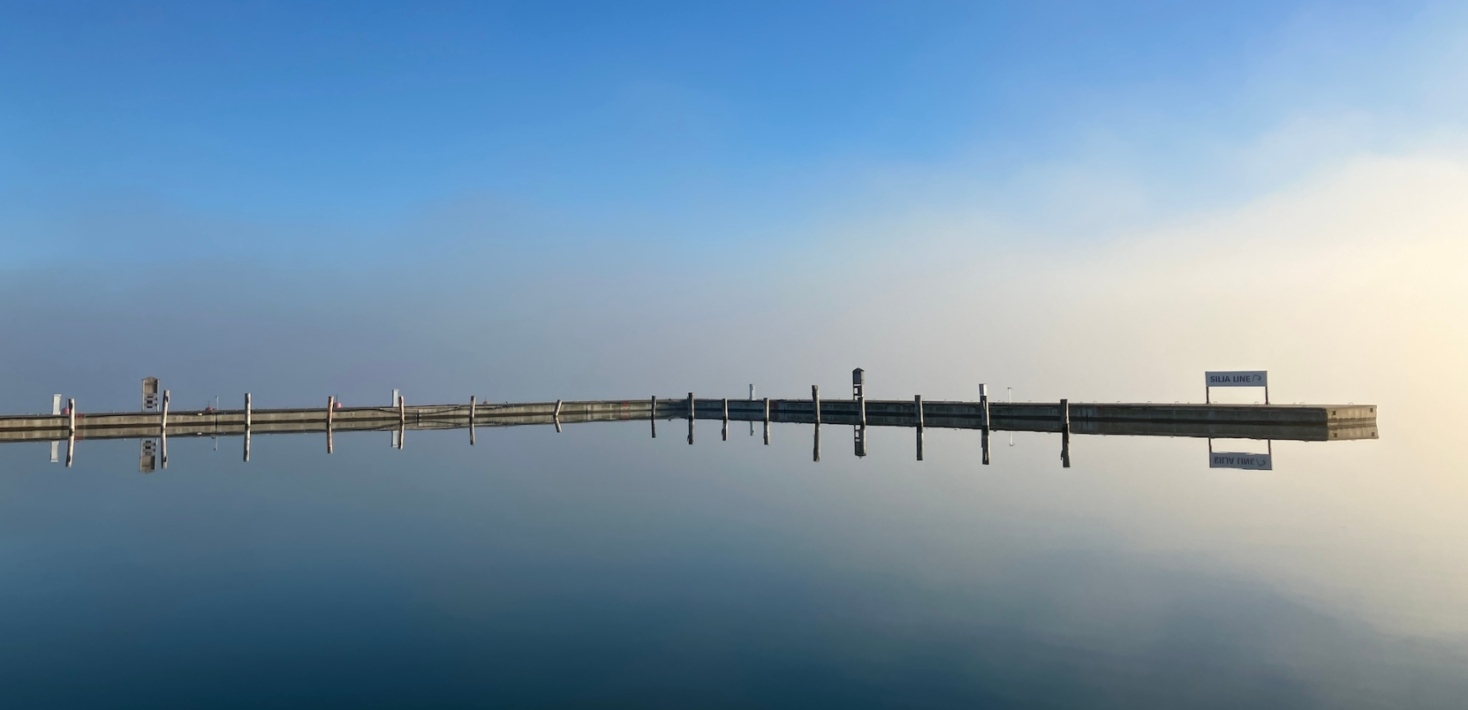
Photo: Sara Söderström
Oct 9, 2024.
The EU Nature Restoration Regulation was finally adopted on 17 June 2024, with a narrow majority in a vote in the Council of the EU. The battle was not so much about the sea as about forests and agricultural land, but the weakening of the texts unfortunately also affects the restoration of marine areas.
The Restoration Regulation still sets much-needed time-bound requirements for the restoration of damaged ecosystems in all Member States. The targets include restoring 30% of degraded marine habitats by 2030, 60% by 2040 and 90% by 2050. How the targets will be achieved and the actual implementation of measures is planned by each country individually. Member States have two years to develop a national restoration plan.
The regulation fills gaps in other legislation
The good thing about the regulation is that it fills the gaps in other EU environmental legislation. For example, the Habitats Directive lacks time-bound targets for achieving favourable conservation status, while the Birds Directive has a similar target for all bird species, but again without time-bound targets. Both directives also lack requirements to restore habitats outside the Natura 2000 network. The Marine Directive also sets a broad target to achieve good environmental status in EU seas by 2020, but lacks both requirements for specific actions and sufficiently fine-grained monitoring of specific habitats and species. These shortcomings are now partly addressed as the Nature Restoration Regulation has clear and time-bound targets, requires actions and monitoring and follow-up.
Some reflections after studying the regulation with ‘wet eyes´ are firstly that it seems to have many exceptions and loopholes. For example, areas of important public interest can be excluded - and this includes areas for renewable energy production such as wind and hydro power. In other words, the regulation will have limited potential to improve the situation of all fish that depend on free migration routes in rivers from the sea - such as eels and salmon. It should also be noted that the target of restoring at least 25 000 kilometres of rivers to free-flowing status sounds impressive, but actually represents less than 2% of the EU's waterways.
Lack of knowledge about marine areas makes priorities difficult
For marine areas in particular, there is often a lack of knowledge about the location and size of the various habitats to be restored. Hence most probably a good implementation will require added resources in member states to map the baseline condition. In addition, the regulation requires extensive monitoring and reporting on progress. Here too, resources will be needed both in authorities and among providers. This does not sit well with the already strained situation of environmental monitoring at sea in many member states. One a positive note, a possibility with the regulation is that it requires member states to find common solutions when there is a conflict between marine restoration objectives and destructive activities such as bottom trawling in areas fished by neighbouring countries. The Nature Restoration Act gives the European Commission the power to take emergency measures if common solutions cannot be found between Member States.
How to finance the regulation
In fact, the regulation comes with no funding of its own. Instead, Member States are encouraged to make use of private and public funding, as well as the various EU funds, such as the LIFE programme, the European Maritime, Fisheries and Aquaculture Fund, the European Regional Development Fund and Horizon 2020 - the Framework Programme for Research and Innovation. That said, the regulation does not require member states to reprogramme funding for agriculture and fisheries under the 2021-2027 multiannual financial framework.
Text: Ellen Bruno
More reading:
European Commission: Degraded ecosystems to be restored across Europe as Nature Restoration Law enters into force
European Council: Nature restoration law: Council gives final green light
Theme
Climate and Environment - Theme page - Theme page - Theme page - Theme page
Last updated: 2025-09-18
Source: Baltic Sea Centre