


New EU Commission in place
It's done - we have a new European Commission in place to start work on 1 December. That's after the world's most difficult job interviews have been completed.
Photo: Iaroslav Danylchenko/Mostphotos
That's what the European Parliament's (EP) hearings of candidates for commissioner jobs are called. For three hours, candidates are grilled by mainly one of the parliamentary committees. If it goes well, the committee says yes shortly afterwards and then a formal vote takes place in the plenary of the Parliament. If the committee is satisfied, the vote in plenary is a formality.
This year, as in many years before, several of the candidates were not immediately approved. One who did sail through was the future Agriculture Commissioner, Christophe Hansen from Luxembourg. A farmer's son, who has himself been a MEP for the conservative EPP group. All party groups in the EP were pleased with the way he balanced the issues of agricultural competitiveness, the economy of agriculture and the need to reduce environmental impact.
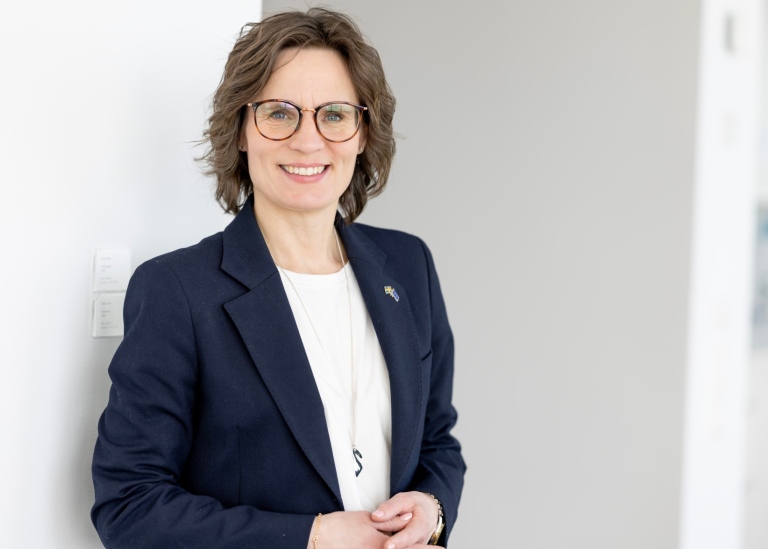
Jessika Rosvall, new Swedish Commissioner for Environment, Water Resilience and a Competitive Circular Economy. Photo: Ninni Andersson/Swedish Government Offices.
One person who was strongly criticised, however, was Swedish Jessika Rosvall, who ran for the post of environment commissioner. However, the Commission President, Ursula von der Leyen, had chosen to propose some senior vice-presidents directly under herself. Teresa Ribera, a Socialist from Spain, will be one of the vice-presidents in charge of the environment and ‘a clean, fair and competitive transition’.
Under her, Jessika Rosvall will be in charge of environment, competitive circular economy and water resilience. EP questioners were not satisfied with Ms Rosvall's answers, saying her knowledge was insufficient. The party groups that did not want to accept her demanded the approval of another controversial commissioner candidate, Hadja Lahbib (preparedness, crisis management, gender equality) from Belgium, and there are indications of political horse-trading.
The new Commissioner for Maritime Affairs and Fisheries, Costas Kadis from Cyprus, had no problems during his hearing. With his background in science and politics, he emphasised the need for profitability in the sector, to develop the blue economy while protecting the oceans.
The Dutch Wopke Hoekstra, who has already been part of the Commission for a few years, since the departure of Frans Timmermans, will be the Climate Commissioner. Hoekstra will also serve under Teresa Ribera.
Now it is urgent to get down to work. Many processes are waiting to be taken forward. It is of course too early to say which new processes will be launched, but reading von der Leyen's political programme for the period 2024-2029, one can see more emphasis on competitiveness and industrial development than on the green transition.
Text: Gun Rudquist
Last updated: 2024-11-25
Source: Baltic Sea Centre