


New Postdocs at SCGG Tackle Global Governance Challenges in Law, Security, and Climate
Four distinguished scholars are joining the Stockholm Center on Global Governance (SCGG) for postdoctoral research, each addressing urgent issues in international law, security, and climate governance. Their work will contribute to global discussions on policy solutions and academic research in these fields. Their individual expertise spans crucial areas, including legal frameworks, political analysis, and environmental governance, shaping the evolving landscape of global governance.
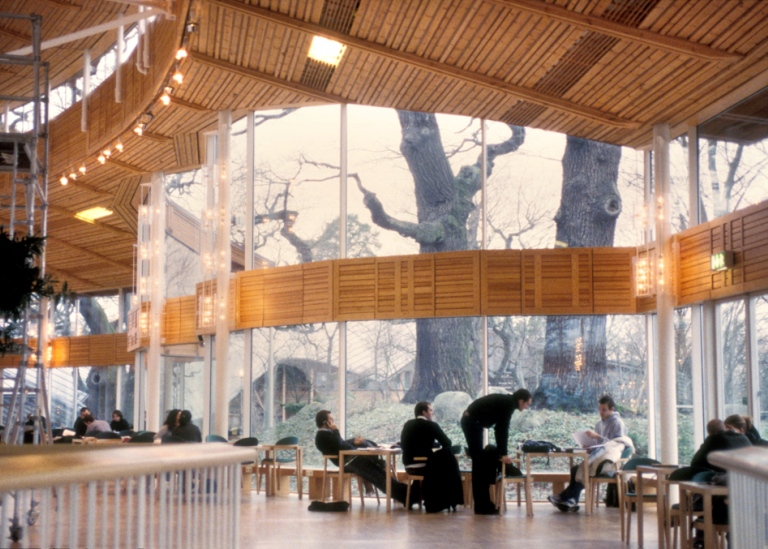
Sally Longworth, the most recent addition to SCGG's postdoc team, started on July 1, 2025. "My research focuses on the relationship between international human rights, international humanitarian and international criminal law," she told the SCGG website. Photo: Aula Magna © Orasis 2012
PUBLISHED: March 28, 2025
UPDATED: September 5, 2025
Note: In this article, Sally Longworth's, Gudlaug Olafsdottir's, Marcel Jahn's and Nicholas Olczak's responses are referred to as "SL," "GO," "MJ," and "NO" (e.g., SL: etc.).
Sally Longworth, postdoctoral researcher, Stockholm University
Primarily based at: Department of Law, Stockholm University, SWEDEN
Visit: July 1, 2025 – December 31, 2027
SCGG Areas of expertise: Global Governance Institutions and Law, Global Justice, Democracy and Rights, Global Security Governance, and Global Technology Governance.
Hosted by: SCGG and the Department of Law, Stockholm University
Learn more about Sally Longworth's research
Please describe your past and current research
SL: "My research focuses on the relationship between international human rights, international humanitarian and international criminal law. My doctoral research examined the right to freedom of expression in armed conflict.
My other research interests include the law applicable to military operations, the international legal regulation of artificial intelligence and weapons of mass destruction, gender and armed conflict, and international criminal law and procedure.
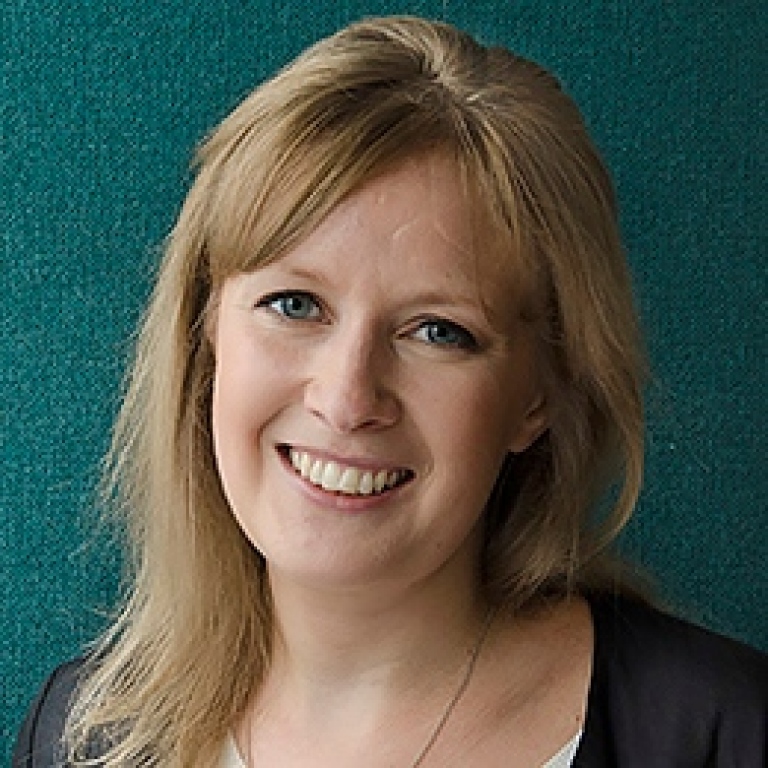
Sally Longworth Photo: Stockholm University
I also conducted research in the law applicable in military operations on behalf of the SEDU and as requested by Swedish Ministry of Defence in international humanitarian law, international criminal law, human rights, gender and international law applicable in military operations, refugee law and comparative domestic law, amongst others."
What research will you be conducting during your postdoc at SCGG?
SL: "My research will focus on the international legal regulation of weapons of mass destruction under international law in light of recent State practice that aims to disrupt stability in system of governance and technological developments that call into question the integrity of the system.
The aim of the project is to contribute to an updated and holistic understanding of the various regimes that specifically address and those that are applicable to the development, production, acquisition, stockpiling, retention, transfer and use of WMDs" (Ed. note see below).
Will you be connected to any specific research projects at SCGG?
SL: Not planned yet, but I hope so!
UN Definition of Weapons of Mass Destruction (WMDs)
In 1977, the General Assembly, (...), affirmed the definition of Weapons of Mass Destruction as "[…] atomic explosive weapons, radioactive material weapons, lethal chemical and biological weapons, and any weapons developed in the future which might have characteristics comparable in destructive effect to those of the atomic bomb or other weapons mentioned above."
(Source: UNRCPD)
Gudlaug Olafsdottir, postdoctoral researcher, Stockholm University
Primarily based at: Department of Political Science, Stockholm University, SWEDEN
Visit:May 1, 2025 – November 27, 2027 (N.B. As Gudlaug Olafsdottir will also be working 30% on a research project, funded by The Swedish Research Council, based at Uppsala University. This is why the length of her position is more than 2 years).
SCGG Areas of expertise: Global Governance Institutions and Law, Global Justice, Democracy and Rights and Global Security Governance
Hosted by: SCGG and the Department of Political Science, Stockholm University
Please describe your past and current research
GO: "Broadly, my research focuses on the political dynamics of semi-authoritarian regimes. At the SCGG, I will be investigating the domestic drivers of autocratizing regimes’ changing contestation of international norms, treaties, and cooperation, with a particular focus on security-related topics.
Moreover, together with researchers at Uppsala University and The Nordic Africa Institute, I am investigating election boycotts and the conditions under which they are likely to be successful.
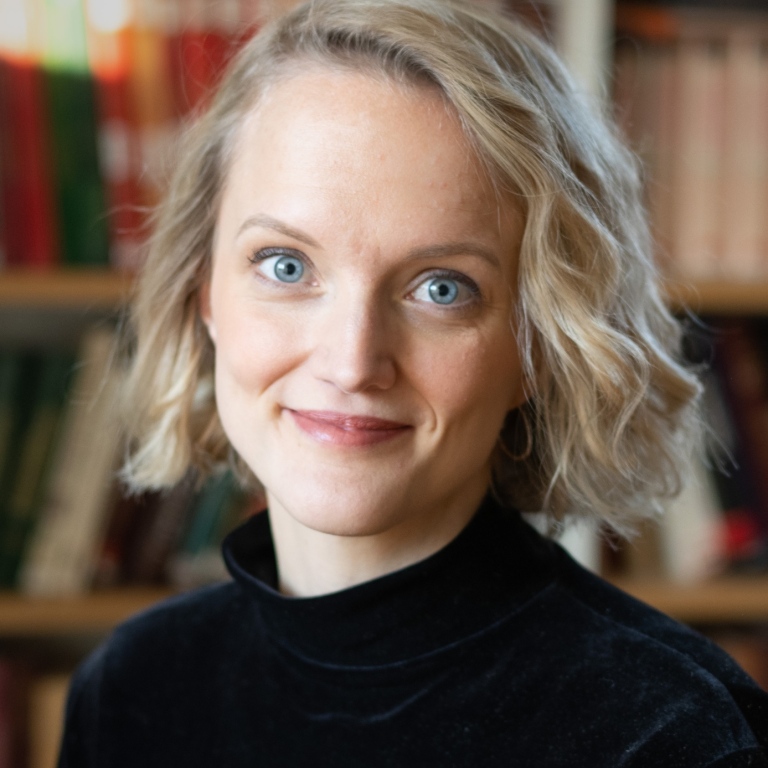
Gudlaug Olafsdottir Photo: Chris Chau © DPCR, Uppsala University
My research to date covers topics relating to electoral violence and how it influences democratization.
For instance, it investigates how citizens' attitudes toward democracy are affected by electoral violence, taking partisanship into account.
I also explore how violence between supporters of different parties shapes parties' propensity to give concessions in constitution-making processes, and how the outcomes of constitutional reform processes affect the development of electoral violence in their aftermath.
More recently, I am focusing on the drivers of student-led violence, addressing the puzzle of why universities sometimes are hot spots for violent mobilization.
I have also worked on conflict forecasting, using machine learning techniques to estimate the future risk of armed conflict, and written about the development of women’s rights in post-conflict settings.
Methodologically, I take a varied approach. Beyond applied statistical modelling, I have done field research in Turkey and Uganda and contributed to several quantitative data collection efforts.”
What research will you be conducting at SCGG?
GO: "My postdoctoral project at the Stockholm Center for Global Governance is within Political Science and will contribute to themes one and two in the center’s research agenda, seeking to understand the sources and processes of autocratizing regimes’ contestation of global governance.
Learn more about SCGG's central themes
The proposed focus is on policy areas relating to security, taking a broad approach to include both military security and the security of women and gender minorities.
My project seeks to address the question of why, when, and under what conditions autocratizing regimes withdraw from international treaties, breach established international norms and institutions, and challenge international cooperation.
I draw on insights of domestic political processes to explain changes in states’ behavior in the international arena."
Will you be connected to any specific research projects at the center?
GO: I will be affiliated with Jonas Tallberg’s DEMCOOP project.
Would you like to add anything?
GO: "I’m looking forward to meeting everyone."
Marcel Jahn, postdoctoral fellow, University of Potsdam
Primarily based at: Department of Philosophy, University of Potsdam, GERMANY
Visit:March 1, 2025 – February 28, 2027
SCGG Areas of expertise: Global Governance Institutions and Law, and Global Security Governance
Hosted by: SCGG and the Department of Philosophy, Stockholm University
Learn more about Marcel Jahn's research
Please describe your past and current research
MJ: "My research focuses on meta-ethics, normative ethics, and topics that lie at the intersection of philosophy and the social sciences, especially international relations and economics."
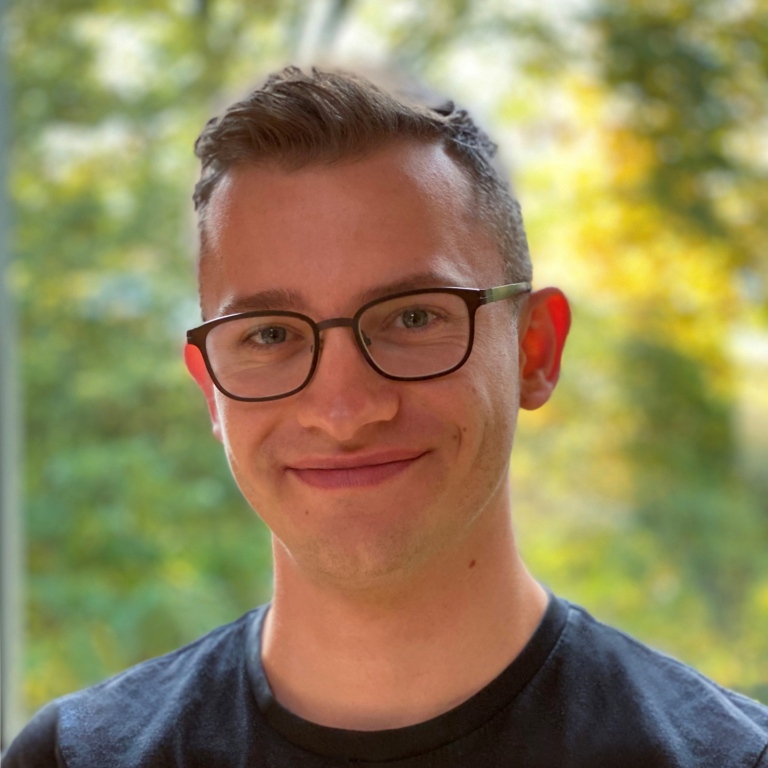
Marcel Jahn Photo: Michael Rimkus
What research will you be conducting during your postdoc at SCGG?
MJ: "During my postdoctoral fellowship at the SCGG, my research will fall into two main categories.
First, I will continue exploring the intersection of philosophy and international relations (IR). In collaboration with political scientist Moritz Graefrath (Williams & Mary), I have previously undertaken several article-length projects that leverage philosophical analysis to refine central theoretical concepts and normative challenges in IR.
This work examines the ontological foundations of state intentions, the nature of interstate cooperation, and the governance of extraterritorial spaces – commonly referred to as the global commons.
At the SCGG, I aim to expand my normative research on the global commons, exploring the political future we want for these spaces and the role of international institutions in shaping it.
In this regard, I am currently preparing an article on the legitimacy of international institutions. It argues that for an international institution to hold normative legitimacy – i.e., the right to rule – it is essential that there is widespread belief in its legitimacy or that establishing such belief is sufficiently likely.
In brief, what many scholars refer to as sociological legitimacy is necessary for normative legitimacy. This result highlights that the ongoing contestation of international institutions is more severe than often recognized: it leads not only to dysfunction but also deprives them of a central normative foundation.
My second line of research at the SCGG explores model-centered approaches to policy advice aimed at addressing global governance challenges.
Specifically, I will examine the normative significance of so-called Integrated Assessment Models (IAMs) – widely used by climate economists to inform policies on mitigating climate change.
Building on my previous philosophical work on such normative models, in collaboration with Lukas Beck (London School of Economics), I will investigate key questions about their normative function.
How do these models fulfill their normative role? Do they generate new normative insights beyond the normative assumptions introduced by modelers? Or do they merely uncover unforeseen implications of these pre-existing normative assumptions rather than producing novel normative findings?
I believe that this line of inquiry can provide both scholars and policymakers with a more profound understanding of the tools that drive high-stakes decision-making, especially in the context of addressing climate change."
Will you be connected to any specific research projects at SCGG?
MJ: As a member of the Department of Philosophy, I will work closely with Antoinette Scherz and engage with her ongoing research.
That said, as far as I am aware, the precise project(s) I will be involved in during my postdoc have yet to be determined.
Nicholas Olczak, postdoctoral researcher, Stockholm University
Primarily based at: The Department of Economic History and International Relations, Stockholm University. He is also associated with the Asia Programme at the Swedish Institute of International Affairs (UI).
Visit: February 1, 2025 – January 31, 2027
SCGG Areas of expertise: To be updated
Hosted by: SCGG and the Department of Economic History and International Relations, Stockholm University
Learn more about Olczak's research
New study explores the US and China's influence on the Arctic Council's work
Please describe your past and current research
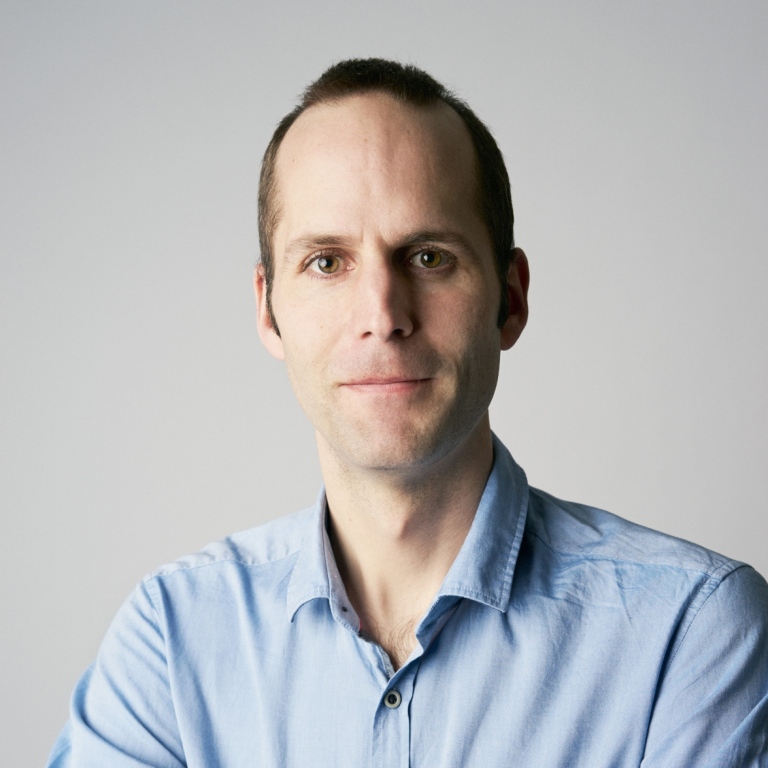
Nicholas Olczak, postdoctoral researcher, SCGG Photo: Swedish Institute of International Affairs, UI
N.B. Below is an extract from his employee profile page:
"Nicholas Olczak has published articles in journals including Global Studies Quarterly, Review of International Studies, and the Journal of Chinese Political Science.
His research interests include East Asian international relations, with a particular focus on China and its foreign policy, and constructivist IR theory.
He is also interested in global governance and international organisations (IOs), together with rising powers’ participation in these institutions.
He holds a PhD in International Relations from Stockholm University. His doctoral thesis studied the connections between online identity discourses and China’s foreign policy and is a book forthcoming with Bloomsbury."
What research will you be conducting at SCGG during your postdoc?
NO: "As a postdoc with the SCGG, I will be carrying out a project studying China’s evolving participation in global environmental and security governance.
More specifically, it will investigate the intersection between domestic dynamics within China and its changing engagement with these two areas of global governance - studying how discussions within the country impact on its approach to key principles in these two governance areas, as well as how the Chinese government legitimises the actions it takes for domestic audiences."
Will you be connected to any specific research projects at SCGG?
NO: "No, this will be a stand alone project, but the aim is to potentially collaborate on some of the outputs."
Would you like to add anything?
NO: "I am keen to organise or be involved in events as part of the SCGG around my interest in Asian and rising states participation in global governance."
Last updated: 2026-04-16
Source: SCGG