


Theresa Squatrito: Can international courts judge without political constraints?
International courts operate in nearly all world regions and have jurisdiction over states with varying histories of judicial power, democracy, and respect for the rule of law.
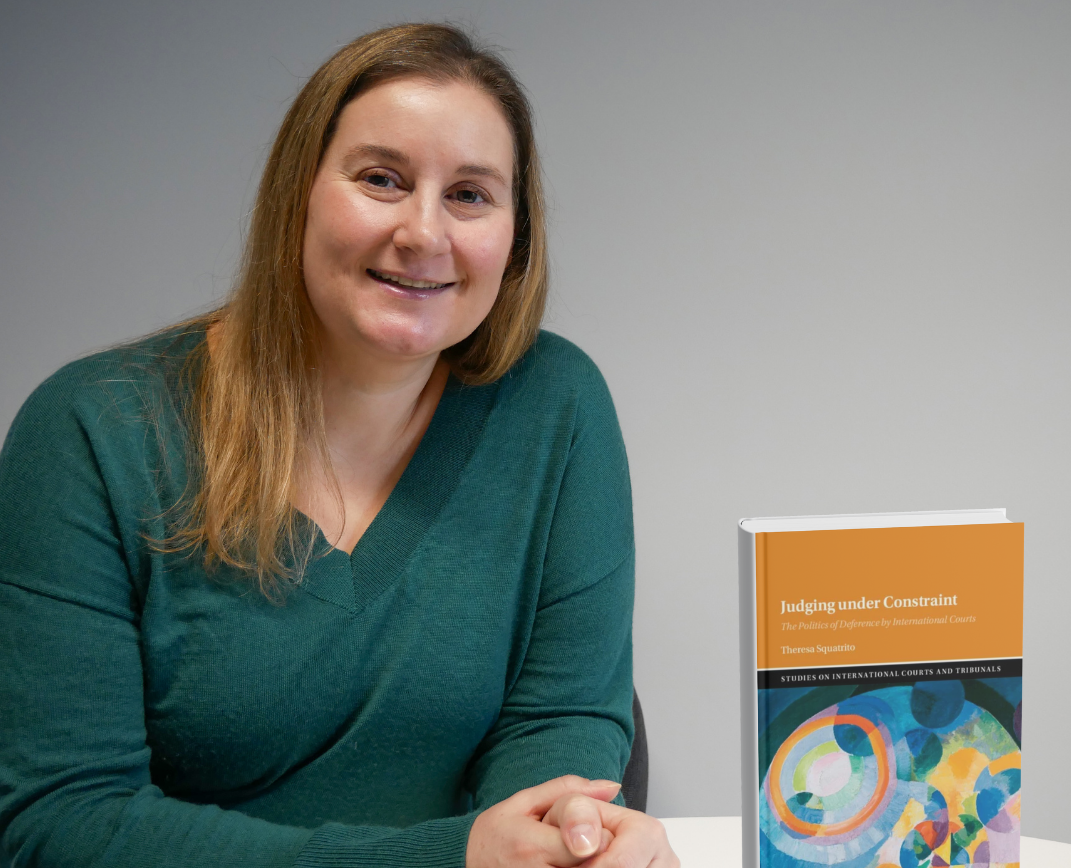
Theresa Squatrito
N.B. Please note that the seminar time has changed.
States, international organizations (IOs), civil society groups, and private actors regularly petition these courts, asking them to interpret the law, facilitate dispute settlement, determine whether states and IOs have complied with their obligations, and to provide remedies for wrongs. What factors contribute to how international courts respond to these pleas?
In this talk, Dr Theresa Squatrito will discuss her recent book, Judging under Constraint: The Politics of Deference by International Courts (Cambridge University Press, 2025). The talk will explore how international courts defer to states and when they are more likely to do so, giving special attention to judicial independence, political fragmentation, and legitimacy. Organized by SCGG and The Stockholm Centre for International Law and Justice (SCILJ).
Bio
Dr. Squatrito is Associate Professor in International Organisations in the Department of International Relations at the London School of Economics and Political Science. Her research focuses on international organisations and international law.
Last updated: 2026-04-16
Source: SCGG