


From text to tech: Digital literacy and the transformation of history, 7.5 ECTS
The aim of this course is to critically examine the technologies supporting historical research and to train participants in the critical handling of humanities data. Participants will develop a foundational understanding of theoretical concepts and gain practical experience in tools and methods for organising and analysing data, based on their own doctoral projects.
Course Content
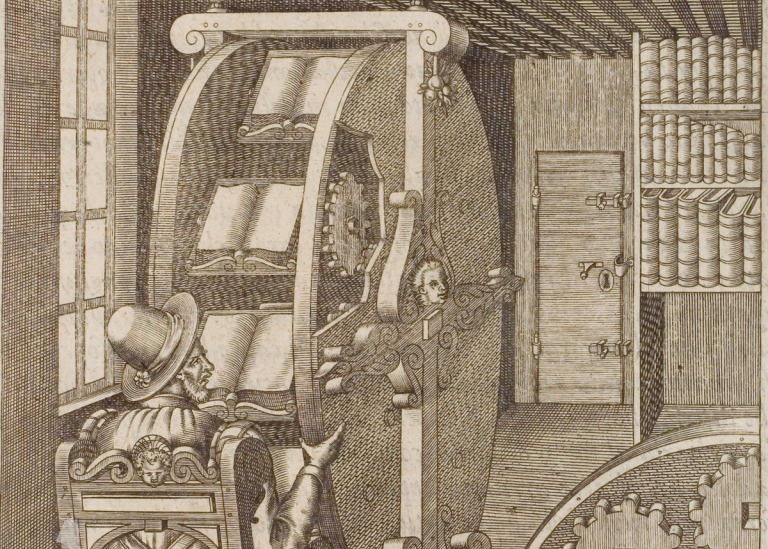
Foto: Bookwheel illustration from “The Various and Ingenious Machines of Captain Agostino Ramelli” (1588). Source: Wikimedia Commons
Historical research is undergoing a profound transformation. Digitalisation is generating new kinds of sources, while older materials are being digitised at scale and archival collections are increasingly accessed through remote servers rather than physical reading rooms. These shifts alter how historians discover, evaluate, and interpret evidence, and they open possibilities for computer‑assisted analysis that challenge established methodological habits. Situated at the intersection of digital humanities and digital history, this course examines the field’s growing dependence on digital technologies and develops participants’ capacity to critically engage with humanities data.
The course combines conceptual reflection with practical training. Teaching consists of seminars, hands‑on workshops, and discussions of current scholarship within the framework of the Digital History Seminar. Participants are introduced to central issues such as structured data, data modelling, database logic, and the methodological consequences of digitisation. They also gain familiarity with open‑source tools for organising and analysing data, explore the implications of AI-assisted techniques for historical inquiry, and experiment with forms of distant reading and other computational approaches. Throughout, the course emphasises how methodological choices shape historical interpretation and encourages participants to integrate digital practices into their own research in a reflective and informed manner.
Last updated: 2026-05-06
Source: Områdeskansliet för Humanvetenskap