


Hanna Kulahina-Stadnichenko – new visiting researcher through Scholars at Risk
Hanna Kulahina-Stadnichenko has been a SAR scholar at IÄD since March 1. During her time here, she will continue to develop her research on religiosity and processes of change in religion. She aims to develop new perspectives, build networks, and integrate Ukrainian research into a global context.
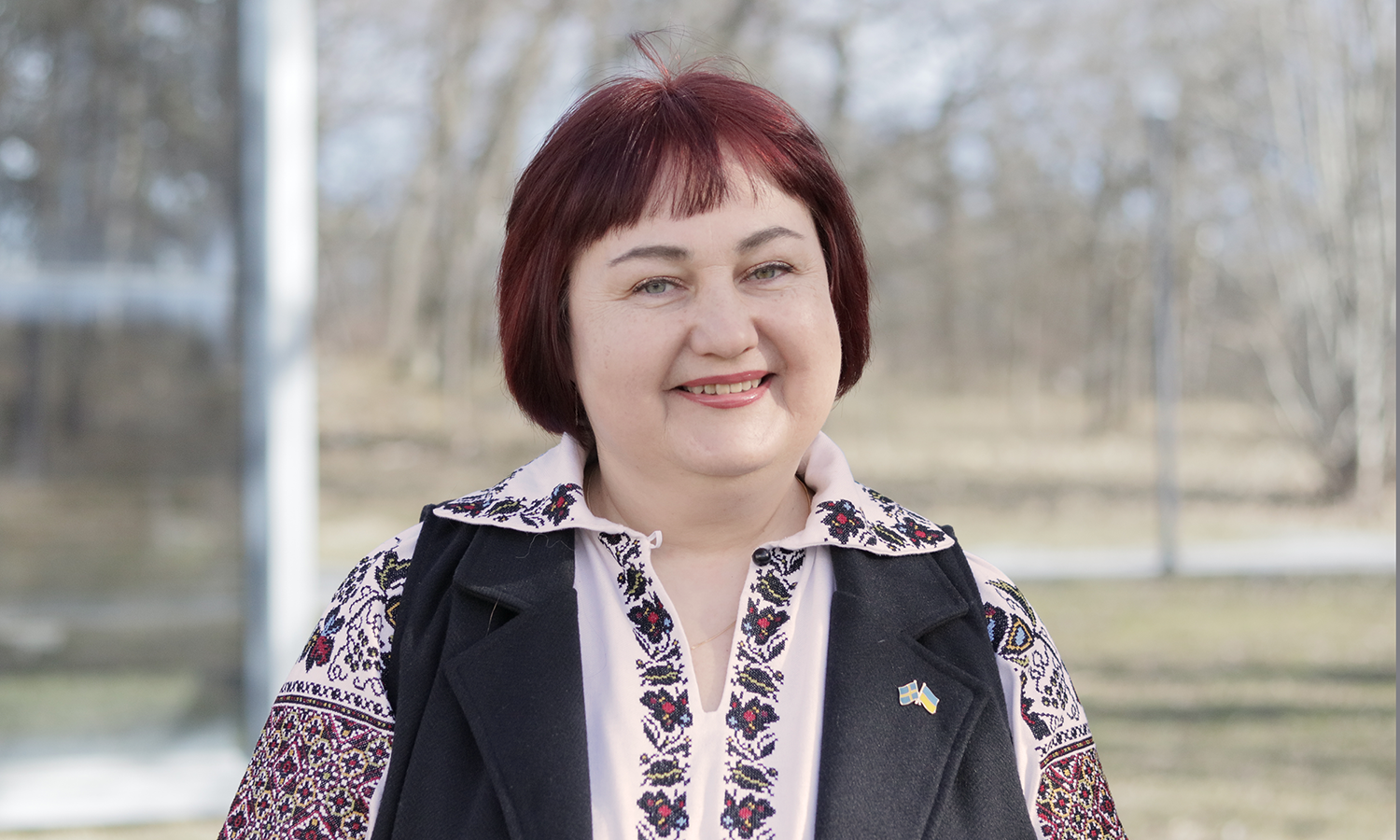
Hanna Kulahina-Stadnichenko. Photo: Private.
Stockholm University hosts a researcher each year through Scholars at Risk (SAR), an international network that works to promote academic freedom and provides protection for scholars who are threatened or unable to work in their home countries. As a member of SAR Sweden, the university—together with other affiliated institutions—can offer these researchers temporary positions as visiting scholars.
We are now pleased to welcome Hanna Kulahina-Stadnichenko as a new SAR scholar at the Department of Teaching and Learning (IÄD). She comes from Ukraine and will be with us for one year, with Jenny Berglund as her contact person. We hope that her time at the university will provide a safe environment for continued research, while also strengthening our international solidarity and enriching our research environment with new perspectives.
How did you become part of the Scholars at Risk programme, and how did you come to Stockholm University?
– Stockholm University and the National Academy of Sciences of Ukraine have long maintained close and positive relations, particularly between the Department of Religious Studies at the G.S. Skovoroda Institute of Philosophy and the Department of Teaching and Learning.
– When the war broke out in Ukraine, I was in Sweden with my young daughter, looking for opportunities to continue my research as a scholar at risk. Through Scholars at Risk, I got in touch with Jenny Berglund and Stockholm University, who showed great trust in me and gave me the opportunity to continue my academic work in a safe environment.
Can you tell us about your research and what you hope to develop during your time here?
– My research interests focus mainly on religious identity, how spirituality and religiosity interact in society, and how these change in times of migration and social upheaval. Much of my work builds on my doctoral thesis on the syncretism between pre-Christian beliefs and Orthodox Christianity in Ukraine, which I completed in 2001. In it, I examined how older, pre-Christian traditions and beliefs have persisted and become part of Orthodox Christianity—and how rituals, symbols, and beliefs are combined and shape people’s religious lives today.
– During my time at Stockholm University, I want to learn more about safe religious education—an approach to teaching that takes social, political, and cultural risks into account while strengthening the resilience of both individuals and societies. I want to explore how teaching can not only convey knowledge about religion but also provide tools for acting critically and responsibly in religiously sensitive contexts. I believe that comparisons between Sweden and Ukraine can offer new perspectives on this important area.
How long were you in Sweden before coming to Stockholm University—and what have you done since then?
– I have been in Sweden since the Russian invasion began—four years now. During that time, I have, among other things, collaborated with the Sankt Ignatios University College in Stockholm as a researcher.
– I have also worked, and am still active, in an international project on ecumenical initiatives in Ukrainian churches during war and crises, funded by an American research grant. I also participate in international conferences and research collaborations.
– In 2024, I published an article together with colleagues on how the war has affected relations within the Orthodox world. I am also planning to lead a session at the EASR conference in Bucharest in 2026 on transformations of religion in times of war.
How has the war in Ukraine affected your work and research environment, and what challenges do researchers in Ukraine face today?
– The war has affected my work in many ways. When I was forced to leave Ukraine, I lost access to important archives and materials, projects were interrupted, and my ability to teach there disappeared. At the same time, my time in Sweden has opened new doors, with access to research resources and international networks that I might not otherwise have had.
– However, the situation is also challenging. Language barriers, differences in academic culture, and uncertain employment make everyday life more complex. The personal burden is significant, with concern for loved ones, experiences of war, and the feeling of living between two countries.
– For researchers who remain in Ukraine, the situation is even more difficult. They often work under extreme conditions, facing physical danger, destroyed infrastructure, and limited resources. Research is interrupted or hindered, while the psychological pressure is immense. Despite this, many continue their work—for many, research has become a way to preserve both resilience and a sense of continuity in a very difficult time.
What do international collaborations and programmes like Scholars at Risk mean?
– Programmes like Scholars at Risk are absolutely crucial. They make it possible to continue being a researcher, with access to resources, networks, and academic affiliation, even in very difficult circumstances.
– They not only protect individuals but also help safeguard academic freedom and the continuity of research. At the same time, they open up international collaborations and provide scholars with a global platform.
– For many, it is not just about a career opportunity, but about preserving meaning and identity in a time of crisis. In this way, such programmes become a kind of infrastructure for the survival of scholarship in times of war.
What will you do after your time at Stockholm University, and what do you hope this period will have given you?
– I will continue my research on religiosity and processes of change in religion. I hope that my time at Stockholm University will be an important turning point for me, both academically and professionally.
– The access to resources, teaching, and international contacts that I have gained here enables me to complete ongoing projects and plan new ones, including a new academic book. For me, this stay is not only about getting through a difficult period during the war, but about transforming the experience of war into academic development and laying the foundation for a new international career.
– I would also like to express my sincere gratitude to Stockholm University for the trust and the opportunity to continue my research here. It has meant a great deal to me.
Last updated: 2026-06-15
Source: Department of Teaching and Learning