


Academic Religious Studies in Ukraine During Wartime: Resilience, Challenges, and Future Prospects
The purpose of this presentation is to examine how Russia’s war against Ukraine has transformed academic religious studies and to demonstrate its growing role in strengthening democratic resilience, protecting religious freedom, and supporting Ukraine’s post-war reconstruction.
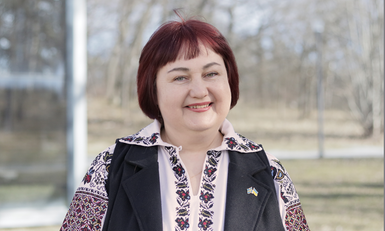
Hanna Kulahina-Stadnichenko. Photo: Private.
Russia’s full-scale invasion of Ukraine has profoundly transformed the conditions, priorities, and societal role of academic religious studies in Ukraine. The destruction and occupation of educational institutions, displacement of scholars, reduced research funding, and threats to academic freedom have created unprecedented challenges for the academic community. At the same time, the war has demonstrated the growing importance of the academic study of religion for understanding the complex relationship between religion, politics, security, and social resilience.
This seminar examines how Ukrainian religious studies have responded to these wartime challenges and how the field itself has been transformed. Particular attention is given to emerging research areas, including religion and security, religious freedom in wartime, the theology of war, the ideological construction of “russkiy mir,” transformations within Orthodoxy, military chaplaincy, religious diplomacy, humanitarian activities of religious organisations, lived religion, migration, and religious identity.
The seminar also considers the changing public role of scholars of religion. By analysing the political instrumentalisation of religion, documenting violations of freedom of religion or belief, and providing evidence-based expertise, Ukrainian scholars increasingly contribute to public policy, democratic governance, human rights protection, and international debates on religion and security.
Finally, the Ukrainian experience is discussed in the broader context of post-war recovery. The seminar argues that the reconstruction of Ukrainian academia cannot be limited to rebuilding physical infrastructure but must also include the restoration and strengthening of academic freedom, institutional independence, intellectual capacity, and public trust. From this perspective, academic religious studies can contribute not only to understanding religious transformations caused by war, but also to democratic resilience, peacebuilding, and Ukraine’s sustainable post-war reconstruction.
Last updated: 2026-09-16
Source: Department of Teaching and Learning