


Higher Seminar: The Role of Translanguaging in Academic Writing – A Longitudinal Study of Mainland Chinese Postgraduates in Hong Kong
Jing Tian, visiting PhD student from the Universitat Autònoma de Barcelona, presents her study on how Chinese master’s and doctoral students use translanguaging, AI tools, and other resources in academic writing in English-medium educational contexts in Hong Kong.
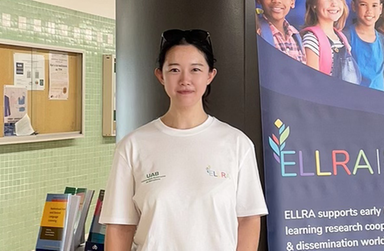
Jing Tian. Photo: Private.
Academic writing for EMI students is considered a challenging skill, as it is through academic writing that students are evaluated. Recent research has shown that students are integrating the use of translanguaging and AI as tools to help them facilitate their writing process (Ou et al., 2026; Yang & Lin, 2025; Yu & Jiang, 2025).
Studies also demonstrate how students exercise their agency by drawing on their multilingual resources to navigate the writing practices (Zheng & Drybrough, 2023). However, despite the prevalence of EMI programs at the master’s level (Wingrove et al., 2025), postgraduate students are underrepresented.
In addition, L2 writing research has called for more investigation into the writing process from an ecological perspective, highlighting the critical role of surrounding resources (Bronfenbrenner, 1995). For this reason, this PhD project considers both qualitative and quantitative data and aims to examine the employment of translanguaging practices aided by contextual resources (e.g., peers, teachers and AI tools) during their academic writing process. This study also explores learner agency exercised by these postgraduates.
Data instruments include questionnaires, semi-structured interviews and artefacts, such as screenshots of AI interaction and Word documents of drafts.
Thus far, the results from the pilot study reveal that students engage in translanguaging practices not only through AI tools but also through traditional methods like peer discussions. While students recognize the scaffolding role of L1 to support L2 writing from the cognitive dimension of learner agency, they reported complicated feelings from the emotional dimension of agency, including guilt due to social expectations of English-major-student identity and an increasing level of acceptance of bilingual-student identity.
References
Bronfenbrenner, U. (1995). Developmental ecology through space and time: A future perspective.
Ou, A. W., Tai, K. W., & Wang, X. (2026). The emergence of academic writers: Multilingual doctoral students’ translanguaging and transpositioning in AI-mediated academic writing. Journal of English for Academic Purposes, 79, 101613.
Wingrove, P., Zuaro, B., Yuksel, D., Nao, M., & Hultgren, A. K. (2025). English-medium instruction in European higher education: Measurement validity and the state of play in 2023/2024. Applied Linguistics, amaf020.
Yang, W., & Lin, C. (2025). Translanguaging with generative AI in EFL writing: Students’ practices and perceptions. Journal of Second Language Writing, 67, 101181.
Yu, R., & Jiang, L. (2025). A translanguaging perspective on students’ use of generative artificial intelligence in L2 writing. Computer Assisted Language Learning, 1-22.
Zheng, Z. Z., & Drybrough, A. G. (2023). Translanguaging in the academic writing process: Exploring Chinese bilingual postgraduate students’ practices at a British university. Journal of English for Academic Purposes, 65, 101269.
About Jian Tian
Jian Tian is a PhD candidate at the Universitat Autònoma de Barcelona (UAB). Her doctoral research, titled "An ecological perspective on translanguaging practices: a longitudinal study of Chinese postgraduates in the process of academic writing", explores the evolving writing ecologies of multilingual writers in the era of Generative AI.
Last updated: 2026-08-13
Source: Department of Teaching and Learning