


NFSUN 2027 – Nordic voices on bildning/sivistys/dannelse/menntun
We look forward to welcoming you to NFSUN 2027. The conference will be held in English and Scandinavian languages.
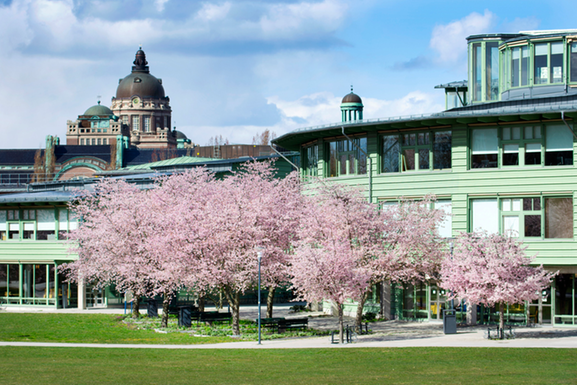
Stockholm University. Photo: Anna-Karin Landin.
How can science education contribute to making futures livable? Join the Nordic Research Symposium on Science Education – a teacher|researcher gathering advancing scientific literacy through future oriented, imaginative educational practices. We warmly invite you to conversations and dialogue in a friendly atmosphere at Stockholm University.
Call for contributions
The call for contributions for NFSUN 2027 is now open! We welcome contributions that explore questions related to science education, teaching and learning from a range of theoretical, empirical and practical perspectives. You can find more information about the conference themes in the submission form.
We invite submissions in the form of paper presentations, symposia, workshops and poster presentations. Presentations may be given in English or a Scandinavian language.
The deadline for submissions is 15 February 2027. All authors will be notified by 31 March 2027 whether their contribution has been accepted or not.
We look forward to receiving your contributions!
Keynote speakers
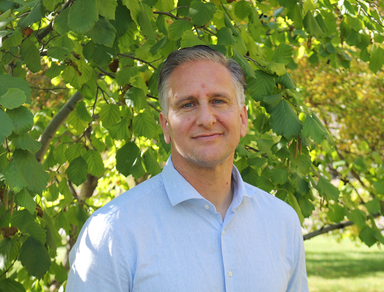
Jesse Bazzul. Photo: Private.
Jesse Bazzul
Jesse Bazzul is Professor of Science and Environmental Education at the University of Regina and has held tenure-track positions at the University of Massachusetts, as well as Maynooth University. His current work explores how sociomaterial approaches to ethics create potential for different ways of living together and multispecies flourishing.

Cecilia Caiman. Foto: Privat.
Cecilia Caiman
Cecilia Caiman is an Associate Professor in Science Education at Stockholm University. Her current research projects address teachers’ and principals’ professional growth, with education for sustainability foregrounded. The role of aesthetics in science education, students’ voices in public spaces in alignment with the perspective of 'learning as participation', as well as students’ narratives and imagination, constitute additional perspectives in which Cecilia engages, both in research and in teacher education. Cecilia’s work is often grounded in pragmatic theory and Deleuze’s empirical experimentalism.

Last updated: 2026-10-15
Source: Department of Teaching and Learning