Workshop on minoritized language perspectives in teacher education: The case of Sámi languages and sign languages in Norway

WORKSHOP
Date: Wednesday 20 May 2026
Time: 08:30 - 12:00
Location: P402 (Svend Pedersenrummet), Svante Arrhenius väg 20 A (register by May 6th)

This workshop focuses on minoritized languages and communities in higher education, with particular attention to Sámi languages and sign languages. Drawing inspiration from the Norwegian context, the workshop discusses how these perspectives can be given greater space in Swedish teacher education.

We welcome all interested to this workshop where we will focus on minoritized communities and languages in Higher Education, with a special focus on Sámi languages and sign languages in the Norwegian context.

The intention is to start a conversation on how to enlarge the scarce space that is given to these perspectives in teacher education in Sweden. In this endeavour, we take inspiration from the Norwegian educational context.

More specifically, we will get insights from the Norwegian context in conversations with Hilde Sollid, Professor and Sigrid Slettebakk Berge, Professor

Lecturer
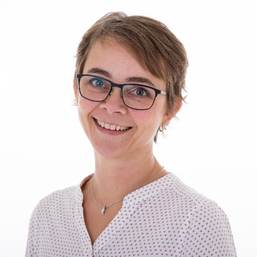
Hilde Sollid. Photo: UiT.
Abstract

From the onset in 1826, Norway’s teacher education was part of the state’s apparatus that contributed to marginalising and oppressing Sámi and Kven students. The last decades there has been important steps towards decolonising and indigenising education, i.e. processes of breaking with colonial power-imbalance and centring Sámi perspectives (cf. Olsen et al., 2017; Olsen & Sollid, 2022). Today, Sámi topics is in the regulations relating to the framework plans for all teacher education programs in Norway.

In the regulations, it is stated that the teacher education programs should qualify the student teachers to provide teachings in Sámi matters. The programs should moreover qualify them to safeguard Sámi pupils’ right to education in accordance with the Education Act and the current national curriculum. While the competence building for the Sámi people is explicitly addressed on this policy level, reports and evaluations of teacher education show that this does not easiliy transform into practice. Such implementation gaps are pointed out by Norway’s Truth and Reconciliation commission (2023) as an obstacle to further reconciliation.

Therefore, to support the process of breaking with the colonial past and centring Sámi perspectives in teacher education, there is a need for practices that supports solidaric interpretation of curricular goals into classroom practices. In my presentation focus on the role of the Norwegian subject in connecting policy and practice.

The Norwegian subject is the school’s largest subject running from grade 1 to 13, and it provides an implementational ground for building a supportive relational space for students with diverse linguistic and cultural backgrounds.

Following De Korne & Leonard’s (2017) perspectives on language reclamation I argue that the Norwegian subject can contribute to countering marginalisation of the Sámi people through critical place-based education (see also De Korne et al., 2025). In the presentation a draw on the experiences as a teacher educator as well as responses of the book Samisk i norskfaget – fra plan til praksis (Johansen & Sollid, 2023).

Bio – Hilde Sollid

Hilde Sollid, Ph.D., is Professor of Scandinavian Studies at the Department of Language and Culture, UiT The Arctic University of Norway. She previously worked at Department of Education (UiT) and has been part of developing master in teacher education program for primary and lower secondary school. Sollid is PI of the project Multilingualism in Transition (2021–2026, funded by NFR), and member of the research project Revitalisation Processes in Education: Bringing South Saami Forward (with PI David Kroik, funded by NFR).

Grounded in ethnographic approaches to the intersections of language, community and policy, Sollid’s research focuses on the minoritized languages Sámi and Kven in the Norwegian Arctic, with emphasis on language policy, language reclamation, language in education, and de/coloniality. Her publications include ‘Learning to Reconcile: Entextualisation of a Multilingual Municipality Sign in Educationscapes of Sápmi’ (co-author Åse Mette Johansen), ‘Critical place-based pedagogy and language teacher education in the Global North and South’ (co-authors Haley De Korne and Åse Mette Johansen), and Indigenising Education and Citizenship: Perspectives on Policies and Practices from Sápmi and beyond (book co-edited with Torjer A. Olsen, 2022).

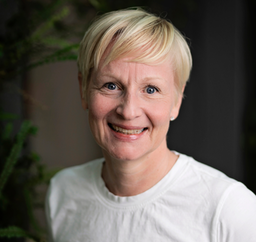
Sigrid Slettebakk Berge. Photo: NTNU.

Abstract

Norwegian sign language/NSL is a recognized minority language. The Educational act (§3.4) confirms that deaf and hard-of-hearing/DHH students’ have right to ‘education in and through Norwegian sign language, and that the training should be in a sign language environment. If the school does not have teachers who can provide instruction in NSL, it can be provided at another school, in digital classrooms, or in ‘short stay’ at Statped. Most DHH children are born into spoken language families. Parents and extended family members can participate in SL courses at Statped for 2-4 weeks a year, in 16 years. The traditional governmental Deaf schools are closed. There are five primary and secondary schools with small NSL departments for groups of DHH students. These departments have an important role for NSL recognition as a minority language. Today, most DHH students are provided education in their local mainstream school and in spoken language environment. The educational change is conducted through more efficient hearing technology (CI), and inclusion policies. However, compared to hearing classmates, we are aware that many DHH students are falling behind academically and socially, and become more exposed to language deprivation.

In many ways, sign language education is a complex educational field. There are tensions between inclusive school policy, language ideologies, and discourses for what is in the best interest of the child. In the society, spoken/written Norwegian has a much stronger recognition that NSL, and there is prejudice about DHH child’s ‘need’ to learn NSL in communities with other signing child. The last years, there is a growing interest in hybrid language practices called ‘total communication’ or ‘sign-with-speak (tecken as stöd), leaning on linguistic structures in written and spoken languages. I am worried that the recognition of NSL is marginalized in today’s teaching practices. Across personal experiences, jobs, and research projects, I have been in contact with numerous school leaders, teachers and DHH students. I am looking forward to sharing some empirical examples about bilingual multimodal teaching practices for today’s generation of DHH students. I will critically reflect on how NSL as a minoritized language perspectives is represented in practice and in teacher education.

Bio – Sigrid Slettebakk Berge

Professor Sigrid Slettebakk Berge works at NTNU, Trondheim, at the Department of Teacher Education. She teaches students in pedagogy and special needs teacher education.

Her research consists of ethnographic classroom studies on the education of deaf and hardofhearing students who have sign language as one of their languages. Her publications explore the practices of various professional groups (teachers, special educators, interpreters, school leaders), and how individuals in these roles works to establish inclusive learning environments. Data is generated come from from several primary schools in Norway and the Nordic countries, as well as uppersecondary schools in Norway. She has also conducted teaching and research on communication and interpreting for deafblind individuals.

Berge holds a master’s degree in pedagogy, and a PhD in disability studies.

She has previously worked at NTNU’s Sign Language and Interpreter Education program, as a department head for signlanguage students in uppersecondary education, and as an interpreter in the public interpreting service for deaf and deafblind individuals.

Preliminary program

Time

Session

8.30-8.45

Welcome and introduction of participants

8.45-9.45

Sigrid Slettebakk Berge presents (45 min) + 15 min discussion

9.45-10.15

PAUS

10.15-11.15

Hilde Sollid presents (45 min) + 15 min discussion

11.15-11.30

PAUS

11.30-12.00

Discussion and ways forward

This workshop is organized by the Research Network on Multilingualism for Epistemic Justice and the Research Group Multilingualism Teaching and Learning from a Critical Perspective.

Please also note a Higher Seminar with Professor Hilde Sollid on 19 May at 13.00–14.30.

Registration

Please register by May 6th. We look forward to your participation.

Go to the registration form

The Organization Committee/
Christina Hedman, Liz Adams Lyngbäck, Enni Paul and Jenny Rosén

Last updated: 2026-04-08

Source: Department of Teaching and Learning