


DEMSOD Seminar: Towards an Intercultural Philosophy Teaching in the Upper Secondary Education in the Nordics
At the seminar, Isabella Varricchio will present a draft article that addresses the issue of an intercultural perspective in philosophy teaching in upper secondary education in the Nordics. The seminar is held in Swedish or English.
Seminar
Date: Thursday 11 December 2025
Time: 13.00 – 15.00
Location: Zoom (link below)
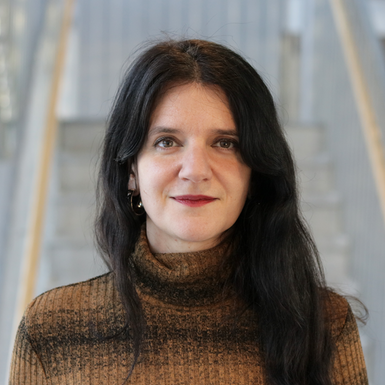
Isabella Varricchio. Foto: Privat.
Isabella Varricchio is a PhD candidate in philosophy didactics at the Department of Teaching and Learning at Stockholm University. In her PhD project, she examines the philosophy subject in upper secondary education in the Nordic national contexts, focusing on its orientation to present-day society and contemporary issues.
At the seminar, Isabella Varricchio will present an article idea on intercultural perspectives in philosophy teaching at upper secondary schools in the Nordic countries. In a similar way that philosophy teaching, according to current subject curricula, is expected to convey knowledge from the history of philosophy, for example, Plato's metaphysics or Kant's epistemology, the teaching could conceivably include ideas and theories from non-Western thought traditions.
Such an ambition or implication is, to varying degrees, already formulated in the current curricula for philosophy in the Nordic countries. Teaching only Western thought traditions, which today dominate philosophy at universities and teacher training as well as in upper secondary schools, carries implicit messages about what is right and valid philosophy. Universalist and hegemonic tendencies in Western philosophy (and its dominance within the school system) can be understood from the perspective of the colonial phenomenon of "white supremacy", where white culture and social order are assigned a superior position in relation to non-Western cultures and societies.
Philosophy teaching in the Nordic countries, which is conducted within white majority societies where colonial and racist notions are also often hidden (Fylkesnes, 2019; Hübinette & Lundström, 2011) behind notions of “Nordic exceptionalism” (Loftsdóttir & Jensen, 2012; Gregers Eriksen, 2021), should challenge these notions, among other things, by offering high school students a broadened perspective on what philosophical thinking can be. This can be considered particularly urgent in a time of increased social and ethnic segregation (Krejsler, 2024) and a xenophobic political agenda within the Nordic region. The seminar will discuss an intercultural approach to subject teaching in the Nordic countries, as well as its meta-philosophical and teaching-related challenges.
If you have any questions, or if you would like to participate and access the texts in advance, please contact Maria Olson: maria.olson@su.se
Participate via Zoom
Last updated: 2025-12-08
Source: Department of Teaching and Learning